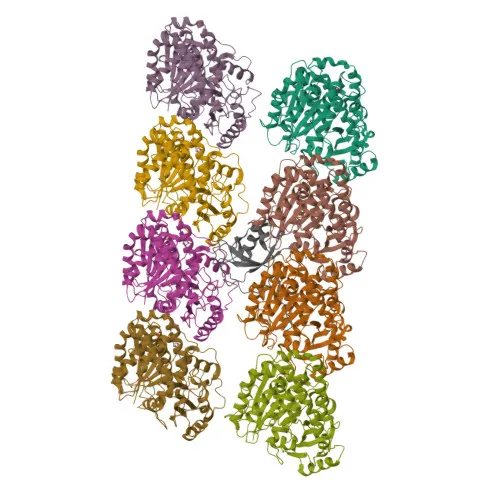
Polyclonal Antibodies
Anti-Doublecortin Polyclonal Antibody for WB, IF/ICC, ELISA - O43602
Item Number : CM0014969
Price varies based on specs and customizations
- Application
- WB, IF/ICC, ELISA
- Cross Reactivity
- Human, Mouse, Rat
- Protein Weight
- 41kDa

Shipping:
Contact us to get shipping details Enjoy On-time Dispatch Guarantee.
Why Choose Us
Easy ordering process, quality products, and dedicated support for your business success.
Core Product Specifications and Parameters
| Parameter | Value |
|---|---|
| Product Name | Doublecortin Rabbit pAb |
| Remarks/Alias | DC; DBCN; LISX; SCLH; XLIS; Doublecortin |
| Species | Human |
| Gene ID (Human) | 1641 |
| Gene ID | 1641 |
| Immunogen | Recombinant fusion protein containing a sequence corresponding to amino acids 265-365 of human Doublecortin (NP_835365.1) |
| Source | Rabbit |
| Category | Polyclonal Antibodies |
| Application | WB, IF/ICC, ELISA |
| Cross Reactivity | Human, Mouse, Rat |
| SWISS | O43602 |
| Protein Weight | 41kDa |
| Shipping | Ice bag |
Biological Background: Doublecortin Function and Localization
- DCX encodes Neuronal migration protein doublecortin (also known as Doublin, Lissencephalin-X), a microtubule-associated protein essential for neuronal migration during cerebral cortex development.
- It plays a key role in the initial steps of neuronal dispersion and cortex lamination, possibly by competing with DCLK1 for target protein binding within a calcium-dependent signaling pathway.
- The protein contains two conserved doublecortin (DCX) domains that mediate binding to and stabilization of microtubules, critical for neuronal migration.
- Subcellular localization is predominantly cytoplasmic and enriched in neuron projections, consistent with its function in migrating neurons.
- Tissue expression is highly specific: in fetal brain, DCX is abundant in cells of the cortical plate, intermediate zone, and ventricular zone; in adults, it is highly expressed in the frontal lobe but at very low levels in other brain regions and absent from non-neural tissues.
- Post-translational modifications include phosphorylation and ubiquitination, which may regulate its activity and turnover.
- Mutations in DCX cause X-linked lissencephaly and subcortical band heterotopia, underscoring its critical role in neurogenesis and proper brain development.
Experimental Guidance and Technical Tips
- For Western blot analysis, consider a band at approximately 41 kDa; validation in neuronal tissue lysates (e.g., fetal brain or adult frontal lobe) is recommended.
- In immunofluorescence/ICC experiments, signal is expected in the cytoplasm and along neuron projections; appropriate fixation and permeabilization protocols should be optimized.
- This polyclonal antibody is generated against amino acids 265–365, a region likely spanning part of the C-terminal domain; epitope-specific performance may vary by application.
- Cross-reactivity with mouse and rat is indicated; however, independent validation in the intended model system is suggested to confirm specificity.
- For ELISA, use recombinant protein or cell lysates as antigen sources; titrate antibody and detection conditions for optimal signal-to-noise ratio.
CamelBio: Your One-Stop Sourcing Bridge
CamelBio specializes in providing diagnostic manufacturers, laboratories, and research institutes with a comprehensive range of IVD raw materials and technical support. This anti-Doublecortin polyclonal antibody supports neuronal development and migration research, and we can assist in sourcing validated antibody pairs, optimized monoclonal/polyclonal antibodies, bulk ancillary reagents, and even rare-target raw materials to accelerate your project from concept to clinical application.
REQUEST A QUOTE
Our professional team will reply to you within one business day. Please feel free to contact us!