Monoclonal Antibodies
Anti-DNPH1 Rabbit Monoclonal Antibody for WB, IF/ICC, ELISA - O43598
Item Number : CM0004103
Price varies based on specs and customizations
- Application
- WB, IF/ICC, ELISA
- Cross Reactivity
- Human, Mouse
- Protein Weight
- 19kDa

Shipping:
Contact us to get shipping details Enjoy On-time Dispatch Guarantee.
Why Choose Us
Easy ordering process, quality products, and dedicated support for your business success.
Core Product Specifications and Parameters
| Parameter | Value |
|---|---|
| Product Name | DNPH1 Rabbit mAb |
| Remarks/Alias | RCL; C6orf108; dJ330M21.3; DNPH1 |
| Species | Human |
| GeneID (Human) | 10591 |
| GeneID | 10591 |
| Immunogen | Synthetic Peptide: A synthetic peptide corresponding to a sequence within amino acids 75-174 of human DNPH1 (O43598). |
| Source | Rabbit |
| Category | Monoclonal Antibodies |
| Application | WB, IF/ICC, ELISA |
| Cross Reactivity | Human, Mouse |
| SWISS | O43598 |
| Protein Weight | 19kDa |
| Shipping | Ice bag |
Biological Background: DNPH1 Function and Localization
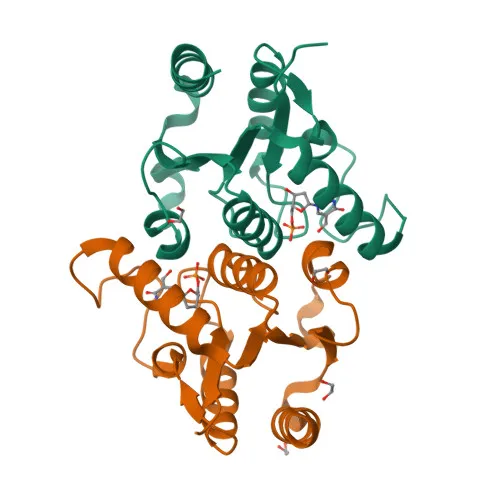
- DNPH1, also known as 5-hydroxymethyl-dUMP N-hydrolase or c-Myc-responsive protein RCL, is a 19108 Da enzyme encoded by the DNPH1 gene (C6orf108) in humans.
- It participates in a nucleotide salvage pathway that removes epigenetically modified 5-hydroxymethyl-dCMP (hmdCMP) by deamination to 5-hydroxymethyl-dUMP (hmdUMP) and subsequent hydrolysis to 5-hydroxymethyluracil and 2-deoxy-D-ribose 5-phosphate (PubMed:33833118). This prevents the integration of cytotoxic hmdUMP into DNA. Related references: PMID:33833118
- DNPH1 catalyzes the N-glycosidic bond hydrolysis of hmdUMP specifically (PubMed:33833118).
- Subcellularly, the protein localizes to both the cytoplasm and the nucleus.
- Tissue expression: low levels in brain, colon, lung, peripheral blood leukocytes, placenta, small intestine, and thymus; high levels in heart, kidney, liver, skeletal muscle, and spleen. Overexpression is common in a significant proportion of breast cancers.
- Post-translational modifications include acetylation and phosphorylation; alternative splicing generates multiple isoforms.
Experimental Guidance and Technical Tips
- The immunogen is a synthetic peptide corresponding to amino acids 75-174 of human DNPH1. When using the antibody, consider that it may preferentially recognize the native protein conformation or denatured epitopes depending on the assay.
- For western blotting, a band at approximately 19 kDa is expected. Optimization of blocking conditions and primary antibody dilution is recommended for specific samples.
- The antibody cross-reacts with mouse DNPH1, thus can be applied to mouse tissue and cell line studies after validation.
- For immunofluorescence and ELISA, appropriate fixation/permeabilization and antigen coating conditions should be determined experimentally.
CamelBio: Your One-Stop Sourcing Bridge
CamelBio provides diagnostic manufacturers and research laboratories with a one-stop sourcing platform for high-quality IVD raw materials. As a supplier of the DNPH1 antibody, we support nucleotide metabolism research and assay development with validated antibody pairs, recombinant proteins, and ancillary reagents. Whether you need bulk quantities, custom conjugation, or rare-target raw materials, CamelBio's integrated supply chain helps streamline your projects from concept to clinical application.
REQUEST A QUOTE
Our professional team will reply to you within one business day. Please feel free to contact us!