Monoclonal Antibodies
Anti-DNA-PKcs Rabbit Monoclonal Antibody for WB, IP, IF/ICC, IHC-P, ELISA - P78527
Item Number : CM0003774
Price varies based on specs and customizations
- Application
- WB, IP, IF/ICC, IHC-P, ELISA
- Cross Reactivity
- Human
- Protein Weight
- 469 kDa

Shipping:
Contact us to get shipping details Enjoy On-time Dispatch Guarantee.
Why Choose Us
Easy ordering process, quality products, and dedicated support for your business success.
Core Product Specifications and Parameters
| Parameter | Value |
|---|---|
| Product Name | DNA-PKcs Rabbit mAb |
| Remarks/Alias | HYRC; p350; DNAPK; DNPK1; HYRC1; IMD26; XRCC7; DNAPKc; DNA-PKC; DNA-PKcs |
| Species | Human |
| GeneID (Human) | 5591 |
| GeneID | 5591 |
| Immunogen | Recombinant Protein|Recombinant fusion protein containing a sequence corresponding to amino acids 3993-4128 of human DNA-PKcs (NP_008835.5). |
| Source | Rabbit |
| Category | Monoclonal Antibodies |
| Application | WB, IP, IF/ICC, IHC-P, ELISA |
| Cross Reactivity | Human |
| SWISS | P78527 |
| Protein Weight | 469 kDa |
| Shipping | Ice bag |
Biological Background: DNA-PKcs Function and Localization
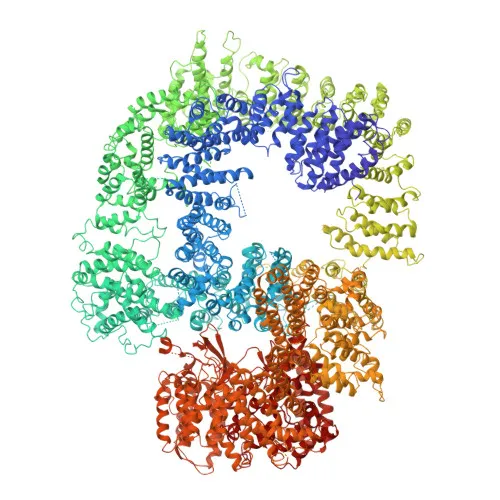
- DNA-PKcs (DNA-dependent protein kinase catalytic subunit), also referred to as DNPK1, p460, HYRC, or XRCC7, is encoded by the PRKDC gene (Gene ID: 5591) and serves as the catalytic subunit of the DNA-PK complex.
- As a serine/threonine-protein kinase, it acts as a molecular sensor for DNA damage and is essential for DNA non-homologous end joining (NHEJ), the primary pathway for repairing double-strand breaks (DSBs) and V(D)J recombination. DNA binding is required for its catalytic activity, and it is recruited by XRCC5/Ku80 and XRCC6/Ku70 to DNA ends, where it protects, aligns, and sequesters the broken ends to prevent degradation (PubMed:11955432, PubMed:12649176, PubMed:14734805). Related references: PMID:11955432 PMID:12649176 PMID:14734805
- DNA-PKcs phosphorylates numerous substrates on the consensus motif [ST]-Q, including histone H2AX at 'Ser-139' to regulate the DNA damage response (PubMed:14627815, PubMed:16046194), p53/TP53, XRCC4, XRCC5, XRCC6, and AKT1 at 'Ser-473' to promote cell survival signaling (PubMed:10026262, PubMed:10467406, PubMed:11889123, PubMed:15262962). Related references: PMID:14627815 PMID:16046194 PMID:10026262 PMID:10467406 PMID:11889123 PMID:15262962
- Beyond DSB repair, DNA-PKcs contributes to telomere maintenance and prevents chromosomal end fusion (By similarity).
- It also modulates transcription (PubMed:11955432, PubMed:12649176, PubMed:14734805) and promotes early ribosome assembly by processing precursor rRNA into mature 18S rRNA in the small-subunit processome, interacting with U3 snoRNA (PubMed:32103174). Related references: PMID:11955432 PMID:12649176 PMID:14734805 PMID:32103174
- In innate immunity, DNA-PKcs regulates the cGAS-STING pathway by phosphorylating CGAS and PARP1, and is part of the HDP-RNP complex that activates IRF3 (PubMed:28712728, PubMed:33273464, PubMed:35460603). Related references: PMID:28712728 PMID:33273464 PMID:35460603
- The protein is predominantly localized to the nucleus and nucleolus, with some presence in the cytosol, and is subject to multiple post-translational modifications including phosphorylation, acetylation, and ubiquitination.
Experimental Guidance and Technical Tips
- The immunogen encompasses amino acids 3993–4128 of human DNA-PKcs, a C-terminal region; consider this epitope location when pairing with other antibodies or designing detection strategies.
- For Western blotting, the target has a predicted molecular weight of 469 kDa; ensure adequate gel percentage (e.g., 6% polyacrylamide) and prolonged transfer times to facilitate efficient blotting.
- Although validated for multiple applications, optimal dilutions should be empirically determined in the end user's experimental system, starting with the concentration ranges recommended in standard protocols.
- Cross-reactivity is reported for human samples; for non-human tissues or cell lines, perform cross-species sequence alignment before use and validate with appropriate controls.
- As DNA-PKcs is a nuclear protein, adjust fixation and permeabilization steps for immunofluorescence or immunohistochemistry to ensure proper antigen accessibility.
CamelBio: Your One-Stop Sourcing Bridge
CamelBio offers diagnostic manufacturers and research institutes a comprehensive, one-stop solution for IVD raw-material procurement, covering every stage from initial development to clinical application. For DNA damage and repair targets like DNA-PKcs, we can supply validated antibody pairs, optimized monoclonal and polyclonal antibodies, bulk ancillary reagents, and rare target sourcing to accelerate your assay development. Backed by robust supply chain capabilities, our goal is to streamline your sourcing process for critical raw materials.
Product Datasheet
Anti-DNA-PKcs Rabbit Monoclonal Antibody for WB, IP, IF/ICC, IHC-P, ELISA - P78527
REQUEST A QUOTE
Our professional team will reply to you within one business day. Please feel free to contact us!