Polyclonal Antibodies
Anti-DMAP1 Polyclonal Antibody for WB, ELISA - Q9NPF5
Item Number : CM0019433
Price varies based on specs and customizations
- Application
- WB, ELISA
- Cross Reactivity
- Human, Mouse, Rat
- Protein Weight
- 53kDa

Shipping:
Contact us to get shipping details Enjoy On-time Dispatch Guarantee.
Why Choose Us
Easy ordering process, quality products, and dedicated support for your business success.
Core Product Specifications and Parameters
| Parameter | Value |
|---|---|
| Product Name | DMAP1 Rabbit pAb |
| Remarks/Alias | EAF2; SWC4; MEAF2; DNMAP1; DNMTAP1; DMAP1 |
| Species | Human |
| Gene ID (Human) | 55929 |
| Gene ID | 55929 |
| Immunogen | Recombinant fusion protein containing a sequence corresponding to amino acids 1-305 of human DMAP1 (NP_061973.1) |
| Source | Rabbit |
| Category | Polyclonal Antibodies |
| Application | WB, ELISA |
| Cross Reactivity | Human, Mouse, Rat |
| SWISS | Q9NPF5 |
| Protein Weight | 53kDa |
| Shipping | Ice bag |
Biological Background: DMAP1 Function and Localization
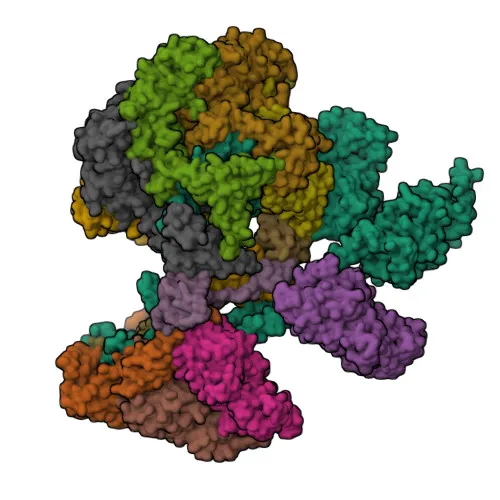
- DNA methyltransferase 1-associated protein 1 (DMAP1) is a dual-function transcription regulator that acts as both a repressor and activator of gene expression.
- DMAP1 interacts with HDAC2, providing a mechanism for histone deacetylation in heterochromatin following DNA replication at late-firing origins, and can also repress transcription independently of histone deacetylase activity.
- As a core component of the NuA4 histone acetyltransferase (HAT) complex, DMAP1 contributes to transcriptional activation by acetylating nucleosomal histones H4 and H2A, thereby modulating chromatin structure and promoting positive transcriptional regulation.
- The NuA4 complex is implicated in diverse cellular processes including oncogene- and proto-oncogene-mediated growth induction, tumor suppressor-mediated growth arrest, replicative senescence, apoptosis, and DNA repair.
- DMAP1 participates in the nuclear localization of URI1 and enhances its transcriptional corepressor activity.
- Subcellular fractionation studies localize DMAP1 to both the nucleus and the cytoplasm.
- The protein is subject to post-translational modifications, including phosphorylation and ubiquitination (isopeptide bond), and contains a coiled-coil domain.
Experimental Guidance and Technical Tips
- The immunogen corresponds to the N-terminal region (amino acids 1–305) of human DMAP1, which may recognize full-length DMAP1 and potentially cross-react with conserved regions in mouse and rat.
- For Western blotting, a band at approximately 53 kDa is expected; consider optimizing blocking and antibody dilution using lysates from human, mouse, or rat cell lines expressing DMAP1.
- ELISA-based detection may require titration of the antibody to establish optimal signal-to-noise ratios; validate performance in the relevant sample matrix.
- If nonspecific bands appear, consider using recombinant DMAP1 or a positive control lysate to verify specificity.
CamelBio: Your One-Stop Sourcing Bridge
CamelBio connects diagnostic manufacturers and research laboratories with high-quality IVD raw materials, offering a streamlined supply chain for antibodies, antigens, and ancillary reagents. This anti-DMAP1 polyclonal antibody supports chromatin biology and transcription research applications. Our team can assist in sourcing validated antibody pairs, bulk monoclonal/polyclonal antibodies, and rare-target reagents to accelerate your diagnostic development.
REQUEST A QUOTE
Our professional team will reply to you within one business day. Please feel free to contact us!