Polyclonal Antibodies
Anti-DLL1 Rabbit Polyclonal Antibody for WB, IHC-P, ELISA - O00548
Item Number : CM0017263
Price varies based on specs and customizations
- Application
- WB, IHC-P, ELISA
- Cross Reactivity
- Human, Mouse, Rat
- Protein Weight
- 78kDa

Shipping:
Contact us to get shipping details Enjoy On-time Dispatch Guarantee.
Why Choose Us
Easy ordering process, quality products, and dedicated support for your business success.
Core Product Specifications and Parameters
| Parameter | Value |
|---|---|
| Product Name | DLL1 Rabbit pAb |
| Remarks/Alias | DL1; Delta; DELTA1; NEDBAS; DLL1 |
| Species | Human |
| GeneID (Human) | 28514 |
| GeneID | 28514 |
| Immunogen | Recombinant fusion protein containing a sequence corresponding to amino acids 130-220 of human DLL1 (NP_005609.3). |
| Source | Rabbit |
| Category | Polyclonal Antibodies |
| Application | WB, IHC-P, ELISA |
| Cross Reactivity | Human, Mouse, Rat |
| SWISS | O00548 |
| Protein Weight | 78kDa |
| Shipping | Ice bag |
Biological Background: DLL1 Function and Localization
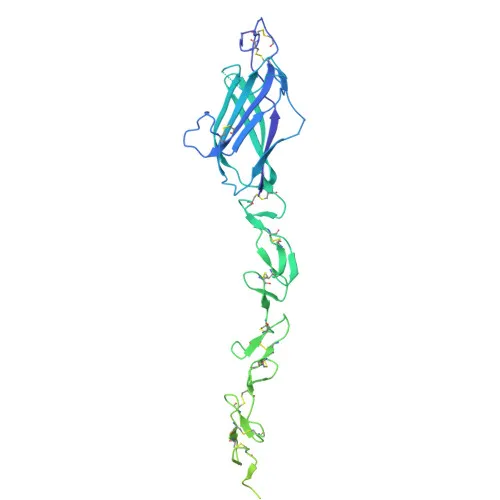
- DLL1 (Delta-like protein 1), also known as Drosophila Delta homolog 1, Delta1, or H-Delta-1, is a transmembrane protein that serves as a ligand for Notch receptors (NOTCH1, NOTCH2, NOTCH3).
- Core function: Upon binding to Notch receptors in trans, DLL1 triggers Notch signaling through receptor cleavage and nuclear translocation of the Notch intracellular domain (NICD), regulating target gene expression. This process requires clathrin-mediated endocytosis and ligand ubiquitination. Related references: PMID:11006133
- DLL1-mediated Notch signaling is essential for embryonic development and adult stem cell maintenance in various tissues, controlling cell lineage specification, differentiation, proliferation, and morphogenesis. Related references: PMID:11581320
- In the brain, DLL1 regulates neuronal differentiation of neural precursor cells and maintains quiescence of neural stem cells; it also functions as a fate determinant during asymmetric cell division.
- Subcellular localization: Apical cell membrane, cell junction, adherens junction, and membrane raft, consistent with its role in intercellular communication.
- Tissue expression: Predominantly expressed in heart and pancreas, with lower levels in brain and muscle; minimal expression in placenta, lung, liver, and kidney.
- Keywords: Developmental protein, Differentiation, Notch signaling pathway, Glycoprotein, Phosphoprotein, Ubl conjugation.
Experimental Guidance and Technical Tips
- The immunogen corresponds to amino acids 130–220 of human DLL1, a region within the extracellular domain; this may be suitable for detecting full-length DLL1 and possibly some processed forms.
- For Western blotting (WB), the predicted molecular weight is 78 kDa; consider using appropriate gel percentages and verify with positive controls (e.g., heart or pancreas lysates where DLL1 is highly expressed).
- For immunohistochemistry (IHC-P), optimize antigen retrieval and antibody dilution based on tissue type and fixation; endothelial and stem cell niches are promising targets.
- Cross-reactivity with mouse and rat is reported; validate species-specific reactivity in your experimental system.
- ELISA applications can be set up with recombinant DLL1 protein as a standard.
CamelBio: Your One-Stop Sourcing Bridge
CamelBio is your integrated partner for IVD raw material sourcing, simplifying the journey from concept to clinic. Whether you need validated antibody pairs, optimized polyclonal or monoclonal antibodies, or bulk ancillary reagents for Notch signaling and developmental biology research, we provide reliable supply solutions tailored to diagnostic manufacturers and laboratories.
REQUEST A QUOTE
Our professional team will reply to you within one business day. Please feel free to contact us!