Polyclonal Antibodies
Anti-DKC1 Polyclonal Antibody for IHC-P, IF/ICC, ELISA - O60832
Item Number : CM0022719
Price varies based on specs and customizations
- Application
- IHC-P, IF/ICC, ELISA
- Cross Reactivity
- Human, Mouse, Rat
- Protein Weight
- 58kDa

Shipping:
Contact us to get shipping details Enjoy On-time Dispatch Guarantee.
Why Choose Us
Easy ordering process, quality products, and dedicated support for your business success.
Core Product Specifications and Parameters
| Parameter | Specification |
|---|---|
| Product Name | DKC1 Rabbit pAb |
| Remarks/Alias | DKC; CBF5; DKCX; NAP57; NOLA4; XAP101; DKC1 |
| Species | Human |
| GeneID (human) | 1736 |
| GeneID | 1736 |
| Immunogen | Recombinant protein |
| Source | Rabbit |
| Category | Polyclonal Antibodies |
| Application | IHC-P, IF/ICC, ELISA |
| Cross Reactivity | Human, Mouse, Rat |
| SWISS | O60832 |
| Protein Weight | 58kDa |
| Shipping | Ice bag |
Biological Background: DKC1 Function and Localization
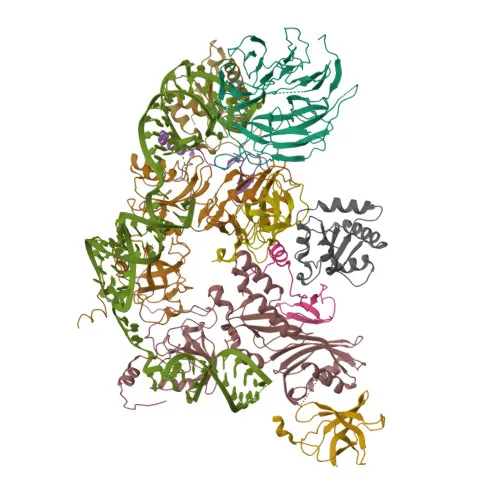
- DKC1 encodes dyskerin, the catalytic subunit of the H/ACA small nucleolar ribonucleoprotein (snoRNP) complex, responsible for pseudouridylation of rRNA. It isomerizes uridine such that the ribose attaches to C5 instead of N1, introducing pseudouridine residues that stabilize rRNA conformation. Related references: PMID:25219674 PMID:32554502
- Essential for ribosome biogenesis and, through correct processing and intranuclear trafficking of TERC (the RNA component of telomerase), is required for telomere maintenance. Related references: PMID:19179534
- Also promotes cell-to-cell and cell-to-substratum adhesion, increases cell proliferation rate, and induces cytokeratin hyper-expression.
- Localizes predominantly to the nucleolus and Cajal bodies within the nucleus, with some presence in the cytoplasm.
- Ubiquitously expressed across human tissues, reflecting its housekeeping role in rRNA modification.
- Subject to various post-translational modifications, including acetylation, phosphorylation, and ubiquitin-like conjugation, which may regulate its activity or stability.
- Genetic variants in DKC1 are associated with X-linked dyskeratosis congenita, characterized by bone marrow failure, cancer predisposition, and features like nail dystrophy and oral leukoplakia; mutations may also cause Hoyeraal-Hreidarsson syndrome.
Experimental Guidance and Technical Tips
- The immunogen spans amino acids 245–514 of human DKC1 (NP_001354.1), covering the central to C-terminal region. Consider this sequence when designing complementary detection reagents or epitope mapping.
- For IHC-P, since DKC1 is ubiquitously expressed but enriched in nucleoli, optimize antigen retrieval and validate staining in positive control tissues such as testis or proliferating cell lines. Include negative controls (e.g., DKC1-depleted samples) to confirm specificity.
- IF/ICC applications should reveal nucleolar and Cajal body localization. Use appropriate fixation/permeabilization methods and co-stain with a nucleolar marker (e.g., fibrillarin) to verify the expected pattern.
- ELISA may require careful optimization of coating conditions and detection due to the relatively large protein size. Cross-reactivity with mouse and rat orthologs should be verified experimentally if using these species’ samples.
CamelBio: Your One-Stop Sourcing Bridge
CamelBio specializes in providing diagnostic manufacturers, laboratories, and research institutes with comprehensive access to IVD raw materials and technical support—from early-stage development to clinical application. This anti-DKC1 polyclonal antibody supports investigations into ribosome biogenesis, telomere biology, and related diseases. Beyond single antibodies, we offer validated antibody pairs, optimized monoclonal/polyclonal reagents, bulk ancillary biochemical, and sourcing of rare targets to streamline your assay development and manufacturing workflows.
REQUEST A QUOTE
Our professional team will reply to you within one business day. Please feel free to contact us!