Polyclonal Antibodies
Anti-DIRAS3 Rabbit Polyclonal Antibody for WB, ELISA - O95661
Item Number : CM0031042
Price varies based on specs and customizations
- Application
- WB, ELISA
- Cross Reactivity
- Mouse, Rat
- Protein Weight
- 26kDa

Shipping:
Contact us to get shipping details Enjoy On-time Dispatch Guarantee.
Why Choose Us
Easy ordering process, quality products, and dedicated support for your business success.
Easy Process
Quality Assured
Dedicated Support
Core Product Specifications and Parameters
| Parameter | Value |
|---|---|
| Product Name | DIRAS3 Rabbit pAb |
| Remarks/Alias | ARHI; NOEY2; DIRAS3 |
| Species | Human |
| GeneID (Human) | 9077 |
| Immunogen | Recombinant fusion protein containing a sequence corresponding to amino acids 1-229 of human DIRAS3 (NP_004666.1). |
| Source | Rabbit |
| Category | Polyclonal Antibodies |
| Application | WB, ELISA |
| Cross Reactivity | Mouse, Rat |
| SWISS | O95661 |
| Protein Weight | 26kDa |
| Shipping | Ice bag |
Biological Background: DIRAS3 Function and Localization
- DIRAS3 (also named ARHI, NOEY2, and Rho-related GTP-binding protein RhoI) is a member of the Ras superfamily of small GTPases. It is a GTP-binding protein Di-Ras3, classified within the distinct subgroup of the Ras family.
- The protein possesses key structural and functional motifs characteristic of Ras proteins, including GTP-binding and nucleotide-binding domains, and undergoes post-translational modifications such as prenylation and methylation, essential for membrane association.
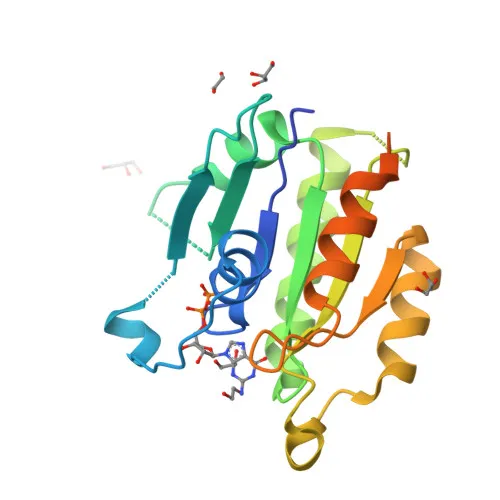
- 3D-structure information is available (UniProt keyword), indicating detailed structural characterization.
- DIRAS3 localizes to the cell membrane, consistent with its lipid modification and role in signal transduction.
- Tissue specificity reveals high expression in normal ovarian and breast epithelial cells, but notably absent in ovarian and breast cancers, suggesting a potential role as a tumor suppressor.
- This differential expression pattern makes DIRAS3 a candidate biomarker and research target in oncology, particularly for hormone-responsive tissues.
- Additional keywords indicate it is a lipoprotein and has been identified in proteomics studies, reinforcing its significance in cell signaling and cancer biology.
- The protein's molecular weight from UniProt is approximately 25.9 kDa (25861 Da), while the detected band for this antibody is around 26 kDa.
Experimental Guidance and Technical Tips
- For Western blotting, the predicted molecular weight is ~26 kDa; use appropriate molecular weight markers and loading controls.
- Cross-reactivity with mouse and rat is indicated; validate in the relevant sample system to confirm species-specific reactivity.
- In ELISA applications, consider using the immunogen or recombinant DIRAS3 protein as a positive control for assay optimization.
- DIRAS3 expression may be low or absent in many cancer cell lines; use normal tissue lysates or overexpression models to confirm detection.
- Pre-adsorption against the immunogen can be considered to further enhance specificity if non-specific bands appear.
CamelBio: Your One-Stop Sourcing Bridge
- As a dedicated IVD raw-material supplier, CamelBio offers this DIRAS3 polyclonal antibody to support oncological research and diagnostic development. Our portfolio includes validated antibody pairs, optimized monoclonals, and ancillary reagents for streamlined procurement. For specialized targets like DIRAS3, we leverage our sourcing network to provide rare and high-quality raw materials.
REQUEST A QUOTE
Our professional team will reply to you within one business day. Please feel free to contact us!