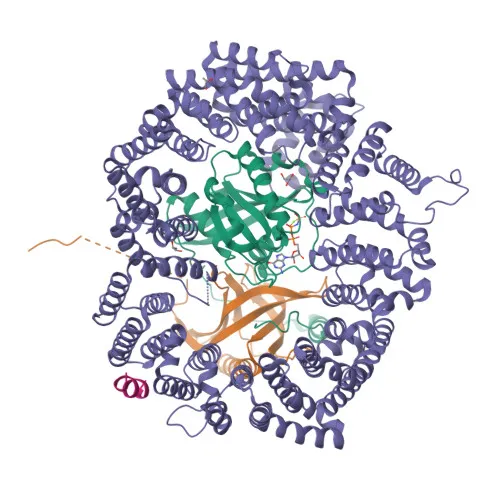
Polyclonal Antibodies
Anti-DIAPH3 Polyclonal Antibody for WB, ELISA - Q9NSV4
Item Number : CM0016574
Price varies based on specs and customizations
- Application
- WB, ELISA
- Cross Reactivity
- Human
- Protein Weight
- 137kDa

Shipping:
Contact us to get shipping details Enjoy On-time Dispatch Guarantee.
Why Choose Us
Easy ordering process, quality products, and dedicated support for your business success.
Core Product Specifications and Parameters
| Parameter | Value |
|---|---|
| Product Name | DIAPH3 Rabbit pAb |
| Remarks/Alias | AN; DIA2; DRF3; AUNA1; NSDAN; diap3; mDia2; DIAPH3 |
| Species | Human |
| GeneID (human) | 81624 |
| GeneID | 81624 |
| Immunogen | Recombinant protein |
| Source | Rabbit |
| Category | Polyclonal Antibodies |
| Application | WB, ELISA |
| Cross Reactivity | Human |
| SWISS | Q9NSV4 |
| Protein Weight | 137kDa |
| Shipping | Ice bag |
Biological Background: DIAPH3 Function and Localization
- DIAPH3, also known as diaphanous-related formin-3 (DRF3), mDia2, or DIA2, is a member of the formin family of actin nucleation and elongation factors.
- It is essential for the assembly of F-actin structures such as actin cables and stress fibers, playing a critical role in cytokinesis and transcriptional activation of serum response factor (SRF).
- DIAPH3 functions downstream of Rho GTPase signaling, binding to the GTP-bound form of Rho and recruiting profilin to the membrane to promote actin polymerization. This couples Rho and Src tyrosine kinase in signaling.
- In the nucleus, DIAPH3 promotes actin polymerization to drive serum-dependent SRF-MRTFA transcriptional activity, linking cytoskeletal dynamics to gene expression.
- DIAPH3 localizes to both the cytoplasm and the nucleus, consistent with its dual roles in actin organization and transcriptional regulation.
- It is subject to post-translational modifications including phosphorylation and ubiquitin-like conjugation, and alternative splicing generates multiple isoforms.
- Mutations in DIAPH3 are associated with autosomal dominant nonsyndromic hearing loss (AUNA1) and neuropathy, reflecting its importance in auditory and nervous system function.
Experimental Guidance and Technical Tips
- For Western blot, consider using a whole cell lysate from a human cell line (e.g., HeLa) and validate with molecular weight markers; the predicted molecular weight is around 137 kDa, but bands may shift due to phosphorylation.
- For ELISA, the antibody may be suitable for detecting recombinant DIAPH3 protein; validate in the relevant sample system.
CamelBio: Your One-Stop Sourcing Bridge
CamelBio serves as a one-stop sourcing partner for IVD raw materials, offering validated antibody pairs, optimized monoclonal and polyclonal antibodies, bulk ancillary reagents, and custom rare-target sourcing. This anti-DIAPH3 polyclonal antibody supports research in actin dynamics, cytoskeletal organization, and hearing loss studies.
REQUEST A QUOTE
Our professional team will reply to you within one business day. Please feel free to contact us!