Polyclonal Antibodies
Anti-DHTKD1 Rabbit Polyclonal Antibody for WB and ELISA - Q96HY7
Item Number : CM0025527
Price varies based on specs and customizations
- Application
- WB, ELISA
- Cross Reactivity
- Human, Mouse, Rat
- Protein Weight
- 103kDa

Shipping:
Contact us to get shipping details Enjoy On-time Dispatch Guarantee.
Why Choose Us
Easy ordering process, quality products, and dedicated support for your business success.
Core Product Specifications and Parameters
| Parameter | Value |
|---|---|
| Product Name | DHTKD1 Rabbit pAb |
| Remarks/Alias | E1a; AAKAD; CMT2Q; AMOXAD; OADC-E1; OADH-E1; DHTKD1 |
| Species | Human |
| GeneID (Human) | 55526 |
| GeneID | 55526 |
| Immunogen | Recombinant fusion protein containing a sequence corresponding to amino acids 1-280 of human DHTKD1 (NP_061176.3) |
| Source | Rabbit |
| Category | Polyclonal Antibodies |
| Application | WB, ELISA |
| Cross Reactivity | Human, Mouse, Rat |
| SWISS | Q96HY7 |
| Protein Weight | 103kDa |
| Shipping | Ice bag |
Biological Background: DHTKD1 Function and Localization
-
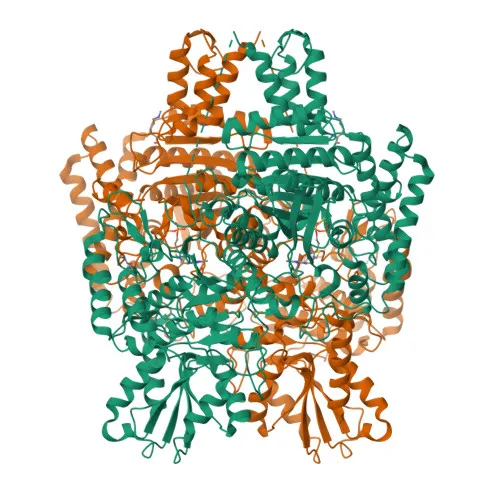
DHTKD1 encodes the E1a subunit of the 2-oxoadipate dehydrogenase complex (OADHC), a mitochondrial enzyme that catalyzes the rate-limiting decarboxylation of 2-oxoadipate (alpha-ketoadipate) to glutaryl-CoA and CO2. Related references: PMID:29191460, PMID:29752936, PMID:32303640, PMID:32695416
-
This reaction is essential for the final step of L-lysine, L-hydroxylysine, and L-tryptophan catabolism, linking amino acid degradation to mitochondrial energy metabolism.
-
In vitro, DHTKD1 can also decarboxylate 2-oxoglutarate, albeit at a significantly lower efficiency than its preferred substrate 2-oxoadipate, demonstrating substrate specificity within the 2-oxoacid dehydrogenase family. Related references: PMID:29191460, PMID:29752936, PMID:32633484
-
The protein resides in the mitochondrial matrix and requires thiamine pyrophosphate (ThDP) as a cofactor for its catalytic activity.
-
Mutations in DHTKD1 are associated with Charcot-Marie-Tooth disease type 2Q (CMT2Q) and alpha-aminoadipic and alpha-ketoadipic aciduria (AMOXAD), underscoring its clinical importance in neurodegeneration and metabolic disorders.
Experimental Guidance and Technical Tips
- For western blotting, the predicted molecular weight is 103 kDa; consider using a 7.5-10% SDS-PAGE gel for optimal resolution of this relatively large protein.
- Since the antibody is polyclonal and raised against a recombinant fragment (aa 1-280), it may recognize multiple epitopes; validate specificity using over-expression or knockdown/knockout cell lysates.
- The antibody cross-reacts with human, mouse, and rat, as indicated by supplier data; consider validating in the relevant species using appropriate tissue or cell lysates.
- For ELISA applications, titration of the antibody and optimization of coating conditions are recommended to achieve optimal signal-to-noise ratios.
- Consider using mitochondrial enrichment protocols when analyzing low-abundance samples, as DHTKD1 is a mitochondrial protein.
CamelBio: Your One-Stop Sourcing Bridge
CamelBio provides diagnostic manufacturers, labs, and research institutes with one-stop access to IVD raw materials, technical services, and consulting—covering every stage from concept to clinic. For mitochondrial metabolism and neurodegeneration research, this anti-DHTKD1 polyclonal antibody is backed by CamelBio’s comprehensive supply chain, including validated antibody pairs, bulk ancillary reagents, and rare target raw-material sourcing. Let CamelBio be your trusted partner in accelerating the development of next-generation diagnostic assays.
REQUEST A QUOTE
Our professional team will reply to you within one business day. Please feel free to contact us!