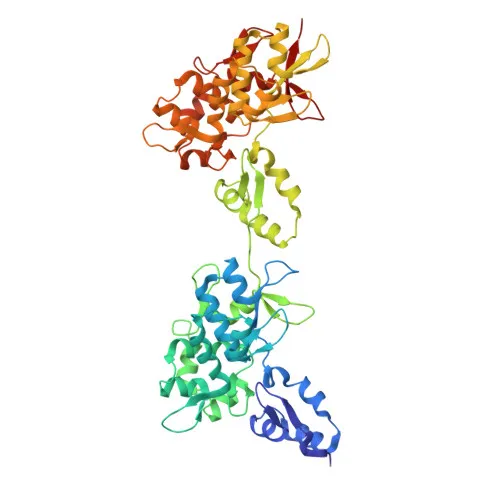
Polyclonal Antibodies
Anti-Desmoplakin Polyclonal Antibody for WB, IHC-P, ELISA - P15924
Item Number : CM0015647
Price varies based on specs and customizations
- Application
- WB, IHC-P, ELISA
- Cross Reactivity
- Human, Mouse, Rat
- Protein Weight
- 332kDa

Shipping:
Contact us to get shipping details Enjoy On-time Dispatch Guarantee.
Why Choose Us
Easy ordering process, quality products, and dedicated support for your business success.
Core Product Specifications and Parameters
| Parameter | Value |
|---|---|
| Product Name | Desmoplakin Rabbit pAb |
| Remarks/Alias | DP; DCWHKTA; Desmoplakin |
| Species | Human |
| GeneID (Human) | 1832 |
| Immunogen | Synthetic peptide corresponding to a sequence within amino acids 2609-2830 of human Desmoplakin (NP_004406.2) |
| Source | Rabbit |
| Category | Polyclonal Antibodies |
| Application | WB, IHC-P, ELISA |
| Cross Reactivity | Human, Mouse, Rat |
| SWISS | P15924 |
| Protein Weight | 332kDa |
| Shipping | Ice bag |
Biological Background: Desmoplakin Function and Localization
- Desmoplakin (alt. names DP, DCWHKTA) is a major component of desmosome cell-cell junctions, obligate in all desmosomes, and positively regulates cellular adhesion (PubMed:25733715). Related references: PMID:25733715
- It anchors intermediate filaments to the desmosomal plaque and organizes the keratin network, essential for epidermal and dermal epithelial barrier integrity (PubMed:26604139). Related references: PMID:26604139
- Desmoplakin promotes gap junction intracellular communication by facilitating microtubule-mediated trafficking of GJA1/CX43 to cell membranes via interaction with MAPRE1/EB1 (PubMed:25225338). Related references: PMID:25225338
- The protein negatively regulates cell cycle progression and differentiation in keratinocytes, potentially by inhibiting MAPK and PI3K pathways (PubMed:17475244). Related references: PMID:17475244
- Desmoplakin interacts with the COP9 signalosome, promoting keratinocyte differentiation through EGFR deneddylation and reduced membrane localization (PubMed:28891468). Related references: PMID:28891468
- It is required for maintaining protein abundance of multiple desmosome components including DSG1, DSG2, DSC2, DSC3, and plakophilins (PubMed:17475244, PubMed:26073755). Related references: PMID:17475244 PMID:26073755
- The C-terminal domain binds telomere DNA and interacts with TRF2 to prevent telomere damage and maintain telomere length (PubMed:31595153). Related references: PMID:31595153
- Desmoplakin is expressed in tissues of stratified origin, including skin keratinocytes, oral mucosa, heart, and arrector pili muscle, and localizes to desmosomes, cell membrane, cytoplasm, and nucleus.
Experimental Guidance and Technical Tips
- The immunogen corresponds to the C-terminal region (aa 2609-2830) of human Desmoplakin, which contains a plakin repeat domain involved in intermediate filament binding and telomeric DNA interaction. Antibodies targeting this region may recognize full-length Desmoplakin and any C-terminal fragments.
- For Western blot, anticipate a band near the predicted molecular weight of ~332 kDa. Given the large size, consider using 6-8% SDS-PAGE gels and wet transfer with extended transfer times (e.g., overnight at 30 V). Validate the band specificity using appropriate controls.
- In immunohistochemistry (IHC-P), antigen retrieval (e.g., citrate buffer, pH 6.0) and tissue permeabilization are recommended. Test on tissues with abundant desmosomes such as skin or heart, and confirm localization to cell-cell junctions.
- For ELISA, this antibody can be used to detect recombinant or purified Desmoplakin protein. Optimize coating and detection conditions based on the antigen format.
- Reported cross-reactivity with human, mouse, and rat species should be confirmed experimentally in your specific assay system, as sequence homology may affect binding.
- Given Desmoplakin's dynamic subcellular localization (desmosomes, cytoplasm, nucleus), consider subcellular fractionation or co-staining with junctional markers to verify antibody specificity.
CamelBio: Your One-Stop Sourcing Bridge
CamelBio serves as a comprehensive IVD raw-material partner, connecting diagnostic developers and research laboratories with high-quality antibodies, proteins, and custom services from concept to clinic. For desmoplakin-focused investigations into desmosome biology, cell adhesion, and related disorders, we provide reliable access to validated polyclonal and monoclonal antibodies, including bulk quantities and conjugation options. Reach out to our team to explore tailored sourcing solutions for rare targets or full-panel reagent assemblies.
REQUEST A QUOTE
Our professional team will reply to you within one business day. Please feel free to contact us!