Polyclonal Antibodies
Anti-DDX6 Polyclonal Antibody for WB, IHC-P, IF/ICC, ELISA - P26196
Item Number : CM0024127
Price varies based on specs and customizations
- Application
- WB, IHC-P, IF/ICC, ELISA
- Cross Reactivity
- Human, Mouse, Rat
- Protein Weight
- 54kDa

Shipping:
Contact us to get shipping details Enjoy On-time Dispatch Guarantee.
Why Choose Us
Easy ordering process, quality products, and dedicated support for your business success.
Core Product Specifications and Parameters
| Parameter | Value |
|---|---|
| Product Name | DDX6 Rabbit pAb |
| Remarks/Alias | P54; RCK; HLR2; IDDILF; Rck/p54; DDX6 |
| Species | Human |
| Gene ID (Human) | 1656 |
| Gene ID | 1656 |
| Immunogen | Synthetic peptide corresponding to amino acids 384-483aa of human DDX6 (NP_001244120.1) |
| Source | Rabbit |
| Category | Polyclonal Antibodies |
| Application | WB, IHC-P, IF/ICC, ELISA |
| Cross Reactivity | Human, Mouse, Rat |
| SWISS | P26196 |
| Protein Weight | 54kDa |
| Shipping | Ice bag |
Biological Background: DDX6 Function and Localization
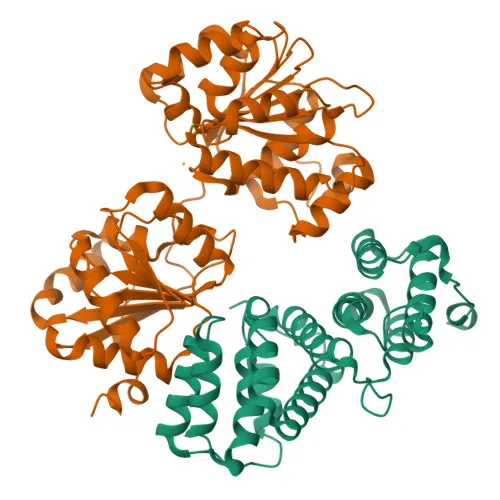
- DDX6 (DEAD-box helicase 6) is a probable ATP-dependent RNA helicase, also known as DEAD box protein 6, oncogene RCK, or p54, involved in RNA metabolism.
- Essential for the formation of P-bodies, cytosolic membrane-less ribonucleoprotein granules that coordinate storage of translationally inactive mRNAs, preventing their degradation.
Related references: PMID:25995375, PMID:27342281, PMID:31422817 - Plays a role in mRNA decapping during the process of mRNA degradation.
Related references: PMID:16364915 - Blocks autophagy in nutrient-rich conditions by repressing the expression of ATG-related genes through degradation of their transcripts.
Related references: PMID:26098573 - Localizes to the cytoplasm, P-bodies, nucleus, and cytoplasmic ribonucleoprotein granules, reflecting its dynamic role in mRNA storage and metabolism.
- Abundantly expressed in most tissues.
- Associated with multiple keywords including ATP-binding, RNA-binding, helicase, phosphoprotein, proto-oncogene, chromosomal rearrangement, and disease variants linked to intellectual disability.
Experimental Guidance and Technical Tips
- The immunogen is a synthetic peptide spanning amino acids 384-483 of human DDX6, a region conserved in mouse and rat, supporting the observed cross-reactivity.
- For Western blot (WB), a band of approximately 54 kDa is expected; consider using positive control lysates from cell lines with high DDX6 expression.
- In immunohistochemistry (IHC-P), antigen retrieval methods (e.g., citrate buffer, heat-induced) may be necessary; optimization is recommended.
- For immunocytochemistry/immunofluorescence (IF/ICC), permeabilization is required to visualize cytoplasmic and P-body localization.
- ELISA application can be used for titer determination and quantification, but optimal coating concentration should be determined experimentally.
- When investigating P-bodies or stress granules, co-staining with established markers (e.g., DCP1A) could validate target specificity.
CamelBio: Your One-Stop Sourcing Bridge
CamelBio serves as a comprehensive sourcing partner for IVD raw materials, offering validated antibodies, bulk ancillary reagents, and custom solutions to support diagnostic development and research. This anti-DDX6 polyclonal antibody caters to studies on mRNA metabolism, P-body dynamics, and autophagy-related pathways. Explore our portfolio for one-stop access to high-quality reagents and technical consulting to accelerate your projects.
REQUEST A QUOTE
Our professional team will reply to you within one business day. Please feel free to contact us!
Related Articles
ROX in qPCR: The Quiet Reference That Makes Diagnostic Signals Trustworthy
Learn how ROX normalizes qPCR fluorescence, stabilizes Ct calls, and shapes the trade-off between instrument compatibility and multiplexing.
ROX in Real-Time PCR: The Optical Trade-Off Behind Precision and Multiplexing
Understand how ROX normalization corrects qPCR signal variation, how optics consume channels, and how to choose the right master mix.
From Fluorescence to Diagnostic Truth: Choosing Passive Reference Dyes for qPCR Master Mixes
Learn how passive reference dyes stabilize qPCR signals, improve diagnostic reproducibility, and guide ROX formulation across instrument platforms.
Why Dioxin Immunoassays Fail in Complex Matrices—and How to Engineer Them for Reliable Screening
Explore how matrix interference, antibody cross-reactivity, and sample preparation limit dioxin immunoassays—and how better materials and workflows improve accuracy.