Polyclonal Antibodies
Anti-DDB2 Polyclonal Antibody for IF/ICC, ELISA - Q92466
Item Number : CM0019031
Price varies based on specs and customizations
- Application
- IF/ICC, ELISA
- Cross Reactivity
- Human
- Protein Weight
- 48kDa

Shipping:
Contact us to get shipping details Enjoy On-time Dispatch Guarantee.
Why Choose Us
Easy ordering process, quality products, and dedicated support for your business success.
Core Product Specifications and Parameters
| Parameter | Value |
|---|---|
| Product Name | DDB2 Rabbit pAb |
| Remarks/Alias | XPE; DDBB; UV-DDB2; DDB2 |
| Species | Human |
| GeneID | 1643 |
| Immunogen | Recombinant fusion protein corresponding to amino acids 1-315 of human DDB2 (NP_000098.1) |
| Source | Rabbit |
| Category | Polyclonal Antibodies |
| Application | IF/ICC, ELISA |
| Cross Reactivity | Human |
| SWISS | Q92466 |
| Protein Weight | 48kDa |
| Shipping | Ice bag |
Biological Background: DDB2 Function and Localization
-
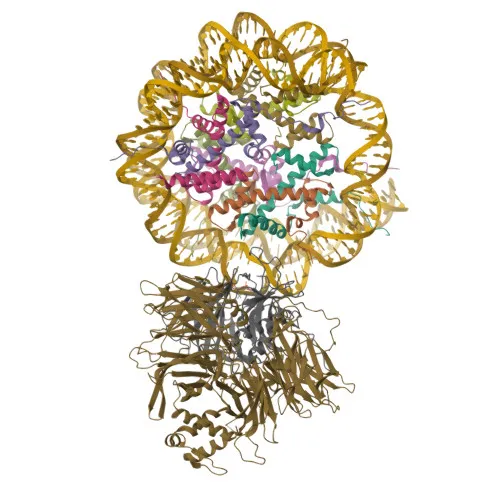
Core component of the UV-DDB complex that recognizes UV-induced DNA damage and initiates nucleotide excision repair (NER) by binding to cyclobutane pyrimidine dimers (CPD) and 6-4 photoproducts. Related references: PMID:10882109, PMID:11278856, PMID:11705987
-
Functions as substrate recognition module for the DCX (DDB2-CUL4-X-box) E3 ubiquitin-protein ligase complex DDB2-CUL4-ROC1, which ubiquitinates histones H2A, H3, H4 and XPC at damage sites to facilitate chromatin remodeling and repair. Related references: PMID:12732143, PMID:15882621, PMID:16473935, PMID:16678110
-
Targets KAT7/HBO1 for ubiquitination and degradation following ATR-mediated phosphorylation upon DNA damage. Related references: PMID:26572825
-
Localizes to the nucleus and associates with chromosomes, consistent with its DNA repair function.
-
Ubiquitously expressed, with highest levels in corneal endothelium and lowest in brain; isoform D1 is highly expressed in brain and heart.
-
Belongs to the WD repeat protein family and undergoes post-translational modifications including phosphorylation, acetylation, and ubiquitination.
-
Mutations in DDB2 cause Xeroderma pigmentosum group E, characterized by extreme UV sensitivity and predisposition to skin cancers.
Experimental Guidance and Technical Tips
- The immunogen spans amino acids 1–315 (N-terminal region), which is likely to detect full-length DDB2 and most isoforms.
- For IF/ICC, consider optimizing fixation and permeabilization conditions to ensure adequate nuclear staining; a DDB2 knockout control is recommended for specificity validation.
- In ELISA, coat the antigen under non-denaturing conditions to preserve conformational epitopes, and include competitive inhibition with the immunogen to confirm signal specificity.
- Because it is a polyclonal antibody, batch-to-batch consistency should be monitored using a characterized reference standard.
CamelBio: Your One-Stop Sourcing Bridge
CamelBio streamlines IVD raw-material procurement for diagnostic manufacturers and research institutes, offering a comprehensive portfolio that includes validated antibody pairs, optimized monoclonal/polyclonal antibodies, bulk ancillary reagents, and sourcing for rare targets. For DNA damage repair research, this anti-DDB2 antibody provides a reliable tool, and CamelBio’s expertise extends to custom development and scalable supply solutions across the full assay development pipeline. Let us connect you with the materials and support needed to advance your project efficiently.
REQUEST A QUOTE
Our professional team will reply to you within one business day. Please feel free to contact us!