Monoclonal Antibodies
Anti-DCAMKL1/DCLK1 Rabbit Monoclonal Antibody for WB, ELISA - O15075
Item Number : CM0011902
Price varies based on specs and customizations
- Application
- WB, ELISA
- Cross Reactivity
- Human, Mouse, Rat
- Protein Weight
- 82kDa

Shipping:
Contact us to get shipping details Enjoy On-time Dispatch Guarantee.
Why Choose Us
Easy ordering process, quality products, and dedicated support for your business success.
Core Product Specifications and Parameters
| Parameter | Value |
|---|---|
| Product Name | DCAMKL1/DCLK1 Rabbit mAb |
| Remarks/Alias | CL1; DCLK; CLICK1; DCDC3A; DCAMKL1; DCAMKL1/DCLK1 |
| Species | Human |
| GeneID | 9201 (Human) |
| Immunogen | Synthetic peptide corresponding to amino acids 600-700 of human DCAMKL1/DCLK1 (O15075) |
| Source | Rabbit |
| Category | Monoclonal Antibodies |
| Application | WB, ELISA |
| Cross Reactivity | Human, Mouse, Rat |
| SWISS | O15075 |
| Protein Weight | 82kDa |
| Shipping | Ice bag |
Biological Background: DCAMKL1/DCLK1 Function and Localization
- DCAMKL1/DCLK1 (Doublecortin-like kinase 1) is a serine/threonine-protein kinase belonging to the doublecortin family, encoded by the DCLK1 gene (GeneID: 9201).
- The protein contains two N-terminal doublecortin domains that mediate microtubule binding and a C-terminal kinase domain, indicating a role in both cytoskeletal dynamics and signal transduction.
- It functions as a probable kinase in a calcium-signaling pathway that controls neuronal migration during brain development; additional roles in the mature nervous system are suggested.
- Multiple isoforms are produced by alternative splicing; type A isoforms are predominantly expressed in fetal brain, while type B isoforms are abundant in both fetal and adult brain.
- In fetal tissues, DCAMKL1 is highly expressed in the brain, with detectable levels in lung and liver; in adults, it is ubiquitously expressed in the brain and also found in heart, liver, spleen, thymus, prostate, testis, ovary, small intestine, and colon.
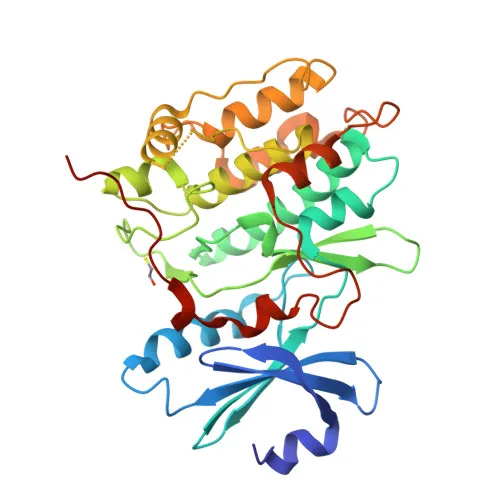
- The protein is a phosphoprotein, and its activity is regulated by post-translational modifications; a 3D structure has been determined, providing insights into its functional domains.
- Key biological processes associated with DCAMKL1 include neurogenesis, cell differentiation, and brain development, as reflected by its annotation with ATP-binding, kinase, and developmental protein keywords.
Experimental Guidance and Technical Tips
- The immunogen is a synthetic peptide spanning amino acids 600–700 of human DCAMKL1 (O15075). This region may be conserved across isoforms; however, users should verify isoform specificity if needed.
- For Western blotting, the predicted molecular weight is ~82 kDa, but alternative splicing may produce additional bands. Use appropriate whole-cell lysates from brain tissue or neuronal cell lines (e.g., human, mouse, rat) to confirm detection.
- For ELISA, consider coating plates with recombinant protein or the immunizing peptide to validate antibody reactivity; optimal dilutions and conditions should be determined experimentally.
- Since the antibody is cross-reactive with mouse and rat, it can be used in comparative neurodevelopmental studies across species; we recommend confirming reactivity in the relevant sample system.
CamelBio: Your One-Stop Sourcing Bridge
CamelBio is a dedicated sourcing partner for IVD manufacturers and research laboratories, offering a comprehensive range of raw materials, from validated monoclonal antibodies to ancillary reagents. For neuroscience and developmental biology studies focused on DCAMKL1/DCLK1, we can supply bulk quantities of this antibody, related protein targets, and customized reagent panels to streamline your diagnostic or assay development. Leverage our global supply chain and technical expertise to bridge the gap from concept to clinical application.
REQUEST A QUOTE
Our professional team will reply to you within one business day. Please feel free to contact us!