Monoclonal Antibodies
Anti-DBF4 Rabbit Monoclonal Antibody for WB, ELISA - Q9UBU7
Item Number : CM0002257
Price varies based on specs and customizations
- Application
- WB, ELISA
- Cross Reactivity
- Human
- Protein Weight
- 77kDa

Shipping:
Contact us to get shipping details Enjoy On-time Dispatch Guarantee.
Why Choose Us
Easy ordering process, quality products, and dedicated support for your business success.
Core Product Specifications and Parameters
| Parameter | Value |
|---|---|
| Product Name | DBF4 Rabbit mAb |
| Remarks/Alias | ASK; CHIF; DBF4A; ZDBF1; DBF4 |
| Species | Human |
| Gene ID (Human) | 10926 |
| Gene ID | 10926 |
| Immunogen | Synthetic Peptide|A synthetic peptide corresponding to a sequence within amino acids 1-100 of human DBF4 (Q9UBU7). |
| Source | Rabbit |
| Category | Monoclonal Antibodies |
| Application | WB, ELISA |
| Cross Reactivity | Human |
| SWISS | Q9UBU7 |
| Protein Weight | 77kDa |
| Shipping | Ice bag |
Biological Background: DBF4 Function and Localization
- Protein DBF4 homolog A (also known as Activator of S phase kinase, Chiffon homolog A, DBF4-type zinc finger-containing protein 1) is encoded by the DBF4 gene (ASK, DBF4A, ZDBF1) in humans.
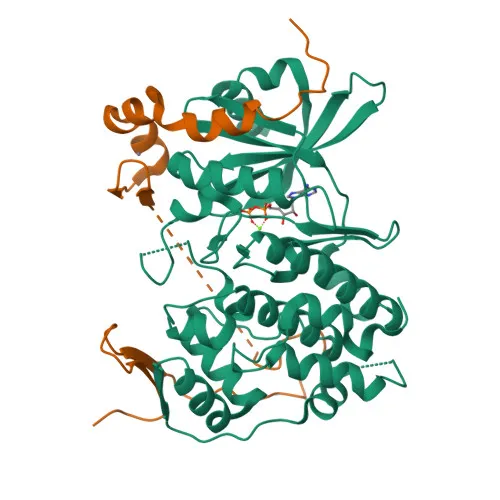
- DBF4 is the regulatory subunit of the CDC7 kinase, forming the CDC7-DBF4 complex that plays a central role in the initiation of DNA replication and cell proliferation.
- The CDC7-DBF4 complex is required for S phase progression and selectively phosphorylates the MCM2 subunit of the replicative helicase at Ser-40 and Ser-53, a critical step for origin firing.
- Localized to the nucleus, DBF4 operates at the core of the cell cycle machinery, ensuring timely replication licensing and checkpoint control.
- DBF4 is highly expressed in testis and thymus, and is also detected in most cancer cell lines, suggesting a role in both normal and malignant cell division.
- The protein contains a DBF4-type zinc finger and multiple phosphorylation sites, indicating regulation by upstream kinases and potential as a phosphoprotein target.
- Alternative splicing of DBF4 generates multiple isoforms, which may have specialized functions or expression patterns in different tissues or disease states.
Experimental Guidance and Technical Tips
- This antibody was raised against a synthetic peptide spanning amino acids 1 to 100 of human DBF4 (Q9UBU7), a region near the N-terminus. This immunogen design typically yields reactivity toward full-length DBF4.
- For Western blot (WB), the theoretical molecular weight is approximately 77 kDa, but modifications such as phosphorylation may cause shifts; empirical validation in the target sample is advised.
- In ELISA, consider pairing with a recombinant DBF4 protein standard or a second non-competing antibody for sandwich assays.
- Given DBF4's role in cancer cell proliferation, this antibody may be useful for studying tumor samples; however, expression levels should be confirmed in the specific cell line or tissue under investigation.
- Always include appropriate positive and negative controls, such as DBF4-overexpressing lysates or siRNA knockdown samples, to verify specificity.
CamelBio: Your One-Stop Sourcing Bridge
CamelBio connects diagnostic manufacturers, laboratories, and research institutes with a comprehensive range of IVD raw materials, technical services, and consulting—supporting every stage from concept to clinic. This anti-DBF4 rabbit monoclonal antibody is part of our expanding portfolio for cell cycle and oncology research, offering a reliable reagent for DNA replication studies. Beyond individual antibodies, we supply validated antibody pairs, optimized monoclonal and polyclonal antibodies, bulk ancillary reagents, and rare target sourcing to accelerate your assay development and commercialization.
REQUEST A QUOTE
Our professional team will reply to you within one business day. Please feel free to contact us!