Polyclonal Antibodies
Anti-DARS2 Polyclonal Antibody for WB, IHC-P, ELISA - Q6PI48
Item Number : CM0030223
Price varies based on specs and customizations
- Application
- WB, IHC-P, ELISA
- Cross Reactivity
- Human, Mouse
- Protein Weight
- 74kDa

Shipping:
Contact us to get shipping details Enjoy On-time Dispatch Guarantee.
Why Choose Us
Easy ordering process, quality products, and dedicated support for your business success.
Core Product Specifications and Parameters
| Parameter | Value |
|---|---|
| Product Name | DARS2 Rabbit pAb |
| Remarks/Alias | LBSL; ASPRS; mtAspRS; MT-ASPRS; DARS2 |
| Species | Human |
| GeneID (Human) | 55157 |
| GeneID | 55157 |
| Immunogen | Recombinant protein |
| Source | Rabbit |
| Category | Polyclonal Antibodies |
| Application | WB, IHC-P, ELISA |
| Cross Reactivity | Human, Mouse |
| SWISS | Q6PI48 |
| Protein Weight | 74kDa |
| Shipping | Ice bag |
Biological Background: DARS2 Function and Localization
- DARS2 encodes mitochondrial aspartyl-tRNA synthetase (AspRS), a member of the class-II aminoacyl-tRNA synthetase family critical for mitochondrial protein synthesis.
- Catalyzes the two-step attachment of aspartate to tRNA(Asp): first activating aspartate with ATP to form Asp-AMP, then transferring aspartate to the tRNA acceptor end.
- Localizes primarily to the mitochondrial matrix and may associate with the mitochondrial membrane, reflecting its role in mitochondrial translation.
- Alternate names include LBSL, ASPRS, mtAspRS, and MT-ASPRS; the protein is the mitochondrial counterpart of cytoplasmic DARS.
- Mutations in DARS2 cause leukoencephalopathy with brainstem and spinal cord involvement and lactate elevation (LBSL), linking it to neurodegeneration and Charcot-Marie-Tooth disease.
- Post-translational modifications such as acetylation, phosphorylation, and ubiquitination have been identified, potentially regulating enzyme activity or stability.
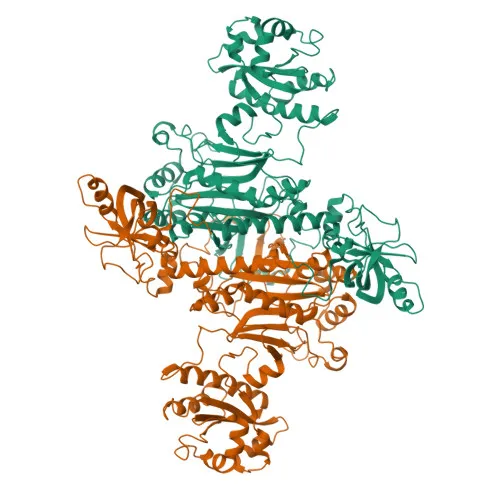
- The protein is also annotated with 3D-structure, ATP-binding, and isopeptide bond, highlighting its conserved catalytic mechanism.
Experimental Guidance and Technical Tips
- The immunogen covers the C-terminal region (aa 406–645), which includes part of the catalytic domain; confirm the detected band at ~74 kDa in your sample type and consider the possibility of alternative splicing or processing.
- For Western blot, optimize antibody dilution (e.g., 1:500–1:2000) and use mitochondrial-enriched lysates to enhance signal, given the mitochondrial localization.
- In IHC-P, test antigen retrieval conditions (e.g., citrate buffer pH 6.0) and include a no-primary control to assess specificity.
- For ELISA, pair with an appropriate enzyme-conjugated secondary antibody and validate linearity using recombinant DARS2 protein as a standard.
CamelBio: Your One-Stop Sourcing Bridge
CamelBio provides diagnostic manufacturers, laboratories, and research institutes with a streamlined one-stop platform for IVD raw-material procurement, spanning concept to clinic. Our DARS2 antibody supports mitochondrial translation and neurodegenerative disease research; we can supply matched antibody pairs, optimized monoclonal/polyclonal antibodies, and bulk ancillary reagents. For rare targets like mitochondrial aminoacyl-tRNA synthetases, CamelBio leverages its extensive network to accelerate your raw-material sourcing.
REQUEST A QUOTE
Our professional team will reply to you within one business day. Please feel free to contact us!