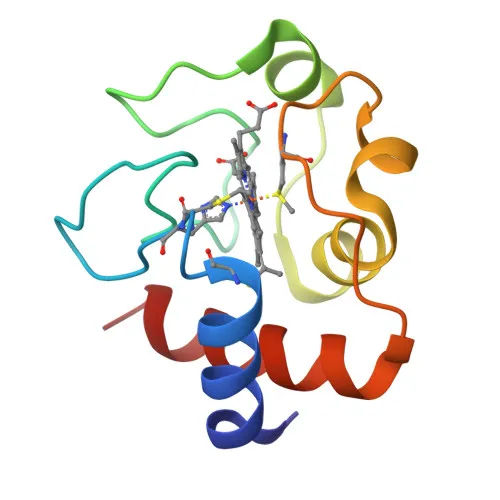
Polyclonal Antibodies
Anti-Cytochrome C Polyclonal Antibody for WB, IHC-P, IF/ICC, ELISA - P99999
Item Number : CM0013459
Price varies based on specs and customizations
- Application
- WB, IHC-P, IF/ICC, ELISA
- Cross Reactivity
- Human, Mouse, Rat
- Protein Weight
- 12kDa

Shipping:
Contact us to get shipping details Enjoy On-time Dispatch Guarantee.
Why Choose Us
Easy ordering process, quality products, and dedicated support for your business success.
Core Product Specifications and Parameters
| Parameter | Value |
|---|---|
| Product Name | Cytochrome C Rabbit pAb |
| Remarks/Alias | CYC; HCS; THC4; C |
| Species | Human |
| GeneID (Human) | 54205 |
| GeneID | 54205 |
| Immunogen | Recombinant fusion protein containing a sequence corresponding to amino acids 1-105 of human Cytochrome C (NP_061820.1). |
| Source | Rabbit |
| Category | Polyclonal Antibodies |
| Application | WB, IHC-P, IF/ICC, ELISA |
| Cross Reactivity | Human, Mouse, Rat |
| SWISS | P99999 |
| Protein Weight | 12kDa |
| Shipping | Ice bag |
Biological Background: Cytochrome C Function and Localization
- Cytochrome c is a conserved heme protein encoded by the CYCS gene, functioning as a critical electron carrier in the mitochondrial respiratory chain.
- It accepts electrons from the cytochrome c1 subunit of cytochrome reductase and transfers them to cytochrome oxidase, facilitating ATP production.
- Beyond respiration, cytochrome c acts as a key apoptosis regulator; upon apoptotic stimuli, it is released from mitochondria into the cytosol.
- In the cytosol, cytochrome c binds Apaf-1, promoting caspase-9 activation and triggering the caspase cascade that executes apoptosis.
- The protein localizes to the mitochondrial intermembrane space under normal physiological conditions.
- Post-translational modifications include acetylation and phosphorylation, which may modulate its function and interactions.
- Clinically, mutations in CYCS are linked to disease variants affecting energy metabolism and cell death, relevant for research in neurodegenerative and cardiovascular diseases.
Experimental Guidance and Technical Tips
- For Western blotting, expect a specific band at approximately 12 kDa; optimize transfer conditions for small proteins to ensure complete transfer.
- In IHC-P experiments, test antigen retrieval methods and validate staining in appropriate tissue sections known to express Cytochrome c.
- For IF/ICC, co-localization studies with mitochondrial markers are recommended to confirm subcellular localization.
- Because this is a polyclonal antibody, validate performance with each new lot using positive control lysates or cell lines.
- To study apoptosis-related cytochrome c release, consider using apoptosis inducers (e.g., staurosporine) and fractionation assays to detect cytosolic translocation.
CamelBio: Your One-Stop Sourcing Bridge
CamelBio provides diagnostic manufacturers and research laboratories with one-stop access to IVD raw materials, including high-quality antibodies for apoptosis and mitochondrial studies like this Cytochrome C polyclonal antibody. Our supply capabilities cover validated antibody pairs, optimized monoclonal and polyclonal antibodies, bulk ancillary reagents, and rare target sourcing—supporting your projects from concept to clinic with reliable procurement solutions.
Product Datasheet
Anti-Cytochrome C Polyclonal Antibody for WB, IHC-P, IF/ICC, ELISA - P99999
REQUEST A QUOTE
Our professional team will reply to you within one business day. Please feel free to contact us!