Monoclonal Antibodies
Anti-Cytochrome C Monoclonal Antibody for WB, IHC-P, ELISA - P99999
Item Number : CM0010307
Price varies based on specs and customizations
- Application
- WB, IHC-P, ELISA
- Cross Reactivity
- Human, Mouse, Rat
- Protein Weight
- 12kDa

Shipping:
Contact us to get shipping details Enjoy On-time Dispatch Guarantee.
Why Choose Us
Easy ordering process, quality products, and dedicated support for your business success.
Core Product Specifications and Parameters
| Parameter | Value |
|---|---|
| Product Name | Cytochrome C Rabbit mAb |
| Remarks/Alias | CYC; HCS; THC4; C |
| Species | Human |
| GeneID (Human) | 54205 |
| GeneID | 54205 |
| Immunogen | Synthetic Peptide: A synthetic peptide corresponding to a sequence within amino acids 1-105 of human Cytochrome C (P99999) |
| Source | Rabbit |
| Category | Monoclonal Antibodies |
| Application | WB, IHC-P, ELISA |
| Cross Reactivity | Human, Mouse, Rat |
| SWISS | P99999 |
| Protein Weight | 12kDa |
| Shipping | Ice bag |
Biological Background: Cytochrome C Function and Localization
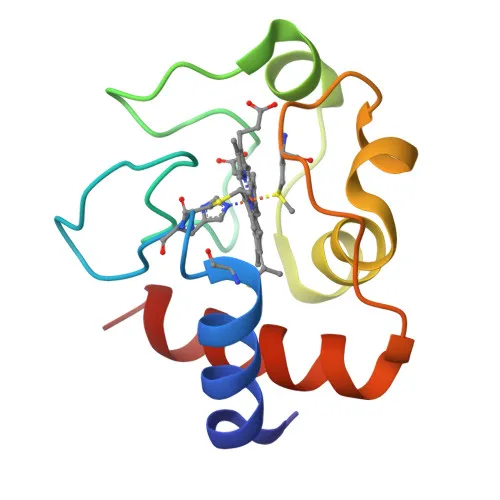
- Human cytochrome c (encoded by the CYCS gene) is a small heme protein functioning as an essential electron carrier in the mitochondrial respiratory chain.
- It accepts an electron from the cytochrome c1 subunit of cytochrome reductase and transfers it to the cytochrome oxidase complex, facilitating ATP production.
- Beyond its role in oxidative phosphorylation, cytochrome c is a critical mediator of apoptosis. Upon apoptotic stimuli, it is released from mitochondria into the cytosol.
- In the cytosol, cytochrome c binds to Apaf-1, promoting caspase-9 activation and the subsequent caspase cascade that executes programmed cell death.
- The protein localizes to the mitochondrial intermembrane space and undergoes post-translational modifications including acetylation and phosphorylation.
- It contains a covalently attached heme group and binds iron, essential for its electron transfer activity.
- UniProt keywords highlight its involvement in diseases and its identification via direct protein sequencing and proteomics.
Experimental Guidance and Technical Tips
- The immunogen is a synthetic peptide corresponding to the N-terminal region (amino acids 1–105) of human cytochrome c; it may recognize both native and denatured forms in various applications.
- For Western blot, consider loading 10–20 µg of total protein lysate and use appropriate positive controls (e.g., HeLa or Jurkat cell lysate).
- In immunohistochemistry (paraffin-embedded), antigen retrieval and optimization of antibody dilution may be necessary for specific tissue types.
- Validate the antibody's performance in your experimental system, especially when detecting cross-reactive mouse or rat cytochrome c.
CamelBio: Your One-Stop Sourcing Bridge
CamelBio provides a comprehensive portfolio of IVD raw materials, from validated antibody pairs and optimized monoclonal antibodies to bulk ancillary reagents. For mitochondrial and apoptosis research, CamelBio offers reliable anti-cytochrome c antibodies and custom sourcing for rare targets. Explore our supply capabilities to accelerate your diagnostic and research projects.
REQUEST A QUOTE
Our professional team will reply to you within one business day. Please feel free to contact us!