Polyclonal Antibodies
Anti-CYSLTR1 Rabbit Polyclonal Antibody for WB, ELISA - Q9Y271
Item Number : CM0022977
Price varies based on specs and customizations
- Application
- WB, ELISA
- Cross Reactivity
- Human, Mouse
- Species
- Human

Shipping:
Contact us to get shipping details Enjoy On-time Dispatch Guarantee.
Why Choose Us
Easy ordering process, quality products, and dedicated support for your business success.
Core Product Specifications and Parameters
| Parameter | Value |
|---|---|
| Product Name | CYSLTR1 Rabbit pAb |
| Remarks/Alias | CYSLT1; CYSLTR; CYSLT1R; HMTMF81; CYSLTR1 |
| Species | Human |
| GeneID (Human) | 10800 |
| GeneID | 10800 |
| Immunogen | Synthetic peptide corresponding to a sequence within amino acids 1-100 of human CYSLTR1 (NP_006630.1). |
| Source | Rabbit |
| Category | Polyclonal Antibodies |
| Application | WB, ELISA |
| Cross Reactivity | Human, Mouse |
| SWISS | Q9Y271 |
| Protein Weight | 39kDa |
| Shipping | Ice bag |
Biological Background: CYSLTR1 Function and Localization
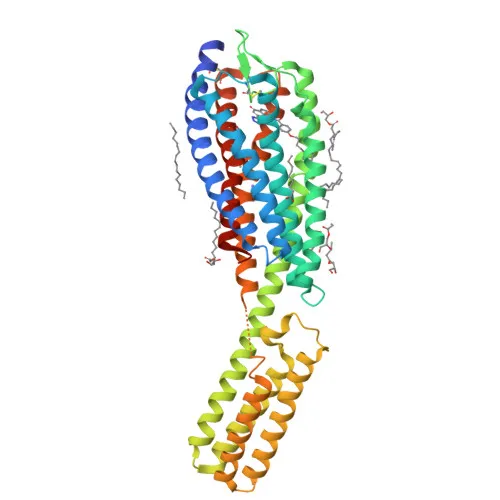
- CYSLTR1 is a G protein-coupled receptor for cysteinyl leukotrienes, with highest affinity for LTD4, followed by LTE4 and LTC4, and very low affinity for LTB4.
- Upon stimulation, it mediates bronchoconstriction and promotes smooth muscle contraction and proliferation, contributing to asthma pathophysiology.
- It triggers inflammatory responses including edema, eosinophil migration, and damage to the mucus layer in the lung.
- The receptor signals via a G protein that activates a phosphatidylinositol-calcium second messenger system.
- CYSLTR1 is localized to the cell membrane and belongs to the rhodopsin-like GPCR family.
- It is widely expressed, with highest levels in spleen and peripheral blood leukocytes, and lower expression in lung smooth muscle, alveolar macrophages, placenta, small intestine, pancreas, colon, and heart.
- Post-translational modifications include glycosylation and disulfide bond formation, typical of membrane receptors.
Experimental Guidance and Technical Tips
- For Western blot, a band around 39 kDa (theoretical 38.5 kDa) should be detected; glycosylation may cause additional bands or shifts.
- Verify the immunogen peptide sequence homology between human and mouse to ensure cross-reactivity; the antibody is listed as reactive with both species.
- For ELISA, use the antibody as a capture or detection reagent in a suitable sandwich or indirect format; titrate for optimal signal-to-noise ratio.
- Include appropriate positive and negative controls (e.g., tissues with known high expression like spleen or leukocytes) to confirm specificity.
- Consider the receptor’s cell membrane localization; use appropriate lysis conditions to extract membrane proteins efficiently.
CamelBio: Your One-Stop Sourcing Bridge
This antibody targets the cysteinyl leukotriene receptor 1, a key mediator in inflammatory and respiratory diseases such as asthma. At CamelBio, we support diagnostic manufacturers and research labs with one-stop access to validated IVD raw materials—from optimized polyclonal and monoclonal antibodies to bulk ancillary reagents and rare-target sourcing—helping you move from concept to clinic with reliable supply solutions.
REQUEST A QUOTE
Our professional team will reply to you within one business day. Please feel free to contact us!