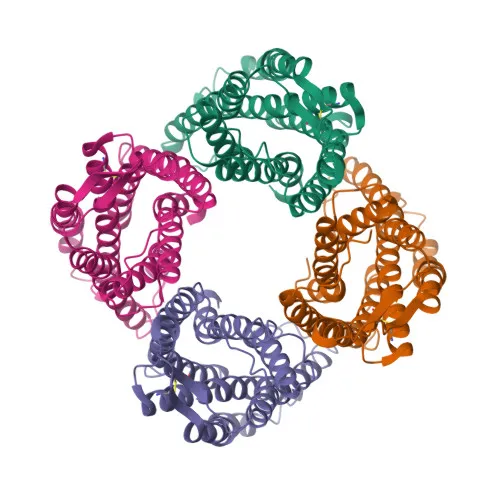
Monoclonal Antibodies
Anti-CXCR4 Rabbit Monoclonal Antibody for WB, ELISA - P61073
Item Number : CM0002616
Price varies based on specs and customizations
- Application
- WB, ELISA
- Cross Reactivity
- Human
- Protein Weight
- 40kDa

Shipping:
Contact us to get shipping details Enjoy On-time Dispatch Guarantee.
Why Choose Us
Easy ordering process, quality products, and dedicated support for your business success.
Core Product Specifications and Parameters
| Parameter | Value |
|---|---|
| Product Name | CXCR4 Rabbit mAb |
| Remarks/Alias | FB22; HM89; LAP3; LCR1; NPYR; WHIM; CD184; LAP-3; LESTR; NPY3R; NPYRL; WHIMS; HSY3RR; NPYY3R; WHIMS1; D2S201E; CXCR4 |
| Species | Human |
| Gene ID (Human) | 7852 |
| Gene ID | 7852 |
| Immunogen | A synthetic peptide corresponding to a sequence within amino acids 253-352 of human CXCR4 (P61073) |
| Source | Rabbit |
| Category | Monoclonal Antibodies |
| Application | WB, ELISA |
| Cross Reactivity | Human |
| SWISS | P61073 |
| Protein Weight | 40kDa |
| Shipping | Ice bag |
Biological Background: CXCR4 Function and Localization
- CXCR4 (C-X-C chemokine receptor type 4, CD184, Fusin) is a G protein-coupled receptor (GPCR) that specifically binds the chemokine CXCL12/SDF-1. Ligand binding triggers signal transduction by increasing intracellular calcium ion levels, enhancing MAPK1/MAPK3 activation, and inhibiting adenylate cyclase via coupling to Gi proteins. Related references: PMID:10074102, PMID:10452968, PMID:10644702, PMID:16725153, PMID:17197449, PMID:18799424, PMID:39093700
- CXCR4 signaling engages the AKT pathway and regulates cell migration, playing a critical role in wound healing. Related references: PMID:24912431, PMID:28978524
- Besides CXCL12, CXCR4 acts as a receptor for extracellular ubiquitin (elevating intracellular calcium and reducing cAMP) and for bacterial lipopolysaccharide (LPS), mediating inflammatory cytokine (TNF) secretion by monocytes. Related references: PMID:20228059, PMID:11276205
- In viral infection, CXCR4 functions as a coreceptor (alongside CD4) for human immunodeficiency virus-1 (HIV-1) X4 isolates and as a primary receptor for some HIV-2 isolates, promoting viral entry. Related references: PMID:10074122, PMID:10756055, PMID:8849450
- Subcellular localization is predominantly at the plasma membrane, cell junctions, and cycles through early endosomes, late endosomes, and lysosomes.
- Post-translational modifications include sulfation, phosphorylation, glycosylation, and the formation of disulfide bonds; it is also subject to ubiquitination. The receptor is a proteoglycan.
- CXCR4 is widely expressed, with isoform 1 being predominant, in tissues including peripheral blood leukocytes, spleen, thymus, spinal cord, heart, placenta, lung, liver, skeletal muscle, kidney, pancreas, brain (cerebellum, cerebral cortex, medulla, microglia, astrocytes), and endothelial cells. Alternative splicing yields additional variants.
- By analogy, CXCR4 contributes to hematopoiesis, cardiac ventricular septum formation, gastrointestinal tract vascularization, and cerebellar/hippocampal neuron development.
Experimental Guidance and Technical Tips
- The immunogen corresponds to the C-terminal intracellular region (aa 253-352), suggesting that the antibody likely targets an epitope within the cytoplasmic domain. For Western blot, denaturing and reducing conditions are recommended to expose the epitope.
- In Western blot, the predicted molecular weight of CXCR4 is approximately 40 kDa; however, due to glycosylation and other post-translational modifications, the apparent band may shift to a higher molecular weight in certain cell types.
- For ELISA applications, consider pairing with a detection antibody targeting a distinct extracellular epitope if developing a sandwich assay. Always validate assay conditions with appropriate positive and negative controls.
- Since CXCR4 is expressed in many immune and endothelial cells, good positive control lysates include Jurkat, THP-1, or PBMCs; for tissue, spleen or thymus may work well.
- If studying HIV coreceptor function, note that the antibody may not block viral entry as it targets an intracellular epitope.
CamelBio: Your One-Stop Sourcing Bridge
CamelBio is your trusted one-stop IVD raw material partner, providing high-quality monoclonal antibodies like this anti-CXCR4 antibody, validated antibody pairs, and bulk ancillary reagents. Our supply chain covers everything from concept to clinic, supporting diagnostic developers in HIV co-receptor research, chemokine signaling assays, and cancer metastasis studies. Whether you need standard products or rare-target sourcing, we streamline your procurement with reliability and expertise.
REQUEST A QUOTE
Our professional team will reply to you within one business day. Please feel free to contact us!