Polyclonal Antibodies
Anti-CTSF Rabbit Polyclonal Antibody for WB, IHC-P, ELISA - Q9UBX1
Item Number : CM0016727
Price varies based on specs and customizations
- Application
- WB, IHC-P, ELISA
- Cross Reactivity
- Human
- Protein Weight
- 53kDa

Shipping:
Contact us to get shipping details Enjoy On-time Dispatch Guarantee.
Why Choose Us
Easy ordering process, quality products, and dedicated support for your business success.
Core Product Specifications and Parameters
| Parameter | Value |
|---|---|
| Product Name | CTSF Rabbit pAb |
| Remarks/Alias | CATSF; CLN13; CTSF |
| Species | Human |
| Gene ID (Human) | 8722 |
| Gene ID | 8722 |
| Immunogen | Recombinant fusion protein containing a sequence corresponding to amino acids 270-484 of human CTSF (NP_003784.2). |
| Source | Rabbit |
| Category | Polyclonal Antibodies |
| Application | WB, IHC-P, ELISA |
| Cross Reactivity | Human |
| SWISS | Q9UBX1 |
| Protein Weight | 53kDa |
| Shipping | Ice bag |
Biological Background: Cathepsin F Function and Localization
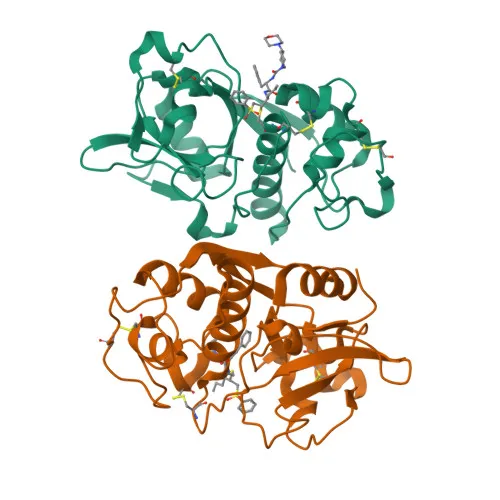
- Cathepsin F (CTSF) is a lysosomal cysteine protease of the papain family, encoded by the CTSF gene.
- Functions as a thiol protease involved in intracellular protein degradation and turnover within lysosomes.
- Implicated in tumor invasion and metastasis, potentially through extracellular matrix remodeling.
- Subcellular location: primarily lysosomal, consistent with its role in terminal protein degradation.
- Tissue specificity: high expression in heart, skeletal muscle, brain, testis, and ovary; moderate in prostate, placenta, liver, colon; absent in peripheral leukocytes and thymus.
- Post-translational modifications: synthesized as an inactive zymogen, activated by proteolytic cleavage; contains disulfide bonds and N-linked glycosylation sites.
- Associated with disease: mutations in CTSF are linked to neuronal ceroid lipofuscinosis (CLN13), a neurodegenerative disorder.
- Keywords: glycoprotein, hydrolase, lysosome, neurodegeneration, thiol protease, zymogen.
Experimental Guidance and Technical Tips
- For Western blot, consider using reducing conditions and a molecular weight marker to identify bands around 53 kDa (precursor) and potentially smaller active forms.
- For immunohistochemistry, antigen retrieval with citrate buffer may enhance staining due to lysosomal localization.
- In ELISA, the antibody may be suitable for detecting recombinant or native CTSF; optimize coating and blocking conditions.
- Confirm specificity with appropriate controls, such as peptide blocking or knockdown cell lines, especially when analyzing tissues with high endogenous CTSF expression.
CamelBio: Your One-Stop Sourcing Bridge
As a comprehensive supplier for IVD manufacturers and research teams, CamelBio provides high-quality antibody raw materials, including this anti-CTSF polyclonal antibody, supporting studies on lysosomal proteases and cancer biology. We also offer validated antibody pairs, bulk ancillary reagents, and customized sourcing for rare targets to accelerate your diagnostic development.
REQUEST A QUOTE
Our professional team will reply to you within one business day. Please feel free to contact us!