Polyclonal Antibodies
Anti-CTSC Polyclonal Antibody for WB, IF/ICC, ELISA - P53634
Item Number : CM0025322
Price varies based on specs and customizations
- Application
- WB, IF/ICC, ELISA
- Cross Reactivity
- Human, Mouse
- Protein Weight
- 15kDa/16kDa/52kDa

Shipping:
Contact us to get shipping details Enjoy On-time Dispatch Guarantee.
Why Choose Us
Easy ordering process, quality products, and dedicated support for your business success.
Core Product Specifications and Parameters
| Parameter | Value |
|---|---|
| Product Name | CTSC Rabbit pAb |
| Remarks/Alias | JP; HMS; JPD; PLS; CPPI; DPP1; DPPI; PALS; DPP-I; PDON1; CTSC |
| Species | Human |
| Gene ID (Human) | 1075 |
| Immunogen | Recombinant fusion protein containing a sequence corresponding to amino acids 25-134 of human CTSC (NP_001805.3) |
| Source | Rabbit |
| Category | Polyclonal Antibodies |
| Application | WB, IF/ICC, ELISA |
| Cross Reactivity | Human, Mouse |
| SWISS | P53634 |
| Protein Weight | 15kDa/16kDa/52kDa |
| Shipping | Ice bag |
Biological Background: CTSC Function and Localization
- Dipeptidyl peptidase 1 (DPP1), also known as cathepsin C, is a thiol protease with dipeptidylpeptidase activity. It acts on dipeptide substrates with specificity constraints: proline cannot occupy the P1 position and arginine cannot occupy the P2 position. Related references: PMID:1586157
- It can function as both an exopeptidase and endopeptidase, and is critical for activating serine proteases like elastase, cathepsin G, and granzymes A and B, which are essential for immune cell functions. Related references: PMID:8428921
- Alternative names include cathepsin J, DPP-I (DPPI), and dipeptidyl transferase, reflecting its enzymatic and historical classification.
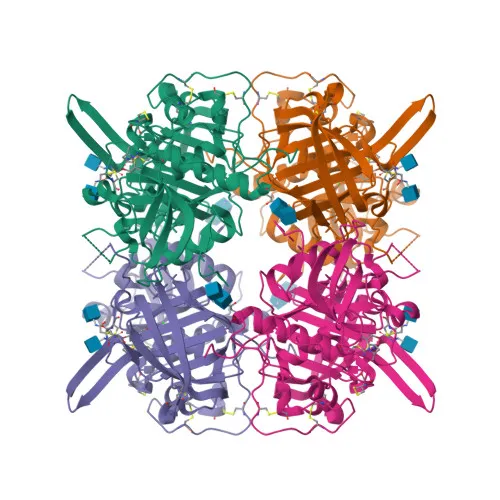
- Encoded by the CTSC gene, which gives rise to alternative splicing variants, the protein is proteolytically processed to produce heavy and light chains that form a tetramer.
- Subcellularly, CTSC is localized in lysosomes, where it participates in protein degradation and activation of proenzymes.
- It is ubiquitously expressed, with high levels in lung, kidney, and placenta, and intermediate levels in colon, small intestine, spleen, and pancreas, underscoring its housekeeping role.
- Post-translational modifications include glycosylation and disulfide bond formation; the enzyme is synthesized as a zymogen requiring activation.
- Clinically, mutations in CTSC are associated with palmoplantar keratoderma (e.g., Papillon-Lefèvre syndrome), highlighting its importance in skin barrier function.
Experimental Guidance and Technical Tips
- The immunogen spans residues 25–134, a region likely part of the propeptide or mature chain. This may detect both precursor and processed forms, which could appear as multiple bands in WB corresponding to the predicted weights of 15 kDa, 16 kDa, and 52 kDa.
- For Western blotting, consider using reducing conditions and validating the observed bands against known cleavage products of CTSC.
- In IF/ICC, fixation and permeabilization conditions should be optimized to access lysosomal compartments; co-staining with lysosomal markers is recommended.
- For ELISA, this polyclonal antibody may be used as capture or detection reagent; titrate for optimal signal-to-noise ratio in your sample matrix.
- Cross-reactivity with mouse is indicated; validate performance in mouse tissues or cell lines if intended for such models.
- As a polyclonal, lot-to-lot consistency should be assessed; consider using recombinant antigen for blocking in immunoassays.
CamelBio: Your One-Stop Sourcing Bridge
CamelBio supports diagnostic manufacturers, laboratories, and research institutes with a comprehensive portfolio of IVD raw materials, technical services, and consulting—from concept to clinic. For CTSC-focused projects—spanning immune cell function, lysosomal storage disorders, or skin barrier pathologies—we offer validated antibody pairs, optimized monoclonal and polyclonal antibodies, bulk ancillary reagents, and rare target raw-material sourcing. Partner with us to streamline your development and secure consistent supply for high-performance immunoassays.
REQUEST A QUOTE
Our professional team will reply to you within one business day. Please feel free to contact us!