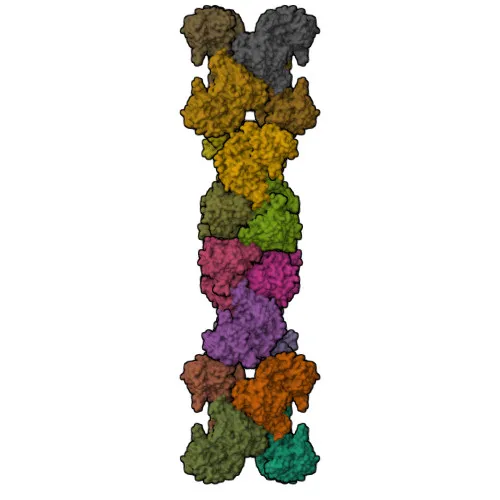
Polyclonal Antibodies
Anti-CTPS1 Rabbit pAb for WB, ELISA - P17812
Item Number : CM0027751
Price varies based on specs and customizations
- Application
- WB, ELISA
- Cross Reactivity
- Human, Mouse
- Protein Weight
- 67kDa

Shipping:
Contact us to get shipping details Enjoy On-time Dispatch Guarantee.
Why Choose Us
Easy ordering process, quality products, and dedicated support for your business success.
Core Product Specifications and Parameters
| Parameter | Value |
|---|---|
| Product Name | CTPS1 Rabbit pAb |
| Remarks/Alias | CTPS; GATD5; IMD24; GATD5A; CTPS1 |
| Species | Human |
| GeneID | 1503 |
| Immunogen | Recombinant fusion protein containing a sequence corresponding to amino acids 402-591 of human CTPS1 (NP_001896.2) |
| Source | Rabbit |
| Category | Polyclonal Antibodies |
| Application | WB, ELISA |
| Cross Reactivity | Human, Mouse |
| SWISS | P17812 |
| Protein Weight | 67kDa |
| Shipping | Ice bag |
Biological Background: CTPS1 Function and Localization
- CTPS1 (CTP synthase 1), also known as CTP synthetase 1, is a key enzyme in the de novo synthesis of CTP, a critical precursor for DNA, RNA, and phospholipid biosynthesis (PubMed:16179339, PubMed:17189248, PubMed:17463002). Related references: PMID:16179339 PMID:17189248 PMID:17463002
- It catalyzes the ATP-dependent amination of UTP to CTP using L-glutamine or ammonia as a nitrogen source, essential for nucleotide metabolism (PubMed:16179339, PubMed:24870241, PubMed:28459447). Related references: PMID:16179339 PMID:24870241 PMID:28459447
- CTPS1 activity is crucial for activated lymphocyte proliferation and immune function, meeting the increased demand for CTP during rapid cell division (PubMed:24870241, PubMed:8530356). Related references: PMID:24870241 PMID:8530356
- Beyond its synthase role, CTPS1 acts as a protein deamidase, modifying asparagine residues to aspartate on targets like IRF3 and histone H1, thereby regulating innate immunity and chromatin dynamics (PubMed:40240600). Related references: PMID:40240600
- Localized in the cytoplasm, nucleus, and chromosomes, CTPS1 shuttles dynamically and is associated with chromatin relaxation during DNA damage repair (PubMed:40240600). Related references: PMID:40240600
- It is widely expressed at low levels in most tissues but is highly induced in activated T-cells, highlighting its role in adaptive immunity.
- Post-translational modifications include acetylation and phosphorylation; the protein belongs to the purine/pyrimidine biosynthesis family and is identified in several proteomics studies.
Experimental Guidance and Technical Tips
- This polyclonal antibody was raised against a recombinant protein corresponding to amino acids 402-591 of human CTPS1, a region that includes part of the C-terminal domain. Consider using it in WB experiments to detect endogenous CTPS1 (predicted MW 67kDa) in human and mouse samples.
- For ELISA, preliminary optimization of coating antigen and antibody dilution is recommended; cross-reactivity with homologous CTP synthase family members should be evaluated.
- Since CTPS1 expression is induced in activated T-cells, include appropriate positive controls (e.g., stimulated lymphocytes) and validate in your specific experimental system.
CamelBio: Your One-Stop Sourcing Bridge
CamelBio provides diagnostic manufacturers and research laboratories with streamlined access to a wide range of IVD raw materials, including validated antibody pairs, optimized polyclonal and monoclonal antibodies, and bulk ancillary reagents. This anti-CTPS1 antibody supports research into nucleotide metabolism, immune function, and cancer biology. Leverage our global network and technical expertise to source the exact immunoreagents you need, from concept to clinical application.
REQUEST A QUOTE
Our professional team will reply to you within one business day. Please feel free to contact us!