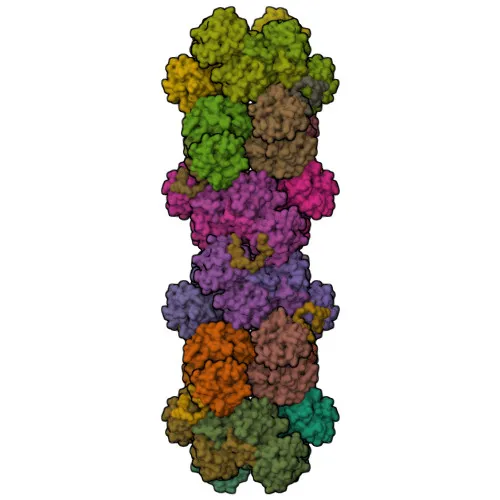
Polyclonal Antibodies
Anti-CtBP1 Rabbit Polyclonal Antibody for WB, ELISA - Q13363
Item Number : CM0016416
Price varies based on specs and customizations
- Application
- WB, ELISA
- Cross Reactivity
- Human, Mouse, Rat
- Protein Weight
- 48kDa

Shipping:
Contact us to get shipping details Enjoy On-time Dispatch Guarantee.
Why Choose Us
Easy ordering process, quality products, and dedicated support for your business success.
Core Product Specifications and Parameters
| Parameter | Value |
|---|---|
| Product Name | CtBP1 Rabbit pAb |
| Remarks/Alias | BARS; HADDTS; CtBP1 |
| Species | Human |
| Gene ID (Human) | 1487 |
| Gene ID | 1487 |
| Immunogen | Recombinant fusion protein containing a sequence corresponding to amino acids 121-353 of CtBP1 (NP_001319.1) |
| Source | Rabbit |
| Category | Polyclonal Antibodies |
| Application | WB, ELISA |
| Cross Reactivity | Human, Mouse, Rat |
| SWISS | Q13363 |
| Protein Weight | 48kDa |
| Shipping | Ice bag |
Biological Background: CtBP1 Function and Localization
- C-terminal-binding protein 1 (CtBP1) is a transcriptional corepressor that modulates the activity of various transcription regulators, including GLIS2 and BCL6, influencing gene expression programs.
- The protein possesses dehydrogenase activity, linking it to cellular metabolic states and redox-sensitive transcriptional control.
- CtBP1 plays a key role in maintaining Golgi complex architecture by regulating the equilibrium between tubular and stacked structures, impacting intracellular trafficking.
- It functions in brown adipose tissue (BAT) differentiation, suggesting a role in adipogenesis and energy homeostasis.
- Alternative splicing produces multiple isoforms, which may exhibit distinct tissue distributions and regulatory properties.
- Subcellularly, CtBP1 localizes to both the cytoplasm and the nucleus, enabling it to shuttle between compartments and respond to various signals.
- The protein undergoes post-translational modifications including ADP-ribosylation, phosphorylation, and ubiquitination, which modulate its stability, activity, and interactions.
- Tissue-specific expression is observed, with notable presence in germinal center B-cells, indicating a role in immune cell function.
Experimental Guidance and Technical Tips
- The immunogen was designed against amino acids 121-353 of CtBP1 (NP_001319.1). For western blot, this region may detect all known isoforms; confirm specificity by knockdown or isoform-specific controls.
- For WB, typical sample preparation includes whole-cell lysates of human, mouse, or rat origin. Consider using nuclear and cytoplasmic fractionation to assess subcellular distribution.
- ELISA applications may utilize the antibody for direct or indirect detection; titration and cross-reactivity checks against closely related CtBP2 are advised.
- Polyclonal antibodies often recognize multiple epitopes; lot-to-lot consistency may vary, so validate each new lot in your specific assay.
CamelBio: Your One-Stop Sourcing Bridge
CamelBio streamlines IVD raw-material sourcing for diagnostic manufacturers and research teams. This anti-CtBP1 antibody supports investigations into transcriptional regulation, Golgi dynamics, and metabolic differentiation. Beyond antibodies, we provide validated antibody pairs, bulk ancillary reagents, and rare target sourcing to accelerate your assay development.
REQUEST A QUOTE
Our professional team will reply to you within one business day. Please feel free to contact us!