Polyclonal Antibodies
Anti-CST6 (Cystatin-M) Rabbit Polyclonal Antibody for WB, IF/ICC, ELISA - Q15828
Item Number : CM0027740
Price varies based on specs and customizations
- Application
- WB, IF/ICC, ELISA
- Cross Reactivity
- Human
- Protein Weight
- 17kDa

Shipping:
Contact us to get shipping details Enjoy On-time Dispatch Guarantee.
Why Choose Us
Easy ordering process, quality products, and dedicated support for your business success.
Core Product Specifications and Parameters
| Parameter | Value |
|---|---|
| Product Name | CST6 Rabbit pAb |
| Remarks/Alias | ECTD15; CST6 |
| Species | Human |
| GeneID (human) | 1474 |
| GeneID | 1474 |
| Immunogen | Recombinant fusion protein containing a sequence corresponding to amino acids 29-149 of human CST6 (NP_001314.1) |
| Source | Rabbit |
| Category | Polyclonal Antibodies |
| Application | WB, IF/ICC, ELISA |
| Cross Reactivity | Human |
| SWISS | Q15828 |
| Protein Weight | 17kDa |
| Shipping | Ice bag |
Biological Background: Cystatin-M (CST6) Function and Localization
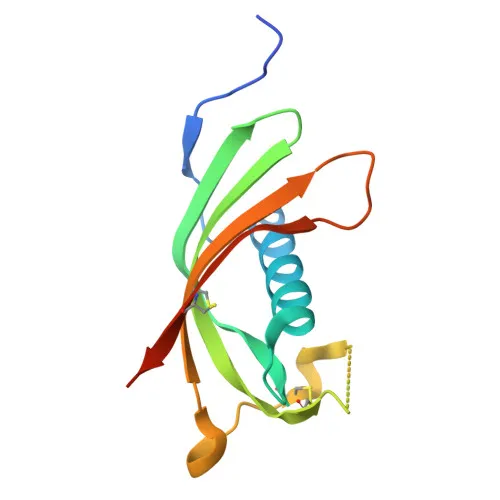
- Cystatin-M (CST6), also known as Cystatin-6 or Cystatin-E, is a secreted thiol protease inhibitor encoded by the CST6 gene.
- It functions as a high-affinity inhibitor for cathepsin L, cathepsin L2 (cathepsin V), and legumain, regulating proteolytic activity in specific tissues. Related references: PMID:30425301
- Involved in the regulation of epidermal cornification, hair follicle morphogenesis and maintenance, playing a critical role in skin barrier formation and cycling. Related references: PMID:30425301
- Tissue expression is restricted to the stratum granulosum of normal skin, the stratum granulosum/spinosum of psoriatic skin, and the secretory coils of eccrine sweat glands; low levels are found in the nasal cavity.
- The protein contains a signal peptide, two intrachain disulfide bonds, and is glycosylated, contributing to its stability and secretory trafficking.
- Mutations in CST6 are associated with ectodermal dysplasia, a condition affecting skin, hair, and nails, underscoring its importance in epidermal development.
- Belongs to the cystatin family of protease inhibitors, characterized by a conserved cystatin domain; it shares homology with other type 2 cystatins but exhibits distinct tissue-specific regulation.
Experimental Guidance and Technical Tips
- For Western blotting, consider that the mature protein migrates at approximately 17 kDa; pre-staining or adjusting blocking conditions may optimize signal detection.
- In immunofluorescence, due to the secreted nature of CST6, detect intracellular pools by permeabilizing cells; co-staining with relevant organelle markers can clarify localization patterns.
- ELISA applications may require optimization of coating buffer and antibody dilution; validate performance in the relevant sample system to ensure specificity.
- As a polyclonal antibody, batch-to-batch variation may influence background; consider titrating the antibody and using appropriate controls to assess specificity.
CamelBio: Your One-Stop Sourcing Bridge
CamelBio offers comprehensive IVD raw material solutions for dermatological and genetic disease research, including high-quality antibodies against key skin protease regulators like CST6. Our portfolio spans validated antibody pairs, optimized monoclonal/polyclonal antibodies, and bulk ancillary reagents, ensuring reliable supply from concept to clinic. For rare targets, we leverage global sourcing networks to expedite your diagnostic development.
REQUEST A QUOTE
Our professional team will reply to you within one business day. Please feel free to contact us!