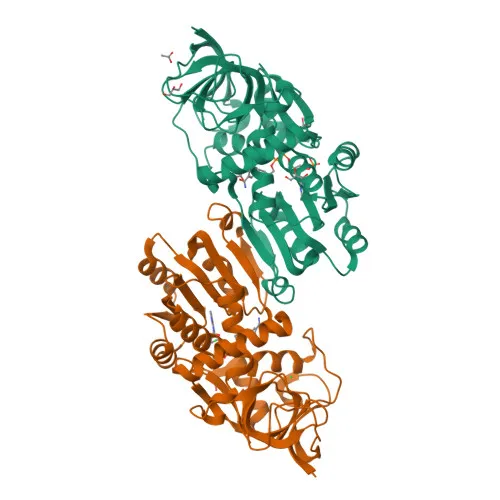
Polyclonal Antibodies
Anti-CRYZ Rabbit Polyclonal Antibody for WB, IF/ICC, ELISA - Q08257
Item Number : CM0018014
Price varies based on specs and customizations
- Application
- WB, IF/ICC, ELISA
- Cross Reactivity
- Human, Mouse, Rat
- Protein Weight
- 35kDa

Shipping:
Contact us to get shipping details Enjoy On-time Dispatch Guarantee.
Why Choose Us
Easy ordering process, quality products, and dedicated support for your business success.
Core Product Specifications and Parameters
| Parameter | Specification |
|---|---|
| Product Name | CRYZ Rabbit pAb |
| Remarks/Alias | CRYZ |
| Species | Human |
| GeneID (Human) | 1429 |
| GeneID | 1429 |
| Immunogen | Recombinant fusion protein containing a sequence corresponding to amino acids 1-329 of human CRYZ (NP_001123514.1) |
| Source | Rabbit |
| Category | Polyclonal Antibodies |
| Application | WB, IF/ICC, ELISA |
| Cross Reactivity | Human, Mouse, Rat |
| SWISS | Q08257 |
| Protein Weight | 35kDa |
| Shipping | Ice bag |
Biological Background: CRYZ Function and Localization
- CRYZ, also known as zeta-crystallin or NADPH:quinone reductase, is a multifunctional protein that combines enzymatic oxidoreductase activity with mRNA-binding and stabilization functions (PubMed:17497241, PubMed:20103721).
Related references:
PMID:17497241
PMID:20103721 - In its role in mRNA metabolism, CRYZ binds to AU-rich elements (ARE) in the 3'-UTR of target mRNAs, thereby enhancing their stability and post-transcriptional regulation (PubMed:17497241, PubMed:20103721).
Related references:
PMID:17497241
PMID:20103721 - Upon metabolic acidosis, CRYZ contributes to renal adaptations by stabilizing SLC12A1 and glutamine catabolism enzyme mRNAs (by similarity), and also upregulates the anti-apoptotic protein BCL2 via mRNA stabilization (PubMed:20103721).
Related references:
PMID:20103721 - As an oxidoreductase, CRYZ catalyzes the NADPH-dependent reduction of orthoquinones such as 1,2-naphthoquinone and 9,10-phenanthrenequinone, possibly participating in xenobiotic detoxification and defense against oxidative stress (PubMed:17497241).
Related references:
PMID:17497241 - The protein is predominantly localized in the cytoplasm, specifically the cytosol, consistent with its metabolic and mRNA regulatory functions.
- CRYZ expression is primarily extra-lenticular; only very low amounts are detected in the lens, indicating a broader physiological role beyond crystallin function.
- Post-translational modifications include acetylation and phosphorylation, and alternative splicing generates multiple transcript variants, potentially modulating its activity and interactions.
Experimental Guidance and Technical Tips
- The immunogen comprises the full-length human CRYZ protein (amino acids 1–329), suggesting the polyclonal antibody may recognize multiple epitopes, potentially offering broad reactivity across applications and species.
- For Western blot (WB), a predominant band around 35 kDa is expected; consider using positive control lysates from cell lines or tissues known to express CRYZ (e.g., kidney, liver) and validate with appropriate loading controls.
- In immunofluorescence/immunocytochemistry (IF/ICC), optimal fixation and permeabilization conditions should be empirically determined, as CRYZ is a cytosolic protein; consider using standard protocols with paraformaldehyde fixation and Triton X-100 permeabilization.
- For ELISA applications, the antibody can be explored as a capture or detection reagent; titrate to determine optimal working concentrations and validate using recombinant protein or characterized positive samples.
- Cross-reactivity with mouse and rat orthologs is expected based on product specifications; verify reactivity in your specific model system before large-scale experiments.
- As with any polyclonal antibody, lot-to-lot variability may occur; always validate new batches with known positive controls.
CamelBio: Your One-Stop Sourcing Bridge
CamelBio provides diagnostic manufacturers, labs, and research institutes with one-stop access to IVD raw materials, technical services, and consulting—covering every stage from concept to clinic. Our portfolio includes this high-quality anti-CRYZ rabbit polyclonal antibody, supporting research into mRNA stability, oxidative stress, and quinone detoxification pathways. Beyond individual antibodies, we offer validated antibody pairs, optimized monoclonal and polyclonal antibodies, bulk ancillary reagents, and rare target raw-material sourcing to streamline your assay development and production.
REQUEST A QUOTE
Our professional team will reply to you within one business day. Please feel free to contact us!