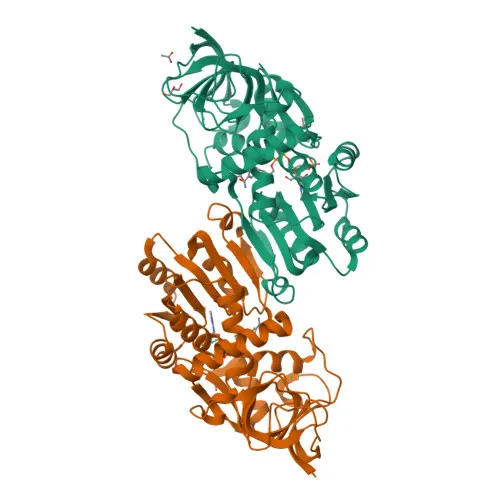
Polyclonal Antibodies
Anti-CRYZ Polyclonal Antibody for WB, ELISA - Q08257
Item Number : CM0019456
Price varies based on specs and customizations
- Application
- WB, ELISA
- Cross Reactivity
- Human, Mouse, Rat
- Protein Weight
- 35kDa

Shipping:
Contact us to get shipping details Enjoy On-time Dispatch Guarantee.
Why Choose Us
Easy ordering process, quality products, and dedicated support for your business success.
Core Product Specifications and Parameters
| Parameter | Value |
|---|---|
| Product Name | [KO Validated] CRYZ Rabbit pAb |
| Remarks/Alias | CRYZ; YZ |
| Species | Human |
| Gene ID (Human) | 1429 |
| Gene ID | 1429 |
| Immunogen | Recombinant fusion protein containing a sequence corresponding to amino acids 1-329 of human CRYZ (NP_001123514.1). |
| Source | Rabbit |
| Category | Polyclonal Antibodies |
| Application | WB, ELISA |
| Cross Reactivity | Human, Mouse, Rat |
| SWISS | Q08257 |
| Protein Weight | 35kDa |
| Shipping | Ice bag |
Biological Background: CRYZ Function and Localization
- CRYZ (zeta-crystallin) is a multifunctional protein possessing both mRNA stabilization and enzymatic oxidoreductase activities. It binds to AU-rich elements (ARE) in the 3'-UTR of target mRNAs to enhance their stability, including mRNAs encoding SLC12A1, enzymes involved in glutamine catabolism, and the antiapoptotic protein BCL2. It also catalyzes the reduction of orthoquinones in the presence of NADPH, suggesting a role in xenobiotic detoxification and oxidative stress protection. Related references: PMID:17497241 PMID:20103721
- During metabolic acidosis, CRYZ contributes to adaptive increases in renal ammoniagenesis and transepithelial NH4+ reabsorption by stabilizing the mRNAs of glutamine catabolism enzymes and the SLC12A1 cotransporter in the kidney medullary thick ascending limb.
- CRYZ is predominantly localized in the cytoplasm/cytosol, consistent with its roles in mRNA stabilization and enzymatic reactions.
- Tissue specificity: CRYZ is expressed at very low levels in the lens, contrasting with its higher expression in other tissues where it functions in mRNA regulation and redox balance.
- The CRYZ gene undergoes alternative splicing, and the protein is subject to post-translational modifications including acetylation and phosphorylation (as noted in UniProt keywords), which may regulate its activity or interactions.
- Protein molecular weight: The canonical isoform has a calculated molecular weight of approximately 35.2 kDa (UniProt: 35207 Da), though the supplier lists 35kDa.
Experimental Guidance and Technical Tips
- The immunogen used was a recombinant fusion protein corresponding to amino acids 1-329 of human CRYZ (NP_001123514.1), encompassing the full-length protein. This design may allow detection of multiple isoforms, but validation for specific splice variants should be performed.
- This antibody is recommended for Western blot (WB) and ELISA applications. For WB, consider a starting dilution range typical for polyclonal antibodies (e.g., 1:500-1:2000) and validate in your sample system. The predicted molecular weight is ~35kDa; a band near this size is expected in human, mouse, and rat lysates, though post-translational modifications or alternative splicing could shift migration.
- Since CRYZ is involved in mRNA stability and redox regulation, its expression may be modulated by acidotic stress, oxidative conditions, or other stimuli. Consider using appropriate positive controls (e.g., kidney cell lines under acidosis) and including loading controls for quantitative WB.
- Cross-reactivity is reported for human, mouse, and rat, but species-specific variations in sequence may affect affinity. Verify performance in your model organism with a preliminary titration experiment.
CamelBio: Your One-Stop Sourcing Bridge
CamelBio provides IVD manufacturers, laboratories, and research institutes with one-stop access to validated raw materials, including polyclonal antibodies like this anti-CRYZ antibody. Our portfolio supports diverse research areas such as mRNA regulation, cellular stress response, and detoxification pathways. Complementing this product, we offer optimized antibody pairs, bulk ancillary reagents, and tailored sourcing services to accelerate your diagnostic and research workflows from concept to clinic.
REQUEST A QUOTE
Our professional team will reply to you within one business day. Please feel free to contact us!