Polyclonal Antibodies
Anti-CRYBB1 Rabbit Polyclonal Antibody for WB, ELISA - P53674
Item Number : CM0025149
Price varies based on specs and customizations
- Application
- WB, ELISA
- Cross Reactivity
- Human, Mouse
- Protein Weight
- 28kDa

Shipping:
Contact us to get shipping details Enjoy On-time Dispatch Guarantee.
Why Choose Us
Easy ordering process, quality products, and dedicated support for your business success.
Core Product Specifications and Parameters
| Parameter | Value |
|---|---|
| Product Name | CRYBB1 Rabbit pAb |
| Remarks/Alias | CATCN3; CTRCT17; CRYBB1 |
| Species | Human |
| Gene ID (Human) | 1414 |
| Gene ID | 1414 |
| Immunogen | Recombinant fusion protein containing a sequence corresponding to amino acids 1-252 of human CRYBB1 (NP_001878.1) |
| Source | Rabbit |
| Category | Polyclonal Antibodies |
| Application | WB, ELISA |
| Cross Reactivity | Human, Mouse |
| SWISS | P53674 |
| Protein Weight | 28kDa |
| Shipping | Ice bag |
Biological Background: Beta-crystallin B1 Function and Localization
- Beta-crystallin B1 (CRYBB1) is a major structural protein of the vertebrate eye lens, critical for maintaining lens transparency and refractive function.
- Belongs to the beta/gamma-crystallin superfamily, characterized by Greek key motifs; the protein comprises two domains forming a stable globular structure.
- Post-translational modifications, including acetylation, have been identified and may regulate protein stability and interactions.
- Mutations in CRYBB1 are associated with congenital cataract (cataract type 17, CTRCT17), underscoring its essential role in lens biology.
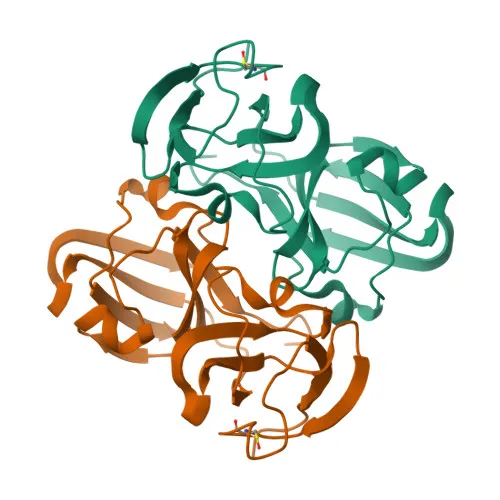
- The three-dimensional structure of beta-crystallin B1 has been determined, providing a framework for understanding its resilience against aggregation.
- An eye lens-specific protein, CRYBB1 expression is largely restricted to lens fiber cells, with no significant extra-lenticular expression.
Experimental Guidance and Technical Tips
- The immunogen used corresponds to the full-length human CRYBB1 protein (residues 1-252), suggesting that the antibody may recognize the native conformation in addition to denatured forms; conditions for reducing and non-reducing SDS-PAGE should be optimized.
- For Western blotting, a band of approximately 28 kDa is expected in human and mouse lens lysates; load appropriate positive and negative controls.
- In ELISA applications, consider using recombinant CRYBB1 as a standard and titrate the antibody to determine optimal working concentrations.
- As a polyclonal antibody, lot-to-lot variability is anticipated; validate each new lot in the intended assay system.
CamelBio: Your One-Stop Sourcing Bridge
CamelBio serves as a one-stop sourcing partner for IVD raw materials, offering a broad portfolio of validated and customizable antibodies, including polyclonal, monoclonal, and antibody pairs, as well as ancillary reagents essential for diagnostic development. For researchers and manufacturers focusing on eye lens proteins or cataract biomarker discovery, CamelBio can source or produce CRYBB1-specific antibodies in bulk, along with technical consultation from concept to clinic.
REQUEST A QUOTE
Our professional team will reply to you within one business day. Please feel free to contact us!