Polyclonal Antibodies
Anti-CRM1/XPO1 Rabbit Polyclonal Antibody for WB and ELISA - O14980
Item Number : CM0016232
Price varies based on specs and customizations
- Application
- WB, ELISA
- Cross Reactivity
- Human, Mouse
- Protein Weight
- 123kDa

Shipping:
Contact us to get shipping details Enjoy On-time Dispatch Guarantee.
Why Choose Us
Easy ordering process, quality products, and dedicated support for your business success.
Core Product Specifications and Parameters
| Parameter | Specification |
|---|---|
| Product Name | CRM1/XPO1 Rabbit pAb |
| Remarks/Alias | emb; CRM1; exp1; CRM-1; CRM1/XPO1 |
| Species | Human |
| Gene ID (Human) | 7514 |
| Gene ID | 7514 |
| Immunogen | Synthetic peptide |
| Source | Rabbit |
| Category | Polyclonal Antibodies |
| Application | WB, ELISA |
| Cross Reactivity | Human, Mouse |
| SWISS | O14980 |
| Protein Weight | 123kDa |
| Shipping | Ice bag |
Biological Background: Exportin-1 Function and Localization
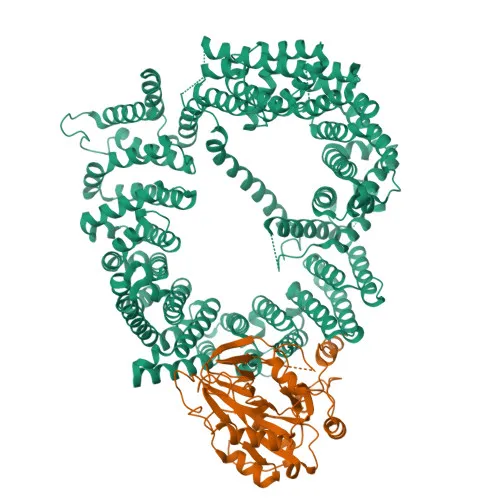
- Exportin-1 (CRM1/XPO1) is a nuclear export receptor that mediates the nucleocytoplasmic transport of proteins and RNAs bearing a leucine-rich nuclear export signal (NES).
- In the nucleus, it cooperatively binds NES-containing cargo and Ran-GTP, facilitated by RANBP3, forming a trimeric export complex.
- The export complex docks at the nuclear pore complex via nucleoporins, translocates to the cytoplasm, and disassembles upon Ran-GTP hydrolysis, releasing the cargo.
- CRM1 is responsible for the nuclear export of diverse cellular proteins and also mediates U3 snoRNA transport from Cajal bodies to nucleoli.
- It plays a critical role in viral replication by exporting unspliced or incompletely spliced viral RNAs from HIV-1, HTLV-1, and influenza A, interacting with viral proteins like HIV-1 Rev and HTLV-1 Rex.
- Subcellular localization includes the cytoplasm, nucleoplasm, Cajal bodies, and nucleolus, reflecting its function in multiple nuclear export pathways.
- CRM1 is broadly expressed across human tissues (heart, brain, lung, liver, etc.) but is notably absent in the kidney.
- Post-translational modifications include acetylation and phosphorylation, which may regulate its activity, and it contains repeat domains and RNA-binding capability.
Experimental Guidance and Technical Tips
- The immunogen corresponds to a conserved C‑terminal region (aa 964–1064) of human CRM1, supporting cross‑reactivity with mouse; confirm specificity by peptide competition assay.
- For Western blot, expect a band at ~123 kDa; optimize blocking conditions and antibody dilution for large‑molecular‑weight proteins.
- ELISA applications may require peptide coating or a capture‑antibody setup; validate in the relevant sample matrix.
- Consider nuclear/cytoplasmic fractionation to enrich CRM1 signals when studying subcellular distribution.
- As a nuclear export receptor, CRM1 function can be assessed using appropriate transport inhibitors as controls in functional assays.
CamelBio: Your One‑Stop Sourcing Bridge
CamelBio provides a comprehensive portfolio of IVD raw materials, including validated antibody pairs, recombinant proteins, and bulk ancillary reagents. Our CRM1/XPO1 antibody supports nuclear transport and virology research, with options for custom scale‑up and technical consultation. From concept to clinic, CamelBio bridges your diagnostic development needs with reliable one‑stop sourcing.
REQUEST A QUOTE
Our professional team will reply to you within one business day. Please feel free to contact us!