Polyclonal Antibodies
Anti-CRK/CRKII Polyclonal Antibody for WB, ELISA - P46108
Item Number : CM0024625
Price varies based on specs and customizations
- Application
- WB, ELISA
- Cross Reactivity
- Human, Mouse
- Protein Weight
- 34kDa

Shipping:
Contact us to get shipping details Enjoy On-time Dispatch Guarantee.
Why Choose Us
Easy ordering process, quality products, and dedicated support for your business success.
Core Product Specifications and Parameters
| Parameter | Value |
|---|---|
| Product Name | CRK/CRKII Rabbit pAb |
| Remarks/Alias | p38; CRKII; CRK/CRKII |
| Species | Human |
| Gene ID (Human) | 1398 |
| Gene ID | 1398 |
| Immunogen | Recombinant protein|Recombinant fusion protein containing a sequence corresponding to amino acids 1-304 of human CRK/CRKII (NP_058431.2). |
| Source | Rabbit |
| Category | Polyclonal Antibodies |
| Application | WB, ELISA |
| Cross Reactivity | Human, Mouse |
| SWISS | P46108 |
| Protein Weight | 34kDa |
| Shipping | Ice bag |
Biological Background: CRK/CRKII Function and Localization
- CRK, also known as adapter molecule crk or proto-oncogene c-Crk, is encoded by the CRK gene and exists as two major isoforms, CRKI and CRKII, through alternative splicing.
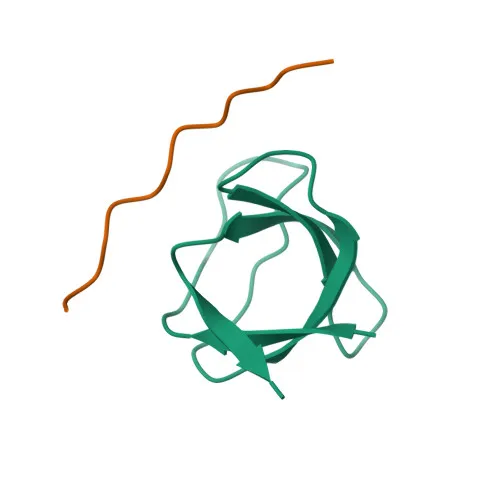
- CRK/CRKII functions as an adaptor protein containing SH2 and SH3 domains, linking tyrosine kinase signals to downstream effectors involved in cell adhesion, spreading, and migration.
- It regulates cell adhesion, spreading, and migration through BCAR1-CRK-RAPGEF1 signaling and RAP1 activation. Related references: PMID:31311869
- CRK mediates attachment-induced MAPK8 activation, membrane ruffling, and cell motility in a Rac-dependent manner.
- Through interactions with DOCK1 and DOCK4, CRK plays a role in phagocytosis of apoptotic cells and cell motility. Related references: PMID:19004829
- CRK may regulate EFNA5-EPHA3 signaling.
- Localizes to the cytoplasm and cell membrane, consistent with its role in signal transduction at the plasma membrane.
- Post-translational modifications include phosphorylation and acetylation; as a proto-oncogene, its dysregulation may contribute to oncogenic processes.
Experimental Guidance and Technical Tips
- For Western blot detection, the predicted molecular weight of CRKII is 34 kDa; additional bands corresponding to CRKI (~23 kDa) or modified forms may be observed.
- Optimize antibody dilution and incubation conditions based on endogenous expression levels in your specific cell or tissue lysates.
- Validate cross-reactivity in mouse samples if required, and include appropriate positive and negative controls to confirm specificity.
- For ELISA, determine optimal coating and detection parameters empirically; the antibody may be used as capture or detection reagent in compatible assay formats.
CamelBio: Your One-Stop Sourcing Bridge
CamelBio provides one-stop access to IVD raw materials, including validated antibody pairs, monoclonal and polyclonal antibodies, and ancillary reagents. This anti-CRK/CRKII polyclonal antibody supports research in cell adhesion, migration, and oncogenic signaling. Contact CamelBio for bulk orders and customized sourcing solutions.
REQUEST A QUOTE
Our professional team will reply to you within one business day. Please feel free to contact us!