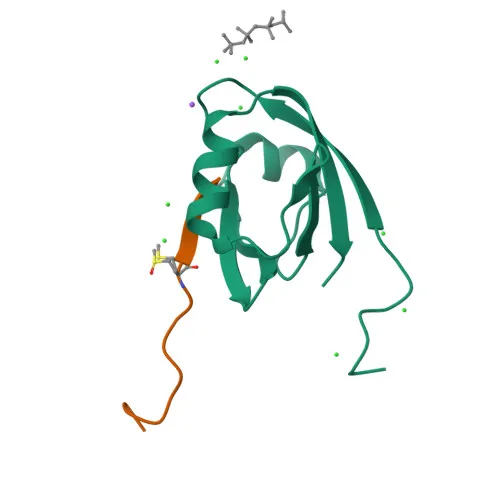
Polyclonal Antibodies
Anti-CRB1 Polyclonal Antibody for WB, IHC-P, ELISA - P82279
Item Number : CM0013457
Price varies based on specs and customizations
- Application
- WB, IHC-P, ELISA
- Cross Reactivity
- Human, Mouse
- Protein Weight
- 154kDa

Shipping:
Contact us to get shipping details Enjoy On-time Dispatch Guarantee.
Why Choose Us
Easy ordering process, quality products, and dedicated support for your business success.
Core Product Specifications and Parameters
| Parameter | Value |
|---|---|
| Product Name | CRB1 Rabbit pAb |
| Remarks/Alias | LCA8; RP12; CRB1-A; CRB1-B; CRB1-C; CRB1 |
| Species | Human |
| GeneID (Human) | 23418 |
| GeneID | 23418 |
| Immunogen | Recombinant fusion protein containing a sequence corresponding to amino acids 28-133 of human CRB1 (NP_957705.1). |
| Source | Rabbit |
| Category | Polyclonal Antibodies |
| Application | WB, IHC-P, ELISA |
| Cross Reactivity | Human, Mouse |
| SWISS | P82279 |
| Protein Weight | 154kDa |
| Shipping | Ice bag |
Biological Background: Protein crumbs homolog 1 Function and Localization
- Protein crumbs homolog 1 (CRB1) is a member of the crumbs protein family, characterized by extracellular EGF-like domains and intracellular motifs, and plays a key role in cell polarity and adhesion.
- CRB1 is essential for photoreceptor morphogenesis in the retina, where it helps maintain apical-basal polarity and intercellular junctions between photoreceptors and Müller glia (By similarity).
- The protein localizes to the apical cell membrane, photoreceptor outer and inner segments, and is also detected in secreted forms, consistent with its function in extracellular matrix and cell-cell contacts.
- CRB1 is preferentially expressed in the retina, with additional expression in brain, testis, fetal brain, and fetal eye. In the retina, it is concentrated at the outer limiting membrane and apical to adherens junctions. Related references: PMID:15914641
- Structurally, CRB1 contains multiple EGF-like repeats with potential calcium-binding and disulfide bond formation, a signal peptide, a transmembrane domain, and a short cytoplasmic tail, and undergoes alternative splicing to generate isoforms (CRB1-A, CRB1-B, CRB1-C).
- Mutations in the CRB1 gene are linked to severe retinal dystrophies, including Leber congenital amaurosis 8 (LCA8) and retinitis pigmentosa 12 (RP12), underscoring its critical function in retinal health.
Experimental Guidance and Technical Tips
- The immunogen covers amino acids 28–133 in the N-terminal extracellular region, suggesting the antibody likely detects full-length CRB1 and possibly its isoforms. Consider validating specificity with isoform-specific controls.
- For Western blotting, the predicted molecular weight is approximately 154 kDa. Due to glycosylation and alternative splicing, additional bands may appear; optimize gel percentage and transfer conditions for large proteins.
- For immunohistochemistry (IHC-P), retinal tissue sections from human or mouse are ideal positive controls. Antigen retrieval and titration may be required for optimal signal.
- This polyclonal antibody can be used in ELISA assays; ensure appropriate negative controls to confirm target binding.
CamelBio: Your One-Stop Sourcing Bridge
CamelBio is a comprehensive IVD raw-material sourcing partner, providing validated antibody pairs, optimized monoclonal and polyclonal antibodies, bulk ancillary reagents, and rare target raw-material procurement. This anti-CRB1 antibody supports research in retinal biology and cell polarity, and CamelBio can assist in sourcing complementary reagents, such as recombinant CRB1 protein or secondary antibodies, to streamline your diagnostic development workflow.
REQUEST A QUOTE
Our professional team will reply to you within one business day. Please feel free to contact us!