Polyclonal Antibodies
Anti-CRALBP Rabbit Polyclonal Antibody for WB, ELISA - P12271
Item Number : CM0029831
Price varies based on specs and customizations
- Application
- WB, ELISA
- Cross Reactivity
- Mouse, Rat
- Protein Weight
- 36kDa

Shipping:
Contact us to get shipping details Enjoy On-time Dispatch Guarantee.
Why Choose Us
Easy ordering process, quality products, and dedicated support for your business success.
Core Product Specifications and Parameters
| Parameter | Value |
|---|---|
| Product Name | CRALBP Rabbit pAb |
| Remarks/Alias | CRALBP |
| Species | Human |
| GeneID (human) | 6017 |
| GeneID | 6017 |
| Immunogen | Recombinant fusion protein containing a sequence corresponding to amino acids 1-317 of human CRALBP (NP_000317.1) |
| Source | Rabbit |
| Category | Polyclonal Antibodies |
| Application | WB, ELISA |
| Cross Reactivity | Mouse, Rat |
| SWISS | P12271 |
| Protein Weight | 36kDa |
| Shipping | Ice bag |
Biological Background: CRALBP Function and Localization
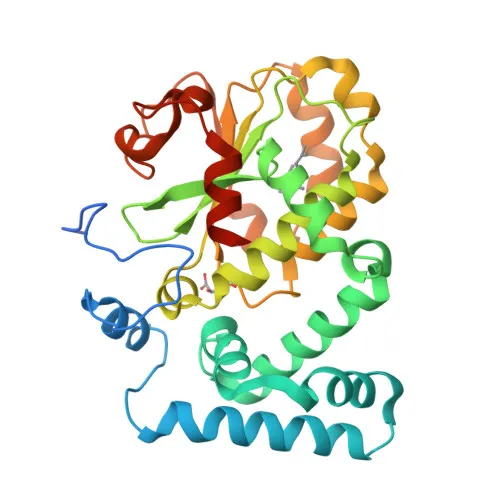
- Retinaldehyde-binding protein 1 (RLBP1), also known as cellular retinaldehyde-binding protein (CRALBP), is a soluble retinoid carrier essential for the proper function of rod and cone photoreceptors.
- CRALBP participates in the visual cycle: regeneration of active 11-cis-retinol and 11-cis-retinaldehyde from inactive 11-trans retinoid products, as well as de novo synthesis of these retinoids from 11-trans metabolic precursors.
- It is predominantly localized in the cytoplasm of retinal pigment epithelium (RPE) cells and Mueller glial cells within the retina; it is not present in photoreceptor cells.
- Expression is tissue-specific: retina and pineal gland are primary sites, consistent with its role in sensory transduction and vision.
- The protein is subject to post-translational acetylation, and mutations in RLBP1 are associated with disease variants (e.g., retinal disorders).
- Swiss-Prot keywords: 3D-structure, Acetylation, Cytoplasm, Disease variant, Proteomics identification, Reference proteome, Retinol-binding, Sensory transduction, Transport, Vision.
- The molecular weight of the mature protein is 36,474 Da (per UniProt), consistent with the observed band around 36 kDa in electrophoretic analyses.
Experimental Guidance and Technical Tips
- The immunogen spans nearly the full-length human CRALBP protein (amino acids 1–317), likely generating antibodies against multiple linear and conformational epitopes, which may enhance sensitivity in denaturing and native assays.
- For Western blotting, a band corresponding to the predicted molecular weight of ~36 kDa should be observed; consider using retinal tissue or RPE cell lysates as a positive control, given the tissue specificity.
- Cross-reactivity with mouse and rat is specified, but investigators should validate reactivity in their specific experimental systems, as sequence homology does not guarantee identical epitope presentation.
- In ELISA applications, the antibody may be used to detect recombinant or native CRALBP; consider optimizing coating conditions and detection ranges using purified recombinant protein as a standard.
- Since CRALBP is involved in the visual cycle, samples from light- or dark-adapted retinal tissues may exhibit different expression or modification states; plan experiments accordingly.
CamelBio: Your One-Stop Sourcing Bridge
CamelBio serves as a comprehensive IVD raw-material sourcing partner for diagnostic manufacturers and research laboratories, offering one-stop access to antibodies like anti-CRALBP for vision and retinoid metabolism studies. Our supply capabilities include validated antibody pairs, optimized monoclonal and polyclonal antibodies, and bulk ancillary reagents to support assay development. For rare or custom targets, CamelBio bridges the gap between concept and clinic, streamlining procurement from lead candidate identification to commercial scale-up.
REQUEST A QUOTE
Our professional team will reply to you within one business day. Please feel free to contact us!