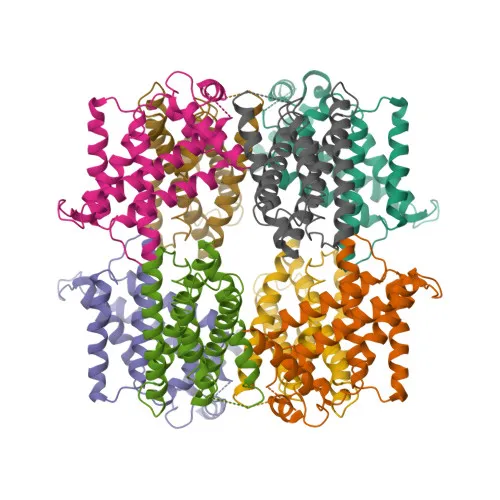
Polyclonal Antibodies
Anti-COQ7 Rabbit Polyclonal Antibody for WB and ELISA - Q99807
Item Number : CM0027974
Price varies based on specs and customizations
- Application
- WB, ELISA
- Cross Reactivity
- Human, Mouse, Rat
- Protein Weight
- 24kDa

Shipping:
Contact us to get shipping details Enjoy On-time Dispatch Guarantee.
Why Choose Us
Easy ordering process, quality products, and dedicated support for your business success.
Core Product Specifications and Parameters
| Parameter | Value |
|---|---|
| Product Name | COQ7 Rabbit pAb |
| Remarks/Alias | CAT5; CLK1; CLK-1; COQ10D8; COQ7 |
| Species | Human |
| Gene ID | 10229 |
| Immunogen | Recombinant fusion protein containing a sequence corresponding to amino acids 37-217 of human COQ7 (NP_057222.2) |
| Source | Rabbit |
| Category | Polyclonal Antibodies |
| Application | WB, ELISA |
| Cross Reactivity | Human, Mouse, Rat |
| SWISS | Q99807 |
| Protein Weight | 24kDa |
| Shipping | Ice bag |
Biological Background: COQ7 Function and Localization
- COQ7 encodes NADPH-dependent 3-demethoxyubiquinone 3-hydroxylase (also known as timing protein clk-1 homolog, ubiquinone biosynthesis monooxygenase COQ7, CAT5, CLK1, CLK-1, COQ10D8), a key enzyme in the final step of ubiquinone (coenzyme Q) biosynthesis.
- Catalyzes the C6 hydroxylation of 5-methoxy-2-methyl-3-(all-trans-polyprenyl)benzoquinone (DMQ) using a diiron center and NADH via substrate-mediated reduction; accepts DMQ substrates with various polyprenyl tail lengths efficiently. Related references: PMID:23445365 PMID:28409910
- Plays a structural role in the COQ enzyme complex, stabilizing other COQ polypeptides (By similarity).
- Acts in the nucleus to modulate mitochondrial stress responses by potentially regulating gene expression, independent of its mitochondrial ubiquinone biosynthesis function. Related references: PMID:25961505
- Localizes to the mitochondrial inner membrane, mitochondrion, nucleus, and chromosome, reflecting its dual role in energy metabolism and nuclear signaling.
- Expressed dominantly in heart and skeletal muscle, tissues with high mitochondrial activity and energy demands.
- Mutations in COQ7 are associated with primary mitochondrial disease, neurodegeneration, and neuropathy, highlighting its clinical relevance.
Experimental Guidance and Technical Tips
- The immunogen (aa 37-217) targets the central region of COQ7, making the antibody likely to recognize full-length COQ7 (~24 kDa) in Western blot; use positive controls such as heart or skeletal muscle lysates where COQ7 expression is high.
- Consider optimizing blocking and washing conditions to reduce background, as polyclonal antibodies may exhibit some non-specific binding.
- For ELISA, validate the coating antigen concentration and detection conditions to ensure specific signal.
- Cross-reactivity with mouse and rat suggests conserved epitopes; confirm reactivity with your species of interest and consider using species-specific detection antibodies.
- Given COQ7's localization to both mitochondria and nucleus, subcellular fractionation prior to Western blot may help elucidate compartment-specific functions.
CamelBio: Your One-Stop Sourcing Bridge
CamelBio serves as a comprehensive one-stop partner for diagnostic manufacturers and research institutes, supplying high-quality IVD raw materials, including validated antibody pairs, optimized monoclonal/polyclonal antibodies (such as this COQ7 antibody), and bulk ancillary reagents. Leveraging our extensive network, we also source rare-target raw materials to accelerate your ubiquinone biosynthesis, mitochondrial disease, and neurodegeneration research projects—supporting every stage from concept to clinic.
REQUEST A QUOTE
Our professional team will reply to you within one business day. Please feel free to contact us!