Polyclonal Antibodies
Anti-COPS3 Polyclonal Antibody for WB, IF/ICC, ELISA - Q9UNS2
Item Number : CM0030559
Price varies based on specs and customizations
- Application
- WB, IF/ICC, ELISA
- Cross Reactivity
- Human, Mouse, Rat
- Protein Weight
- 48kDa

Shipping:
Contact us to get shipping details Enjoy On-time Dispatch Guarantee.
Why Choose Us
Easy ordering process, quality products, and dedicated support for your business success.
Core Product Specifications and Parameters
| Parameter | Value |
|---|---|
| Product Name | COPS3 Rabbit pAb |
| Remarks/Alias | CSN3; SGN3; COPS3 |
| Species | Human |
| GeneID (Human) | 8533 |
| GeneID | 8533 |
| Immunogen | Recombinant fusion protein containing a sequence corresponding to amino acids 194-423 of human COPS3 (NP_003644.2) |
| Source | Rabbit |
| Category | Polyclonal Antibodies |
| Application | WB, IF/ICC, ELISA |
| Cross Reactivity | Human, Mouse, Rat |
| SWISS | Q9UNS2 |
| Protein Weight | 48kDa |
| Shipping | Ice bag |
Biological Background: COPS3 Function and Localization
- Protein identity and isoforms: COPS3, also known as CSN3 or SGN3, is the COP9 signalosome complex subunit 3, a core component of the evolutionarily conserved COP9 signalosome (CSN). It is encoded by the COPS3 gene, and alternative splicing generates multiple isoforms.
- Core CSN function in ubiquitin regulation: COPS3 is an integral part of the CSN complex, which acts as a master regulator of the ubiquitin-proteasome system. The CSN catalyzes the deneddylation of cullin subunits in SCF-type E3 ubiquitin ligases (e.g., SCF, CSA, DDB2), thereby reducing their ligase activity and modulating the degradation of key cellular proteins.
- Involvement in phosphorylation-mediated signaling: The CSN complex, via COPS3, associates with CK2 and PKD kinases to phosphorylate critical proteins such as p53/TP53, c-Jun/JUN, IκBα/NFKBIA, ITPK1, and IRF8/ICSBP. This phosphorylation can either promote (JUN) or protect (TP53) degradation by the ubiquitin system, fine-tuning cellular responses.
- Role in keratinocyte differentiation: COPS3 mediates the interaction between desmosomes and the CSN complex, a process essential for keratinocyte differentiation. It promotes the deneddylation of EGFR, leading to reduced EGFR protein stability and its translocation away from the cell membrane. Related references: PMID:28891468
- Subcellular localization: COPS3 is found in the cytoplasm, nucleus, and at cell junctions. This multi-compartment distribution reflects the CSN's diverse functions in protein degradation, signal transduction, and cell adhesion.
- Tissue expression: Widely expressed across human tissues, with particularly high levels in heart and skeletal muscle, suggesting important roles in cardiac and muscle biology.
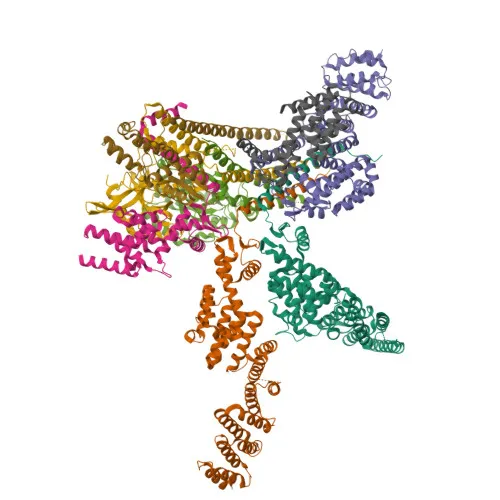
- Post-translational modifications and structural features: The protein is subject to acetylation and phosphorylation, as indicated by proteomics studies. Its 3D structure has been resolved (shared with the CSN complex), and it is classified as a reference proteome component with direct protein sequencing evidence.
Experimental Guidance and Technical Tips
- The immunogen covers amino acids 194–423 of human COPS3, a region within the C-terminal portion of the protein. This design may target epitopes conserved across human, mouse, and rat, supporting the reported cross-reactivity. When using this antibody in WB, expect a band near 48 kDa; consider using lysates from heart or skeletal muscle tissue where COPS3 is highly expressed.
- For IF/ICC, validate the subcellular localization pattern (cytoplasmic, nuclear, and cell junction staining) in the appropriate cell type. Inclusion of appropriate controls (e.g., siRNA knockdown or knockout cell lines) is recommended to confirm signal specificity.
- For ELISA, the antibody can be used as a capture or detection reagent after careful titration. Always validate performance in your specific sample matrix, as endogenous COPS3 levels may vary widely depending on cell type and treatment condition.
CamelBio: Your One-Stop Sourcing Bridge
As a dedicated provider of IVD raw materials, CamelBio offers one-stop access to high-quality antibodies, antigens, and ancillary reagents, helping diagnostic manufacturers and research labs streamline their assay development from concept to clinic. The COPS3 polyclonal antibody is part of our expanding portfolio targeting components of the ubiquitin-proteasome system and signalosome pathways. In addition to validated polyclonals, we can supply optimized monoclonal antibodies, antibody pairs, recombinant proteins, and bulk reagents for your specific research and diagnostic needs. Contact us to explore custom sourcing solutions for rare targets or large-scale production requirements.
REQUEST A QUOTE
Our professional team will reply to you within one business day. Please feel free to contact us!