Polyclonal Antibodies
Anti-COPA Polyclonal Antibody for WB and ELISA - P53621
Item Number : CM0021536
Price varies based on specs and customizations
- Application
- WB, ELISA
- Cross Reactivity
- Mouse
- Protein Weight
- 138kDa

Shipping:
Contact us to get shipping details Enjoy On-time Dispatch Guarantee.
Why Choose Us
Easy ordering process, quality products, and dedicated support for your business success.
Core Product Specifications and Parameters
| Parameter | Specification |
|---|---|
| Product Name | COPA Rabbit pAb |
| Remarks/Alias | AILJK; HEP-COP; alpha-COP; COPA |
| Species | Human |
| GeneID | 1314 |
| Immunogen | Synthetic peptide (aa 550-650 of human COPA, NP_001091868.1) |
| Source | Rabbit |
| Category | Polyclonal Antibodies |
| Application | WB, ELISA |
| Cross Reactivity | Mouse |
| SWISS | P53621 |
| Protein Weight | 138kDa |
| Shipping | Ice bag |
Biological Background: COPA Function and Localization
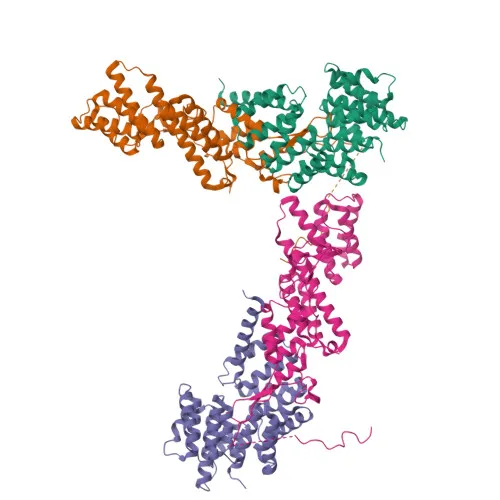
- COPA encodes the alpha subunit of the coatomer complex (alpha-COP), a key component of COPI-coated vesicles involved in retrograde transport from the Golgi to the endoplasmic reticulum and intra-Golgi trafficking.
- The coatomer complex is a cytosolic hetero-oligomer that binds to dilysine motifs on cargo proteins and assembles onto Golgi membranes in an ADP-ribosylation factor (ARF)-dependent manner, facilitating vesicle budding.
- COPA is essential for maintaining Golgi structural integrity and plays roles in the processing, activity, and endocytic recycling of LDL receptors.
- An alternative splicing variant of COPA produces xenin, a peptide hormone found in gastrointestinal mucosa that stimulates pancreatic secretion and modulates gut motility, possibly via neurotensin receptors.
- COPA is uniformly expressed across a broad range of adult and fetal tissues; xenin is specifically detected in gastric, duodenal, and jejunal endocrine cells and circulates in blood.
- The protein localizes predominantly to the cytoplasm, Golgi apparatus membrane, and COPI-coated vesicle membranes, with the xenin fragment being secreted.
- Post-translational modifications include methylation and phosphorylation; mutations in COPA have been associated with disease variants (e.g., autoimmune interstitial lung, joint, and kidney disease).
Experimental Guidance and Technical Tips
- This polyclonal antibody was raised against a synthetic peptide spanning amino acids 550–650 of human COPA; it is predicted to recognize the full-length protein (~138 kDa) in Western blot.
- For Western blot, consider using a suitable loading control and optimizing blocking conditions to reduce non-specific binding due to the polyclonal nature.
- Validate specificity in the appropriate cell or tissue lysate, such as HeLa cells or mouse tissues (given the reported mouse cross-reactivity).
- For ELISA, ensure that the coating antigen is compatible; the immunogen peptide or recombinant COPA protein can be used as a standard.
CamelBio: Your One-Stop Sourcing Bridge
CamelBio is your integrated partner for IVD raw materials, supporting research and diagnostic development from early-stage biomarker discovery through clinical validation. For researchers investigating COPI vesicle transport and Golgi function, we offer not only this anti-COPA polyclonal antibody but also access to a wide range of validated antibody pairs, recombinant proteins, and ancillary reagents to accelerate your assay development. Our sourcing capabilities extend to rare and custom targets, ensuring a reliable supply chain for your most demanding projects.
REQUEST A QUOTE
Our professional team will reply to you within one business day. Please feel free to contact us!