Monoclonal Antibodies
Anti-Connexin 43 Monoclonal Antibody for WB and ELISA - P17302
Item Number : CM0007044
Price varies based on specs and customizations
- Application
- WB, ELISA
- Cross Reactivity
- Human, Mouse, Rat
- Protein Weight
- 43 kDa

Shipping:
Contact us to get shipping details Enjoy On-time Dispatch Guarantee.
Why Choose Us
Easy ordering process, quality products, and dedicated support for your business success.
Core Product Specifications and Parameters
| Parameter | Value |
|---|---|
| Product Name | Connexin 43 Rabbit mAb |
| Remarks/Alias | HSS; CMDR; CX43; EKVP; GJAL; ODDD; AVSD3; EKVP3; HLHS1; PPKCA; Connexin 43 |
| Species | Human |
| GeneID (Human) | 2697 |
| GeneID | 2697 |
| Immunogen | Synthetic peptide corresponding to a sequence within amino acids 300-382 of human Connexin 43 (NP_000156.1) |
| Source | Rabbit |
| Category | Monoclonal Antibodies |
| Application | WB, ELISA |
| Cross Reactivity | Human, Mouse, Rat |
| SWISS | P17302 |
| Protein Weight | 43 kDa |
| Shipping | Ice bag |
Biological Background: Connexin 43 Function and Localization
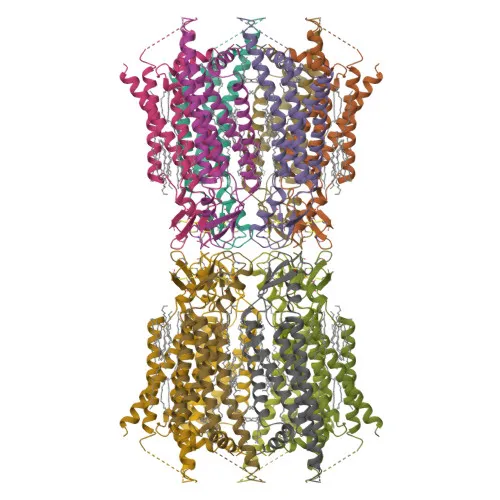
- Encoded by GJA1 (GeneID 2697), Connexin 43 is also known as Cx43 or gap junction alpha-1 protein, a 43-kDa transmembrane phosphoprotein (UniProt P17302).
- Forms gap junction channels that permit exchange of ions, metabolites, and signaling molecules between adjacent cells, essential for electrical and metabolic coupling in tissues.
- Expressed prominently in heart intercalated disks, cochlea, and skin keratinocytes; critical for cardiac morphogenesis, potassium recycling in hearing, and bladder functional capacity regulation.
- Functions as a negative regulator of bladder capacity by enhancing intercellular transmission, sensitizing bladder muscles to cholinergic stimuli.
- Participates in innate immune defense by translocating antiviral second messengers (2',3'-cGAMP and 2-5A) from virus-infected cells to neighboring immune and non-immune cells.
Related references:
PMID:24077100
PMID:31992625
PMID:40010341 - Localizes to the cell membrane at gap junctions and to the endoplasmic reticulum; contains four transmembrane domains with both N- and C-termini cytoplasmic.
- Subject to extensive post-translational modifications including phosphorylation, acetylation, S-nitrosylation, and ubiquitination, which regulate channel activity, trafficking, and turnover.
Experimental Guidance and Technical Tips
- The immunogen corresponds to the C-terminal cytoplasmic tail (residues 300–382) of human Connexin 43, a region highly conserved across human, mouse, and rat, supporting the observed multi-species reactivity.
- For Western blotting, a specific signal near 43 kDa is expected; variations in band pattern may occur due to phosphorylation-induced mobility shifts or proteolytic cleavage.
- In ELISA applications, the peptide-based immunogen typically ensures high target specificity; however, proper controls (e.g., peptide competition) are recommended to confirm signal.
- Optimal working conditions should be empirically determined using positive control lysates such as heart tissue extracts or Connexin 43-overexpressing cell lines.
CamelBio: Your One-Stop Sourcing Bridge
CamelBio supports diagnostic manufacturers and research laboratories with a comprehensive portfolio of IVD raw materials and technical services. For gap junction research and connexin-targeted assay development, we offer validated antibody pairs, optimized monoclonal antibodies, and ancillary reagents to streamline your workflow from concept to clinic. Our sourcing network ensures reliable access to specialized reagents, including rare targets like Connexin 43.
REQUEST A QUOTE
Our professional team will reply to you within one business day. Please feel free to contact us!