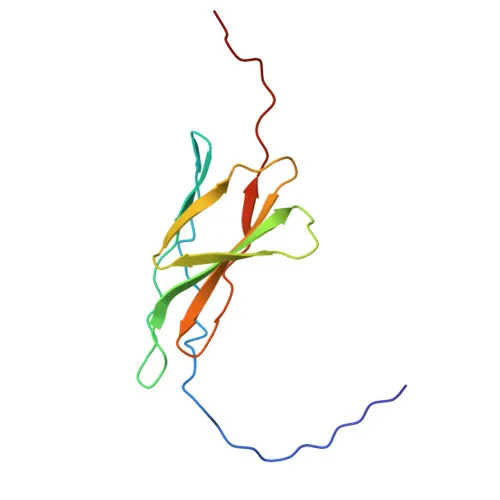
Polyclonal Antibodies
Anti-CNTN3 Rabbit Polyclonal Antibody for WB, ELISA - Q9P232
Item Number : CM0016179
Price varies based on specs and customizations
- Application
- WB, ELISA
- Cross Reactivity
- Mouse, Rat
- Protein Weight
- 113kDa

Shipping:
Contact us to get shipping details Enjoy On-time Dispatch Guarantee.
Why Choose Us
Easy ordering process, quality products, and dedicated support for your business success.
Core Product Specifications and Parameters
| Parameter | Value |
|---|---|
| Product Name | CNTN3 Rabbit pAb |
| Remarks/Alias | PCS; PANG; BIG-1; CNTN3 |
| Species | Human |
| GeneID (Human) | 5067 |
| GeneID | 5067 |
| Immunogen | Recombinant fusion protein containing a sequence corresponding to amino acids 20-110 of human CNTN3 (NP_065923.1) |
| Source | Rabbit |
| Category | Polyclonal Antibodies |
| Application | WB, ELISA |
| Cross Reactivity | Mouse, Rat |
| SWISS | Q9P232 |
| Protein Weight | 113kDa |
| Shipping | Ice bag |
Biological Background: Contactin-3 Function and Localization
- Contactin-3 is a member of the contactin family of immunoglobulin superfamily cell adhesion molecules, encoded by the CNTN3 gene (aliases: BIG-1, PANG).
- It mediates cell surface interactions during nervous system development, contributing to axonal guidance and network formation.
- Exhibits some neurite outgrowth-promoting activity, as demonstrated by similarity to related contactins.
- The protein is anchored to the cell membrane via a glycosylphosphatidylinositol (GPI) motif, placing it on the outer leaflet of the plasma membrane.
- Tissue specificity: In the brain, CNTN3 is expressed in the frontal lobe, occipital lobe, cerebellum, and amygdala, suggesting roles in both cognitive and motor pathways.
- Structurally, it contains multiple immunoglobulin-like domains and disulfide bonds, typical of adhesion molecules, and is post-translationally modified by glycosylation.
- Keywords associated with CNTN3 include: Cell adhesion, Cell membrane, Disulfide bond, Glycoprotein, GPI-anchor, Immunoglobulin domain, Lipoprotein, Membrane, Signal, Repeat.
Experimental Guidance and Technical Tips
- The immunogen corresponds to amino acids 20-110 of the human CNTN3 N-terminal region; the polyclonal nature of the antibody may yield broader epitope recognition. For western blotting, a band near 113 kDa is expected.
- Given that CNTN3 is a GPI-anchored membrane protein, consider using membrane protein extraction protocols or appropriate lysis buffers to enhance detection.
- This antibody is reported to cross-react with mouse and rat CNTN3; validate specificity and sensitivity in the relevant species' tissue or cell lines before quantitative analyses.
- For ELISA applications, optimize coating concentrations and detection antibodies to match your assay format; inclusion of a recombinant CNTN3 protein control is recommended.
CamelBio: Your One-Stop Sourcing Bridge
CamelBio connects diagnostic manufacturers, labs, and research institutes with a comprehensive catalog of IVD raw materials, including validated antibodies, matched antigen pairs, and bulk ancillary reagents. For researchers investigating neural cell adhesion and developmental pathways, this anti-CNTN3 antibody is part of our neural target portfolio, backed by our commitment to quality supply. Our dedicated sourcing team also supports custom procurement for rare targets and large-scale production, bridging your project from concept to clinic.
REQUEST A QUOTE
Our professional team will reply to you within one business day. Please feel free to contact us!