Polyclonal Antibodies
Anti-CNOT1 Rabbit Polyclonal Antibody for WB, IF/ICC, ELISA - A5YKK6
Item Number : CM0030018
Price varies based on specs and customizations
- Application
- WB, IF/ICC, ELISA
- Cross Reactivity
- Human, Mouse
- Protein Weight
- 267kDa

Shipping:
Contact us to get shipping details Enjoy On-time Dispatch Guarantee.
Why Choose Us
Easy ordering process, quality products, and dedicated support for your business success.
Easy Process
Quality Assured
Dedicated Support
Core Product Specifications and Parameters
| Parameter | Value |
|---|---|
| Product Name | CNOT1 Rabbit pAb |
| Remarks/Alias | NOT1; CDC39; HPE12; NOT1H; VIBOS; AD-005; CNOT1 |
| Species | Human |
| Gene ID (Human) | 23019 |
| Gene ID | 23019 |
| Immunogen | Recombinant fusion protein containing a sequence corresponding to amino acids 2137-2376 of human CNOT1 (NP_057368.3) |
| Source | Rabbit |
| Category | Polyclonal Antibodies |
| Application | WB, IF/ICC, ELISA |
| Cross Reactivity | Human, Mouse |
| SWISS | A5YKK6 |
| Protein Weight | 267kDa |
| Shipping | Ice bag |
Biological Background: CNOT1 Function and Localization
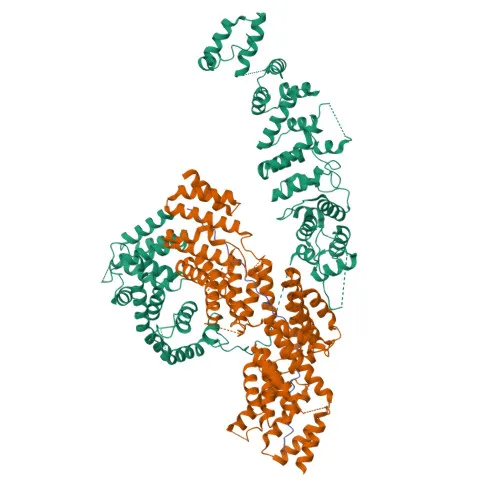
- CNOT1 is the large scaffolding subunit of the CCR4-NOT complex, a major cellular mRNA deadenylase involved in bulk mRNA degradation, miRNA-mediated repression, and translational control.
- The protein functions as a transcriptional repressor, inhibiting ligand-dependent transcriptional activation by nuclear receptors.
- CNOT1 mediates the recruitment of the CCR4-NOT complex to miRNA targets through association with TNRC6 (GW182) proteins, linking it to the RISC complex.
- It is involved in the degradation of AU-rich element (ARE)-containing mRNAs, likely through interaction with ZFP36.
- Subcellularly, CNOT1 localizes to the cytoplasm, P-bodies, and nucleus, consistent with its roles in mRNA decay and transcription regulation.
- The protein is strongly expressed in brain, heart, thymus, spleen, kidney, liver, placenta, and lung, with weaker expression in skeletal muscle and colon.
- Post-translational modifications include phosphorylation, and disease-associated variants have been linked to autism spectrum disorder, holoprosencephaly, and intellectual disability.
Experimental Guidance and Technical Tips
- The immunogen spans amino acids 2137–2376 within the C-terminal region of human CNOT1. Verify antibody specificity in your system, as epitope recognition may differ among isoforms.
- For Western blotting, note that CNOT1 has a high molecular weight (~267 kDa). Use a low-percentage SDS-PAGE gel (e.g., 6%) and extended transfer times for complete protein transfer.
- In immunofluorescence/ICC, expect both cytoplasmic and nuclear staining, with possible enrichment in P-bodies. Co-localization studies with P-body markers may be informative.
- Cross-reactivity is confirmed for human and mouse CNOT1. If working with other species, validate cross-reactivity experimentally.
CamelBio: Your One-Stop Sourcing Bridge
- As a dedicated IVD raw-material partner, CamelBio offers one-stop access to high-quality antibodies, recombinant proteins, and ancillary reagents for mRNA biology and gene expression research.
- Beyond this anti-CNOT1 polyclonal antibody, we supply validated antibody pairs, optimized monoclonal antibodies, and bulk reagents to support diagnostic assay development from concept to clinic.
- Our sourcing capabilities extend to rare targets and customized solutions, ensuring reliable supply for your gene regulation and transcriptome studies.
REQUEST A QUOTE
Our professional team will reply to you within one business day. Please feel free to contact us!