Polyclonal Antibodies
Anti-CNGA4 Rabbit Polyclonal Antibody for WB, ELISA - Q8IV77
Item Number : CM0013013
Price varies based on specs and customizations
- Application
- WB, ELISA
- Cross Reactivity
- Human, Mouse
- Protein Weight
- 66kDa

Shipping:
Contact us to get shipping details Enjoy On-time Dispatch Guarantee.
Why Choose Us
Easy ordering process, quality products, and dedicated support for your business success.
Core Product Specifications and Parameters
| Parameter | Value |
|---|---|
| Product Name | CNGA4 Rabbit pAb |
| Remarks/Alias | CNG4; CNG5; CNCA2; CNG-4; CNGB2; OCNC2; OCNCb; OCNCBETA; CNGA4 |
| Species | Human |
| GeneID (Human) | 1262 |
| GeneID | 1262 |
| Immunogen | Recombinant fusion protein containing a sequence corresponding to amino acids 416-575 of human CNGA4 (NP_001032406.1). |
| Source | Rabbit |
| Category | Polyclonal Antibodies |
| Application | WB, ELISA |
| Cross Reactivity | Human, Mouse |
| SWISS | Q8IV77 |
| Protein Weight | 66kDa |
| Shipping | Ice bag |
Biological Background: CNGA4 Function and Localization
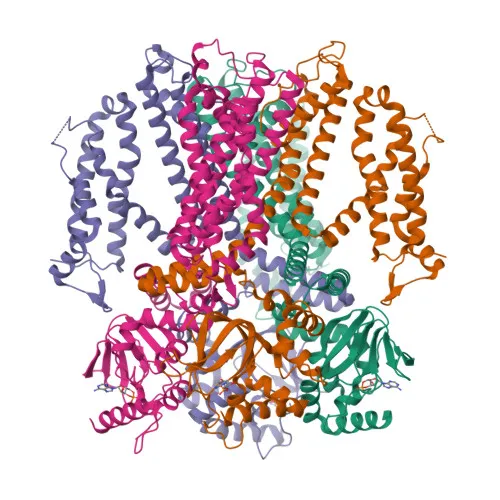
- CNGA4 (Cyclic nucleotide-gated channel alpha-4) is a pore-forming subunit of the olfactory cyclic nucleotide-gated (CNG) channel, also known as OCNC2. It is encoded by the CNGA4 gene in humans.
- Primarily expressed in olfactory sensory neurons, CNGA4 operates in the cilia where it mediates the conversion of odorant chemical stimuli into electrical signals.
- Upon odorant stimulation, CNGA4 facilitates cAMP-dependent Ca²⁺ influx, triggering neuron depolarization and an increase in intracellular Ca²⁺ levels.
- The rise in Ca²⁺ both potentiates the olfactory response via activation of Ca²⁺-dependent Cl⁻ channels and serves as a negative feedback signal to desensitize the channel, enabling rapid adaptation to odorants.
- CNGA4 conducts both cAMP- and cGMP-gated ion currents with permeability to monovalent and divalent cations, playing a central role in olfactory signal transduction.
- Localized to the cilium membrane (a specialized cell projection), CNGA4 is a multi-pass transmembrane protein that belongs to the ligand-gated ion channel family.
- The protein contains cyclic nucleotide-binding domains and exhibits alternative splicing, suggesting potential isoform diversity.
Experimental Guidance and Technical Tips
- The immunogen is designed from the C-terminal region (amino acids 416-575) of human CNGA4, which may confer high specificity to the target.
- For Western blot (WB), the predicted molecular weight of CNGA4 is approximately 66 kDa. Validate detection in olfactory epithelial tissue or cell lysates expressing CNGA4.
- For ELISA applications, this polyclonal antibody can be tested as a capture or detection antibody. Optimize the antibody concentration and pair with a suitable secondary antibody.
- Cross-reactivity with mouse CNGA4 is reported; experimental validation in the relevant sample system is recommended to confirm specificity.
- Consider using appropriate controls, such as knockout cell lines or blocking peptides, to verify specific binding.
CamelBio: Your One-Stop Sourcing Bridge
As a dedicated one-stop sourcing partner for IVD raw materials, CamelBio supports diagnostic manufacturers and research laboratories with a comprehensive portfolio of antibodies and ancillary reagents. This anti-CNGA4 polyclonal antibody is designed for researchers investigating olfactory signal transduction and ion channel function, and CamelBio can further assist with validated antibody pairs, bulk reagent orders, and customized rare-target sourcing. From concept to clinic, we streamline your procurement process with high-quality, traceable products.
REQUEST A QUOTE
Our professional team will reply to you within one business day. Please feel free to contact us!