Polyclonal Antibodies
Anti-CNGA3 Rabbit Polyclonal Antibody for WB, ELISA - Q16281
Item Number : CM0027386
Price varies based on specs and customizations
- Application
- WB, ELISA
- Cross Reactivity
- Human, Mouse, Rat
- Protein Weight
- 79kDa

Shipping:
Contact us to get shipping details Enjoy On-time Dispatch Guarantee.
Why Choose Us
Easy ordering process, quality products, and dedicated support for your business success.
Core Product Specifications and Parameters
| Parameter | Value |
|---|---|
| Product Name | CNGA3 Rabbit pAb |
| Remarks/Alias | CNG3; ACHM2; CCNC1; CCNCa; CNCG3; CCNCalpha; CNGA3 |
| Species | Human |
| GeneID (Human) | 1261 |
| GeneID | 1261 |
| Immunogen | Recombinant fusion protein containing a sequence corresponding to amino acids 1-165 of human CNGA3 (NP_001289.1) |
| Source | Rabbit |
| Category | Polyclonal Antibodies |
| Application | WB, ELISA |
| Cross Reactivity | Human, Mouse, Rat |
| SWISS | Q16281 |
| Protein Weight | 79kDa |
| Shipping | Ice bag |
Biological Background: CNGA3 Function and Localization
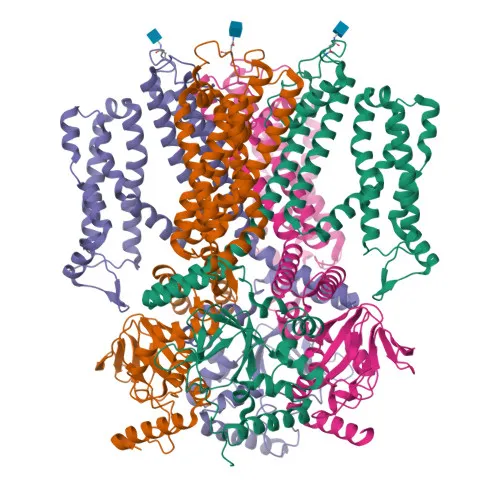
- CNGA3 is the alpha-3 subunit of cyclic nucleotide-gated (CNG) channels, a family of ion channels primarily expressed in cone photoreceptor cells and involved in sensory transduction.
- Functions as the pore-forming subunit mediating cone photoresponses at bright light: in the dark, high cGMP levels keep the channel open, allowing Na(+) and Ca(2+) influx; light-induced cGMP decrease closes the channel, leading to membrane hyperpolarization and signal termination (PubMed:10888875, 12815043, 34969976). Related references: PMID:10888875 PMID:12815043 PMID:34969976
- Conducts both cGMP- and cAMP-gated ion currents with permeability to monovalent (Na(+)) and divalent (Ca(2+)) cations (PubMed:12815043). Related references: PMID:12815043
- Also acts as a pore-forming subunit of gustatory CNG channels in taste buds, potentially sensing oral extracellular pH to modulate taste cell excitability.
- Subcellular localization: cell membrane.
- Tissue specificity: prominently expressed in the retina.
- Clinically, mutations in CNGA3 are associated with autosomal recessive achromatopsia 2 (ACHM2) and Leber congenital amaurosis, emphasizing its essential role in vision.
- The protein undergoes N-glycosylation and the gene is subject to alternative splicing, generating multiple isoforms.
Experimental Guidance and Technical Tips
- The immunogen covers amino acids 1-165 (N-terminal region) of human CNGA3, suggesting potential recognition of N-terminal epitopes and alternatively spliced isoforms.
- For Western blot, optimize membrane protein extraction using mild detergents; avoid boiling to prevent channel aggregation. Expected band near 79 kDa, but glycosylation may shift migration.
- Cross-reactivity with mouse and rat allows testing in rodent retinal models; validate specificity in relevant tissue or cell lines.
- For ELISA, use the recombinant immunogen as a positive control and pair with a matched detection antibody for sandwich assay development.
CamelBio: Your One-Stop Sourcing Bridge
CamelBio provides a streamlined one-stop sourcing solution for IVD raw materials, from concept to clinic, supporting your CNGA3 and vision research needs. We supply validated antibody pairs, optimized recombinant proteins, and bulk ancillary reagents, along with customized development services for monoclonal/polyclonal antibodies and rare-target sourcing tailored to diagnostic applications.
REQUEST A QUOTE
Our professional team will reply to you within one business day. Please feel free to contact us!