Polyclonal Antibodies
Anti-CNGA2 Polyclonal Antibody for WB, ELISA - Q16280
Item Number : CM0027294
Price varies based on specs and customizations
- Application
- WB, ELISA
- Cross Reactivity
- Human, Mouse, Rat
- Protein Weight
- 76kDa

Shipping:
Contact us to get shipping details Enjoy On-time Dispatch Guarantee.
Why Choose Us
Easy ordering process, quality products, and dedicated support for your business success.
Core Product Specifications and Parameters
| Parameter | Value |
|---|---|
| Product Name | CNGA2 Rabbit pAb |
| Remarks/Alias | CNCA; CNG2; CNCA1; OCNC1; OCNCa; OCNCALPHA; CNGA2 |
| Species | Human |
| GeneID (Human) | 1260 |
| GeneID | 1260 |
| Immunogen | Synthetic peptide; A synthetic peptide corresponding to a sequence within amino acids 1-100 of human CNGA2 (NP_005131.1) |
| Source | Rabbit |
| Category | Polyclonal Antibodies |
| Application | WB, ELISA |
| Cross Reactivity | Human, Mouse, Rat |
| SWISS | Q16280 |
| Protein Weight | 76kDa |
| Shipping | Ice bag |
Biological Background: CNGA2 Function and Localization
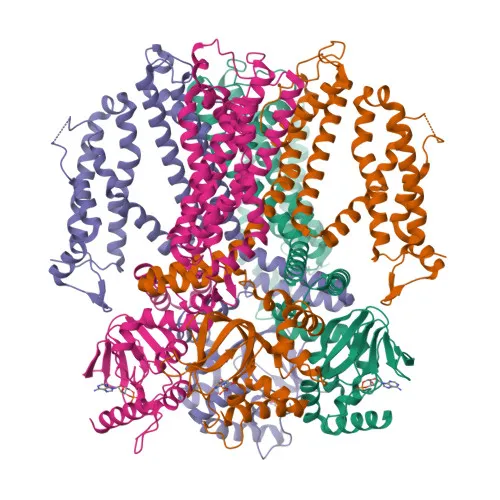
- CNGA2 encodes the pore-forming alpha-2 subunit of the olfactory cyclic nucleotide-gated (CNG) channel, also designated OCNC1.
- It assembles into a tetrameric channel that opens in response to intracellular cAMP or cGMP, mediating cation influx upon odorant stimulation.
- This channel is essential for olfactory signal transduction: odorant binding to receptors elevates cAMP, activating CNGA2 and causing depolarization of olfactory sensory neurons.
- The resulting Ca2+ influx potentiates the response via Ca2+-activated chloride channels and triggers feedback desensitization, allowing rapid adaptation.
- CNGA2 is specifically localized to the ciliary membrane of olfactory sensory neurons, consistent with its role in primary odor detection.
- The protein contains transmembrane helices, a cyclic nucleotide-binding domain, and a coiled-coil region; it binds calmodulin, highlighting its regulation by Ca2+.
- Key functional keywords include calcium transport, cAMP- and cGMP-binding, sensory transduction, and voltage-gated-like ion channel activity.
Experimental Guidance and Technical Tips
- The immunogen was a synthetic peptide from the N-terminal region (aa 1–100) of human CNGA2; therefore, the antibody may detect full-length CNGA2 as well as potential N-terminal variants.
- For Western blot, a band around 76 kDa is expected; consider optimizing blocking and antibody dilution to reduce background given the hydrophobic nature of the transmembrane protein.
- This antibody can be used in ELISA; validate coating conditions and consider a peptide competition assay if detecting native oligomeric channel complexes.
- It exhibits reactivity with human, mouse, and rat CNGA2 per the supplier; for other species, verify sequence homology before use.
CamelBio: Your One-Stop Sourcing Bridge
CamelBio provides diagnostic manufacturers, labs, and research institutes with one-stop access to IVD raw materials, technical services, and consulting—covering every stage from concept to clinic. As part of our broad portfolio for ion channel and neuroscience research, we offer validated antibodies like this anti-CNGA2 polyclonal antibody alongside complementary reagents and assay development support. Whether you need optimized antibody pairs, bulk ancillary reagents, or rare target sourcing, our B2B platform streamlines your procurement for faster R&D progression.
REQUEST A QUOTE
Our professional team will reply to you within one business day. Please feel free to contact us!