Polyclonal Antibodies
Anti-CLEC4M Rabbit Polyclonal Antibody for WB, IF/ICC, ELISA - Q9H2X3
Item Number : CM0014423
Price varies based on specs and customizations
- Application
- WB, IF/ICC, ELISA
- Cross Reactivity
- Human, Mouse, Rat
- Protein Weight
- 45kDa

Shipping:
Contact us to get shipping details Enjoy On-time Dispatch Guarantee.
Why Choose Us
Easy ordering process, quality products, and dedicated support for your business success.
Core Product Specifications and Parameters
| Parameter | Specification |
|---|---|
| Product Name | CLEC4M Rabbit pAb |
| Remarks/Alias | CD299; LSIGN; CD209L; L-SIGN; DCSIGNR; HP10347; DC-SIGN2; DC-SIGNR; CLEC4M |
| Species | Human |
| Gene ID (Human) | 10332 |
| Gene ID | 10332 |
| Immunogen | Synthetic peptide corresponding to a sequence within amino acids 71-399 of human CLEC4M (NP_055072.3) |
| Source | Rabbit |
| Category | Polyclonal Antibodies |
| Application | WB, IF/ICC, ELISA |
| Cross Reactivity | Human, Mouse, Rat |
| SWISS | Q9H2X3 |
| Protein Weight | 45kDa |
| Shipping | Ice bag |
Biological Background: CLEC4M Function and Localization
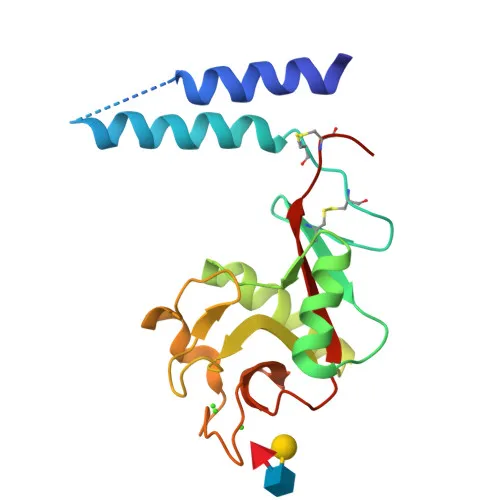
- CLEC4M (C-type lectin domain family 4 member M), also known as DC-SIGNR, L-SIGN, CD299, and DC-SIGN2, is a transmembrane receptor belonging to the C-type lectin family. It functions as a pathogen-recognition receptor involved in immune surveillance, particularly in the liver.
- The protein mediates endocytosis of pathogens, leading to their degradation in lysosomal compartments. It also serves as a receptor for ICAM3, likely through binding to mannose-like carbohydrates.
- CLEC4M acts as an attachment receptor for numerous viruses, including HIV-1, SARS-CoV, Hepatitis C virus, Ebolavirus, Influenzavirus, and coronaviruses, facilitating host cell entry.
- It recognizes bacterial pathogens such as M. bovis, potentially via dendritic cell interactions.
- Subcellularly, CLEC4M is located at the cell membrane and can also be found in secreted forms.
- Tissue expression is predominantly in liver sinusoidal endothelial cells and lymph nodes, with additional presence in placental endothelium, type II alveolar cells, and lung endothelial cells. It is not expressed in macrophages.
- The protein contains a carbohydrate recognition domain (CRD) with mannose-binding specificity, and its activity is calcium-dependent.
- Alternative splicing generates multiple isoforms, and the protein undergoes post-translational modifications including glycosylation and disulfide bond formation.
Experimental Guidance and Technical Tips
- The immunogen corresponds to a large region (aa 71-399) of human CLEC4M, which may generate a polyclonal antibody recognizing multiple epitopes. For Western blotting (WB), consider using a starting dilution of 1:500-1:1000 and expect a band at approximately 45 kDa. Validate in your specific sample system.
- For immunofluorescence (IF)/ICC, the antibody is expected to detect membrane-localized CLEC4M. Fixation and permeabilization conditions should be optimized for your cell type. Use appropriate controls.
- For ELISA applications, the antibody may be used as a capture or detection reagent. Titration and pairing experiments are recommended to determine optimal working concentrations.
CamelBio: Your One-Stop Sourcing Bridge
CamelBio offers a comprehensive range of IVD raw materials, including validated antibodies, antigens, and ancillary reagents, supporting diagnostic manufacturers and research laboratories. This anti-CLEC4M rabbit polyclonal antibody is part of our portfolio for studying pathogen-host interactions, viral entry mechanisms, and immune receptor functions. We provide reliable sourcing solutions for rare targets, bulk quantities, and customized antibody development to accelerate your projects from concept to clinic.
Product Datasheet
Anti-CLEC4M Rabbit Polyclonal Antibody for WB, IF/ICC, ELISA - Q9H2X3
REQUEST A QUOTE
Our professional team will reply to you within one business day. Please feel free to contact us!