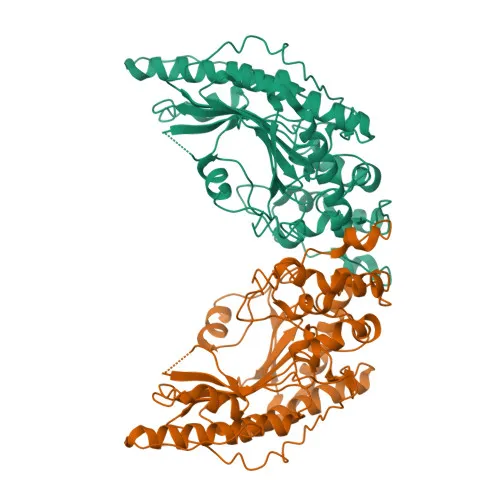
Monoclonal Antibodies
Anti-CKM/CKB Rabbit Monoclonal Antibody for WB, IF-P, IHC-P, ELISA - P06732
Item Number : CM0010618
Price varies based on specs and customizations
- Application
- WB, IF-P, IHC-P, ELISA
- Cross Reactivity
- Human, Mouse, Rat
- Protein Weight
- 43 kDa

Shipping:
Contact us to get shipping details Enjoy On-time Dispatch Guarantee.
Why Choose Us
Easy ordering process, quality products, and dedicated support for your business success.
Core Product Specifications and Parameters
| Parameter | Specification |
|---|---|
| Product Name | CKM/CKB Rabbit mAb |
| Remarks/Alias | CKMM; M-CK; CPK-M |
| Species | Human |
| Gene ID (Human) | 1158 |
| Gene ID | 1158 |
| Immunogen | Recombinant fusion protein containing a sequence corresponding to amino acids 3-381 of human CKM/CKB (NP_001815.2) |
| Source | Rabbit |
| Category | Monoclonal Antibodies |
| Application | WB, IF-P, IHC-P, ELISA |
| Cross Reactivity | Human, Mouse, Rat |
| SWISS | P06732 |
| Protein Weight | 43 kDa |
| Shipping | Ice bag |
Biological Background: Creatine Kinase M-type (CKM) Function and Localization
- CKM (creatine kinase M-type), also known as M-CK or CPK-M, is a key enzyme in cellular energy metabolism (UniProt: P06732).
- It reversibly catalyzes the transfer of a phosphate group between ATP and creatine phosphate, maintaining ATP levels in tissues with high and fluctuating energy demands, such as skeletal muscle, heart, and brain.
- CKM belongs to the creatine kinase family, which includes cytosolic and mitochondrial isoforms, each with tissue-specific distributions.
- The protein is predominantly localized in the cytoplasm, where it facilitates rapid energy buffering and transport.
- CKM is a phosphoprotein subject to post-translational modifications that may regulate its activity and subcellular localization.
- Keywords from UniProt highlight its roles in ATP-binding, nucleotide-binding, kinase activity, and phosphoprotein signaling.
- The canonical molecular weight of CKM is approximately 43 kDa, consistent with the immunogen design.
Experimental Guidance and Technical Tips
- The immunogen corresponds to amino acids 3-381 of human CKM (NP_001815.2), covering nearly the full-length protein, suggesting the antibody recognizes the native conformation.
- For Western blot, a starting dilution of 1:1000 is often suitable, but optimization is recommended for the specific sample type and detection system.
- In immunofluorescence (IF-P), permeabilization with 0.1% Triton X-100 is generally compatible; fixed samples may benefit from antigen retrieval optimization.
- For immunohistochemistry (IHC-P), heat-induced epitope retrieval in citrate buffer (pH 6.0) can be tested; antibody dilution should be empirically determined.
- The antibody cross-reacts with mouse and rat CKM, as indicated, making it suitable for studies in rodent models.
- Always include appropriate positive and negative controls (e.g., CKM-rich tissue lysates, knockout/knockdown samples) to confirm specificity.
CamelBio: Your One-Stop Sourcing Bridge
CamelBio offers diagnostic manufacturers, labs, and research institutes streamlined access to premium IVD raw materials, from validated antibody pairs and optimized monoclonal/polyclonal antibodies to bulk ancillary reagents. The anti-CKM/CKB antibody supports energy metabolism and muscle disease research, and we can assist with custom sourcing for rare target analogs and complementary reagents. Let CamelBio be your procurement partner in translating discovery into clinical utility.
Product Datasheet
Anti-CKM/CKB Rabbit Monoclonal Antibody for WB, IF-P, IHC-P, ELISA - P06732
REQUEST A QUOTE
Our professional team will reply to you within one business day. Please feel free to contact us!