Polyclonal Antibodies
Anti-CHRNA6 Rabbit Polyclonal Antibody for WB, ELISA - Q15825
Item Number : CM0028594
Price varies based on specs and customizations
- Application
- WB, ELISA
- Cross Reactivity
- Human, Mouse
- Protein Weight
- 57kDa

Shipping:
Contact us to get shipping details Enjoy On-time Dispatch Guarantee.
Why Choose Us
Easy ordering process, quality products, and dedicated support for your business success.
Core Product Specifications and Parameters
| Parameter | Value |
|---|---|
| Product Name | CHRNA6 Rabbit pAb |
| Remarks/Alias | CHNRA6; CHRNA6 |
| Species | Human |
| GeneID (human) | 8973 |
| GeneID | 8973 |
| Immunogen | Recombinant protein |
| Source | Rabbit |
| Category | Polyclonal Antibodies |
| Application | WB, ELISA |
| Cross Reactivity | Human, Mouse |
| SWISS | Q15825 |
| Protein Weight | 57kDa |
| Shipping | Ice bag |
Biological Background: CHRNA6 Function and Localization
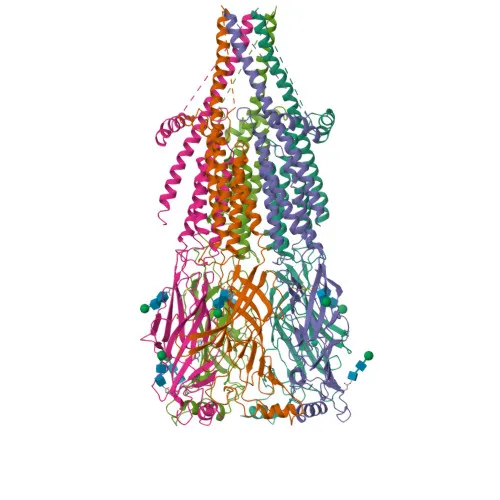
- CHRNA6 (neuronal acetylcholine receptor subunit alpha-6) is a member of the ligand-gated ion channel receptor family, forming pentameric cation channels that mediate fast synaptic transmission in the nervous system.
- It assembles with CHRNB2, CHRNB3, and CHRNA4 subunits to create functional nAChRs that exhibit high sensitivity to acetylcholine and nicotine, and high calcium permeability.
Related references: PMID:16835356 - These alpha-6-containing receptors are predominantly expressed in a limited set of brain regions, including dopaminergic neurons (substantia nigra, ventral tegmental area), noradrenergic neurons (locus coeruleus), and cells of the visual system (retina, superior colliculus).
Related references: PMID:16835356 - At nerve terminals, alpha-6 nAChRs modulate the release of dopamine and gamma-aminobutyric acid (GABA) in response to nicotine, implicating them in reward, addiction, and visual processing pathways.
- The protein localizes to the synaptic cell membrane, consistent with its role as a postsynaptic receptor subunit.
- Post-translational modifications include glycosylation, phosphorylation, and conserved disulfide bonds essential for receptor assembly and function. Alternative splicing generates multiple isoforms (evidenced by 3D-structure, alternative splicing keywords).
Experimental Guidance and Technical Tips
- This polyclonal antibody was generated against a recombinant protein corresponding to amino acids 350–440 of human CHRNA6 (an intracellular loop region). It is recommended for western blotting (WB) and ELISA, as per the supplier’s specifications.
- For WB, a primary band is expected around 57 kDa. Consider using brain tissue lysates or cultured neuronal cells (human or mouse) as positive controls, given the restricted expression pattern.
- Cross-reactivity is reported for human and mouse. Validate the antibody in your specific model system, especially if using knock-out tissue or siRNA-treated cells to confirm specificity.
- Optimize antibody dilution and incubation conditions empirically; typical starting concentrations for polyclonal antibodies in WB range from 0.5–2 µg/mL.
- This antibody has not been validated for immunohistochemistry or immunocytochemistry—perform pilot experiments with appropriate fixation and antigen retrieval if needed.
CamelBio: Your One-Stop Sourcing Bridge
CamelBio streamlines IVD raw-material procurement for diagnostic developers and neuroscience researchers, offering reliable access to validated antibodies, antigens, and ancillary reagents. This CHRNA6 polyclonal antibody exemplifies our commitment to sourcing quality tools for studying nicotinic acetylcholine receptors—whether you need bulk quantities, custom conjugation, or complementary products like CHRNB2 or CHRNA4 antibodies, our one-stop platform bridges the gap from concept to clinic. Reach out to explore our full portfolio of neurotransmitter receptor reagents tailored to your assay development needs.
REQUEST A QUOTE
Our professional team will reply to you within one business day. Please feel free to contact us!