Polyclonal Antibodies
Anti-CHRNA1 Polyclonal Antibody for WB, IF, IHC, ELISA - P02708
Item Number : CM0026988
Price varies based on specs and customizations
- Application
- WB, IF-P, IHC-P, ELISA
- Cross Reactivity
- Human, Mouse
- Protein Weight
- 52kDa

Shipping:
Contact us to get shipping details Enjoy On-time Dispatch Guarantee.
Why Choose Us
Easy ordering process, quality products, and dedicated support for your business success.
Core Product Specifications and Parameters
| Parameter | Value |
|---|---|
| Product Name | CHRNA1 Rabbit pAb |
| Remarks/Alias | ACHRA; ACHRD; CHRNA; CMS1A; CMS1B; CMS2A; FCCMS; SCCMS; CHRNA1 |
| Species | Human |
| GeneID (Human) | 1134 |
| Immunogen | Recombinant protein; Recombinant fusion protein containing a sequence corresponding to amino acids 105-220 of human CHRNA1 (NP_000070.1). |
| Source | Rabbit |
| Category | Polyclonal Antibodies |
| Application | WB, IF-P, IHC-P, ELISA |
| Cross Reactivity | Human, Mouse |
| SWISS | P02708 |
| Protein Weight | 52kDa |
| Shipping | Ice bag |
Biological Background: CHRNA1 Function and Localization
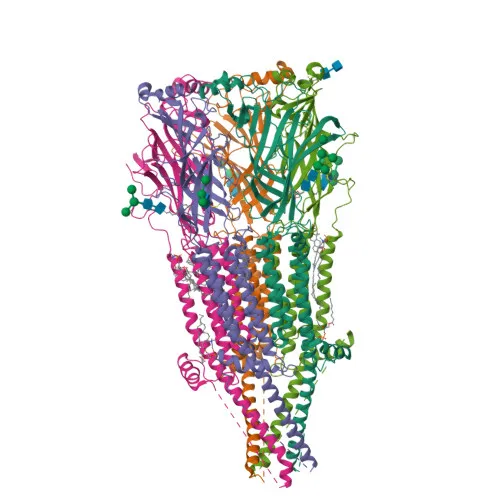
- CHRNA1 encodes the alpha subunit of the nicotinic acetylcholine receptor (AChR), a ligand-gated ion channel that mediates fast synaptic transmission at the neuromuscular junction. Upon acetylcholine binding, the receptor undergoes a conformational change leading to channel opening and cation influx.
- The protein is also known by several aliases: ACHRA, ACHRD, CHRNA, CMS1A, CMS1B, CMS2A, FCCMS, SCCMS. Two isoforms exist due to alternative splicing: isoform 1 is skeletal muscle-specific, while isoform 2 is widely expressed in brain, heart, kidney, liver, lung, and thymus.
- CHRNA1 is a member of the ligand-gated ion channel family, characterized by a large N-terminal extracellular domain, four transmembrane helices, and a cytoplasmic loop. It contains disulfide bonds and glycosylation sites critical for receptor assembly and function.
- Subcellularly, the AChR is located at the postsynaptic cell membrane, where it clusters at the neuromuscular junction. Proper localization requires interaction with rapsyn and other scaffolding proteins.
- Mutations in CHRNA1 are associated with congenital myasthenic syndromes (CMS), including CMS1A, CMS1B, and CMS2A, as well as slow-channel congenital myasthenic syndrome (SCCMS). These mutations alter channel kinetics, receptor expression, or agonist affinity.
- The immunogen used to generate this antibody corresponds to amino acids 105-220 of the human CHRNA1 protein, which lies within the extracellular domain. This region is likely to recognize both isoforms and is conserved across human and mouse, enabling cross-reactivity.
- Post-translational modifications include N-linked glycosylation and disulfide bond formation, which are important for folding and stability. The protein has a calculated molecular weight of ~52kDa, consistent with the observed band in western blot.
Experimental Guidance and Technical Tips
- This polyclonal antibody is raised in rabbit against a recombinant fragment (aa 105-220). For western blot, a band around 52kDa is expected in human and mouse skeletal muscle lysates; consider using reducing conditions and a suitable blocking buffer to minimize non-specific binding.
- For immunoprecipitation, the antibody’s recognition of an extracellular epitope may be advantageous; however, validation in the relevant cell/tissue system is recommended.
- In immunofluorescence and immunohistochemistry, optimal fixation and permeabilization methods should be determined empirically, as the epitope lies in the extracellular domain which may be sensitive to over-fixation. Use appropriate controls like knockout cell lines or blocking peptides.
- For ELISA, the antibody can be used as capture or detection; titrate to determine optimal working concentration.
CamelBio: Your One-Stop Sourcing Bridge
CamelBio acts as a comprehensive sourcing bridge for IVD raw materials, offering validated antibody pairs, bulk ancillary reagents, and rare target antibodies like this CHRNA1 polyclonal antibody. Whether you are developing diagnostic assays for neuromuscular disorders or researching ion channel biology, CamelBio provides one-stop access to high-quality antibodies and technical support to streamline your development pipeline.
REQUEST A QUOTE
Our professional team will reply to you within one business day. Please feel free to contact us!