Polyclonal Antibodies
Anti-CHRM3 Polyclonal Antibody for WB, ELISA - P20309
Item Number : CM0022004
Price varies based on specs and customizations
- Application
- WB, ELISA
- Cross Reactivity
- Human, Mouse, Rat
- Protein Weight
- 66kDa

Shipping:
Contact us to get shipping details Enjoy On-time Dispatch Guarantee.
Why Choose Us
Easy ordering process, quality products, and dedicated support for your business success.
Core Product Specifications and Parameters
| Parameter | Value |
|---|---|
| Product Name | CHRM3 Rabbit pAb |
| Remarks/Alias | HM3, PBS, EGBRS, CHRM3 |
| Species | Human |
| GeneID (Human) | 1131 |
| GeneID | 1131 |
| Immunogen | Recombinant fusion protein containing a sequence corresponding to amino acids 390-475 of human CHRM3 (NP_000731.1) |
| Source | Rabbit |
| Category | Polyclonal Antibodies |
| Application | WB, ELISA |
| Cross Reactivity | Human, Mouse, Rat |
| SWISS | P20309 |
| Protein Weight | 66kDa |
| Shipping | Ice bag |
Biological Background: CHRM3 Function and Localization
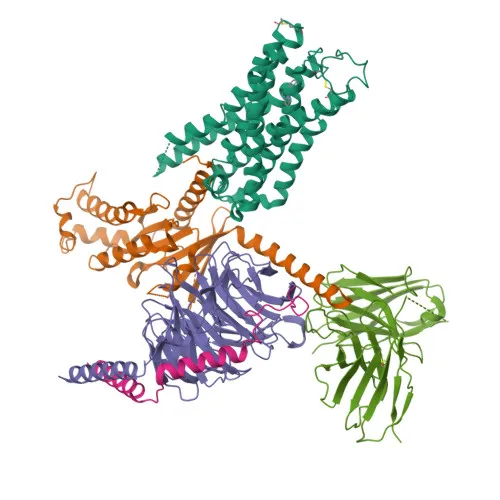
- Muscarinic acetylcholine receptor M3 (CHRM3), also known as HM3, EGBRS, or PBS, is a G protein-coupled receptor (GPCR) that belongs to the muscarinic receptor family.
- Upon acetylcholine binding, CHRM3 activates Gq/11 proteins, leading to phospholipase C stimulation, inositol trisphosphate (IP3) production, and intracellular calcium mobilization—a primary phosphoinositide (Pi) turnover response.
- It mediates various cellular responses including inhibition of adenylate cyclase and modulation of potassium channels, influencing smooth muscle contraction, glandular secretion, and neuronal excitability.
- Subcellularly, CHRM3 resides predominantly at the cell membrane, enriched at postsynaptic and basolateral membranes, and also detectable in the endoplasmic reticulum membrane.
- Post-translational modifications include N-linked glycosylation and phosphorylation, which regulate receptor trafficking, desensitization, and signaling.
- The receptor contains seven transmembrane helices, characteristic of the GPCR superfamily, and features a conserved disulfide bond important for structural integrity.
Experimental Guidance and Technical Tips
- The immunogen corresponds to the intracellular C-terminal region (amino acids 390–475), likely ensuring recognition of the full-length receptor. For Western blot, expect a band around 66 kDa; post-translational modifications may cause slight shifts.
- Due to cross-reactivity with human, mouse, and rat, the antibody is suitable for conserved epitope studies; validate in appropriate tissue or cell lines expressing CHRM3.
- For ELISA, consider direct or indirect formats; preliminary titration and blocking optimization are recommended for each application.
CamelBio: Your One-Stop Sourcing Bridge
CamelBio serves as a comprehensive supply partner for diagnostic raw materials, offering this anti-CHRM3 polyclonal antibody alongside a broad portfolio of validated antibodies and reagents for GPCR and signaling research. Our sourcing capabilities include bulk antibodies, ancillary reagents, and customized antibody development to accelerate your assay and diagnostic kit manufacturing. Whether you need standard catalog items or rare-target raw materials, CamelBio bridges the gap from research concept to clinical application.
REQUEST A QUOTE
Our professional team will reply to you within one business day. Please feel free to contact us!