Polyclonal Antibodies
Anti-CHIT1 Rabbit Polyclonal Antibody for WB, IHC-P, ELISA - Q13231
Item Number : CM0019591
Price varies based on specs and customizations
- Application
- WB, IHC-P, ELISA
- Cross Reactivity
- Human, Mouse
- Protein Weight
- 52kDa

Shipping:
Contact us to get shipping details Enjoy On-time Dispatch Guarantee.
Why Choose Us
Easy ordering process, quality products, and dedicated support for your business success.
Core Product Specifications and Parameters
| Parameter | Value |
|---|---|
| Product Name | CHIT1 Rabbit pAb |
| Remarks/Alias | CHI3; CHIT; CHITD; CHIT1 |
| Species | Human |
| GeneID (Human) | 1118 |
| GeneID | 1118 |
| Immunogen | Recombinant fusion protein containing a sequence corresponding to amino acids 217-466 of human CHIT1 (NP_003456.1). |
| Source | Rabbit |
| Category | Polyclonal Antibodies |
| Application | WB, IHC-P, ELISA |
| Cross Reactivity | Human, Mouse |
| SWISS | Q13231 |
| Protein Weight | 52kDa |
| Shipping | Ice bag |
Biological Background: CHIT1 Function and Localization
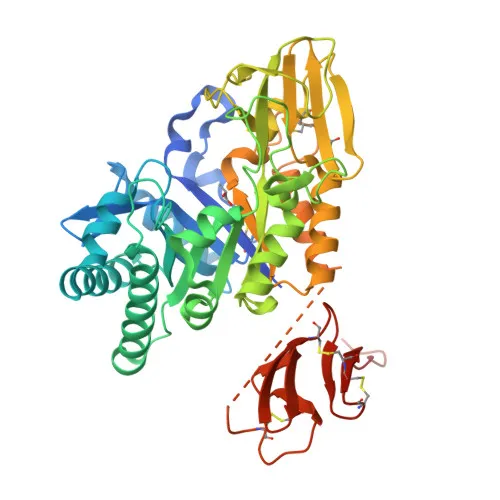
- CHIT1 encodes chitotriosidase-1, a secreted glycoprotein belonging to the glycosyl hydrolase 18 family, involved in chitin degradation.
- The protein hydrolyzes chitin, chitotriose, and chitobiose, playing a role in defense against chitin-containing pathogens such as nematodes.
- Alternative splicing produces isoform 3, which lacks enzymatic activity.
- Subcellular localization includes secretion into the extracellular space and lysosomal compartment.
- Tissue expression is prominent in spleen and macrophages, consistent with an immune defense function.
- Post-translational modifications include glycosylation and disulfide bond formation, essential for stability and activity.
- Contains a chitin-binding domain; classified under hydrolase, carbohydrate metabolism, and polysaccharide degradation.
- Direct protein sequencing evidence supports its identification.
Experimental Guidance and Technical Tips
- The immunogen spans amino acids 217–466 of human CHIT1, targeting the catalytic domain but excluding the signal peptide. This region may detect both active isoforms and the catalytically inactive isoform 3 if the epitope is conserved.
- For Western blotting (WB), consider using lysates from human macrophage cell lines or spleen tissue as positive controls. Expected band size ~52 kDa; note that glycosylation may cause slight migration shifts.
- In immunohistochemistry (IHC-P), test antibody performance on formalin-fixed, paraffin-embedded human spleen sections with appropriate antigen retrieval methods.
- ELISA applications may be used to quantify recombinant CHIT1 or endogenous protein in biological fluids; validate with a standard curve using purified protein.
- Cross-reactivity with mouse suggests utility in mouse models; however, sequence alignment is recommended to confirm epitope conservation.
CamelBio: Your One-Stop Sourcing Bridge
CamelBio offers comprehensive sourcing solutions for IVD raw materials, from established antibodies like this anti-CHIT1 polyclonal antibody to custom reagent development. With expertise in immune-related targets and bulk supply capabilities, we support diagnostic manufacturers and research institutions in advancing chitinase biomarker and infectious disease projects. Contact us for antibody pairs, conjugation services, and technical consultation tailored to your assay development needs.
REQUEST A QUOTE
Our professional team will reply to you within one business day. Please feel free to contact us!