Polyclonal Antibodies
Anti-CHIA Rabbit Polyclonal Antibody for WB and ELISA - Q9BZP6
Item Number : CM0030168
Price varies based on specs and customizations
- Application
- WB, ELISA
- Cross Reactivity
- Human, Mouse, Rat
- Protein Weight
- 52kDa

Shipping:
Contact us to get shipping details Enjoy On-time Dispatch Guarantee.
Why Choose Us
Easy ordering process, quality products, and dedicated support for your business success.
Core Product Specifications and Parameters
| Parameter | Specification |
|---|---|
| Product Name | CHIA Rabbit pAb |
| Remarks/Alias | CHIT2; AMCASE; TSA1902; CHIA |
| Species | Human |
| GeneID (human) | 27159 |
| GeneID | 27159 |
| Immunogen | Recombinant fusion protein containing a sequence corresponding to amino acids 1-368 of human CHIA (NP_001244932.1) |
| Source | Rabbit |
| Category | Polyclonal Antibodies |
| Application | WB, ELISA |
| Cross Reactivity | Human, Mouse, Rat |
| SWISS | Q9BZP6 |
| Protein Weight | 52kDa |
| Shipping | Ice bag |
Biological Background: CHIA Function and Localization
- CHIA, or acidic mammalian chitinase, is a glycosidase (hydrolase) that degrades chitin and chitotriose, and may defend against nematodes, fungi, and other pathogens.
- It is involved in the T-helper cell type 2 (Th2) immune response, specifically contributing to IL-13-mediated inflammation and stimulating chemokine production from pulmonary epithelial cells.
- The protein promotes phosphorylation of AKT1, protecting lung epithelial cells from apoptosis; this function is inhibited by allosamidin, suggesting carbohydrate-binding dependence.
- Localized to both the secreted fraction and the cytoplasm, CHIA is highly expressed in the stomach and detected at lower levels in the lung, with elevated levels in asthmatic lung epithelium.
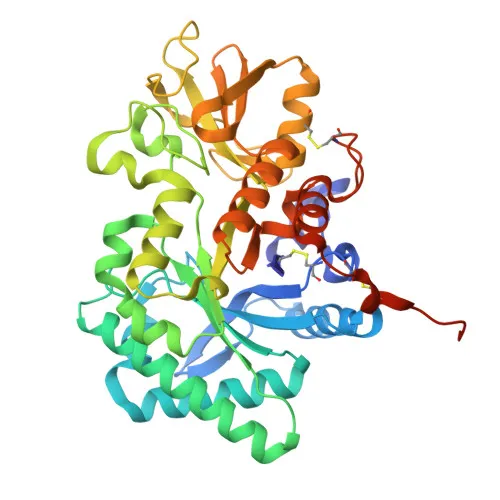
- The chitinase contains a signal peptide, a catalytic domain, and a chitin-binding domain; post-translational modifications include disulfide bonds, and alternative splicing generates multiple isoforms.
- UniProt keywords highlight 3D-structure availability, alternative splicing, disulfide bonds, and classification as a glycosidase and hydrolase involved in carbohydrate metabolism and inflammatory response.
Experimental Guidance and Technical Tips
- The immunogen comprises the N-terminal region (aa 1-368) of human CHIA; therefore, the antibody may detect full-length protein and N-terminal fragments. Confirm band specificity in your sample system.
- For Western blot, the predicted molecular weight is approximately 52 kDa; reducing conditions may yield a band at this size. Use positive controls such as human stomach or lung epithelial cell lysates.
- The antibody is reported to cross-react with mouse and rat CHIA; validation in these species is recommended by testing tissue lysates from stomach or lung where CHIA is expressed.
- For ELISA, use the antibody as a capture or detection reagent after confirming reactivity with recombinant or native CHIA. Optimal dilutions should be determined empirically.
- Since the antibody is polyclonal, be aware of possible batch-to-batch variation and potential reactivity with other chitinase family members; pre-adsorption may be considered for enhanced specificity.
CamelBio: Your One-Stop Sourcing Bridge
CamelBio acts as a comprehensive sourcing bridge for IVD raw materials, supporting researchers from early-stage development to clinical translation. This anti-CHIA polyclonal antibody offers a tool for studying chitin metabolism, Th2 immune pathways, and inflammatory lung diseases. Beyond individual reagents, we supply validated antibody pairs, optimized polyclonal and monoclonal antibodies, and bulk ancillary reagents, with the capability to procure rare-target raw materials to meet your specific assay needs.
REQUEST A QUOTE
Our professional team will reply to you within one business day. Please feel free to contact us!