Polyclonal Antibodies
Anti-CHD4 Polyclonal Antibody for WB, IHC-P, IF/ICC, ELISA - Q14839
Item Number : CM0016346
Price varies based on specs and customizations
- Application
- WB, IHC-P, IF/ICC, ELISA
- Cross Reactivity
- Human, Mouse, Rat
- Protein Weight
- 218kDa

Shipping:
Contact us to get shipping details Enjoy On-time Dispatch Guarantee.
Why Choose Us
Easy ordering process, quality products, and dedicated support for your business success.
Core Product Specifications and Parameters
| Parameter | Value |
|---|---|
| Product Name | CHD4 Rabbit pAb |
| Remarks/Alias | CHD-4; Mi-2b; SIHIWES; Mi2-BETA; CHD4 |
| Species | Human |
| GeneID (Human) | 1108 |
| GeneID | 1108 |
| Immunogen | Recombinant fusion protein containing a sequence corresponding to amino acids 1520-1690 of human CHD4 (NP_001264.2) |
| Source | Rabbit |
| Category | Polyclonal Antibodies |
| Application | WB, IHC-P, IF/ICC, ELISA |
| Cross Reactivity | Human, Mouse, Rat |
| SWISS | Q14839 |
| Protein Weight | 218kDa |
| Shipping | Ice bag |
Biological Background: CHD4 Function and Localization
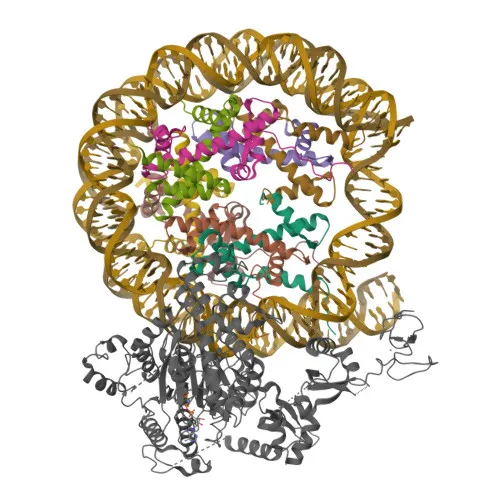
- CHD4 (Chromodomain-helicase-DNA-binding protein 4), also known as Mi2-beta, is an ATP-dependent chromatin remodeler that binds and distorts nucleosomal DNA. Related references: PMID:28977666 PMID:32543371
- It is a core component of the NuRD (Nucleosome Remodeling and Deacetylase) complex, which couples chromatin remodeling with histone deacetylation to regulate transcription. Related references: PMID:16428440 PMID:17626165 PMID:28977666
- CHD4 is recruited to DNA double-strand breaks via ZMYND8, where it facilitates transcriptional repression and promotes repair by homologous recombination. Related references: PMID:25593309
- The protein is implicated in neurogenesis, although the mechanistic details remain to be fully elucidated.
- CHD4 contains two chromodomains, a central ATPase/helicase domain, and multiple zinc-finger motifs, endowing it with DNA-binding and nucleosome remodeling activities.
- It localizes predominantly to the nucleus, but is also detected in the cytoplasm and at the centrosome/microtubule organizing center.
- Post-translational modifications including acetylation, phosphorylation, and ubiquitination may modulate CHD4’s stability, localization, and interactions.
- CHD4 is widely expressed across human tissues, reflecting its fundamental role in chromatin regulation.
Experimental Guidance and Technical Tips
- The immunogen corresponds to amino acids 1520-1690 within the C-terminal region of human CHD4. This segment is conserved in mouse and rat, consistent with the reported cross-reactivity.
- For Western blot, expect a band at approximately 218 kDa. Use a low-percentage gel (e.g., 6-8%) and extended transfer times or wet transfer for high-molecular-weight proteins.
- Validate the antibody in your specific sample type and fixation conditions for IHC-P and IF/ICC. Antigen retrieval (e.g., citrate buffer pH 6.0) may enhance signal.
- As a polyclonal antibody, lot-to-lot variability is possible; include appropriate controls (e.g., siRNA knockdown or knockout lysates) to confirm specificity.
- For ELISA, optimize coating antigen and antibody dilution based on your assay format.
CamelBio: Your One-Stop Sourcing Bridge
CamelBio empowers your chromatin remodeling and DNA repair research with high-quality IVD raw materials like this CHD4 polyclonal antibody. As a one-stop sourcing partner, we provide validated antibody pairs, optimized monoclonal and polyclonal antibodies, bulk ancillary reagents, and can procure rare-target raw materials to streamline your diagnostic development from concept to clinic.
REQUEST A QUOTE
Our professional team will reply to you within one business day. Please feel free to contact us!