Polyclonal Antibodies
Anti-CFTR Rabbit Polyclonal Antibody for WB, IF/ICC, ELISA - P13569
Item Number : CM0026556
Price varies based on specs and customizations
- Application
- WB, IF/ICC, ELISA
- Cross Reactivity
- Human, Mouse, Rat
- Protein Weight
- 168kDa

Shipping:
Contact us to get shipping details Enjoy On-time Dispatch Guarantee.
Why Choose Us
Easy ordering process, quality products, and dedicated support for your business success.
Core Product Specifications and Parameters
| Parameter | Value |
|---|---|
| Product Name | CFTR Rabbit pAb |
| Remarks/Alias | CF; MRP7; ABC35; ABCC7; CFTR/MRP; TNR-CFTR; dJ760C5.1; CFTR |
| Species | Human |
| Gene ID | 1080 |
| Immunogen | Recombinant fusion protein containing a sequence corresponding to amino acids 700-840 of human CFTR (NP_000483.3). |
| Source | Rabbit |
| Category | Polyclonal Antibodies |
| Application | WB, IF/ICC, ELISA |
| Cross Reactivity | Human, Mouse, Rat |
| SWISS | P13569 |
| Protein Weight | 168kDa |
| Shipping | Ice bag |
Biological Background: CFTR Function and Localization
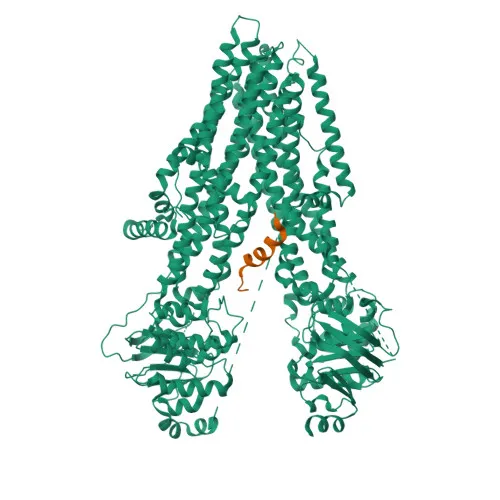
- CFTR (Cystic Fibrosis Transmembrane Conductance Regulator), also designated ATP-binding cassette sub-family C member 7 (ABCC7), is a large transmembrane glycoprotein belonging to the ABC transporter family.
- It functions primarily as a cAMP-regulated chloride channel that mediates chloride ion transport across epithelial cell membranes, a process gated by cycles of ATP binding and hydrolysis at its nucleotide-binding domains.
Related references:
PMID:10792060 PMID:11524016 PMID:11707463 - CFTR is also permeable to bicarbonate ions (HCO3-) and mediates ATP-dependent glutathione flux, contributing to pH and redox homeostasis in epithelial tissues.
Related references:
PMID:15010471 PMID:19019741 PMID:12727866 - The channel plays a pivotal role in airway surface liquid homeostasis and innate defense against pathogens by regulating ion and water transport, impacting mucus hydration and clearance.
Related references:
PMID:16645176 PMID:19621064 PMID:26823428 PMID:14668433 - CFTR modulates the activity of other ion channels and transporters, including inhibition of the epithelial sodium channel ENaC and regulation of the chloride channel ANO1, influencing net ion transport.
Related references:
PMID:12403779 PMID:22121115 PMID:22178883 - Subcellularly, CFTR traffics through the secretory pathway and localizes predominantly to the apical cell membrane, early endosomes, recycling endosomes, and the endoplasmic reticulum, with some reports of nuclear localization.
- CFTR is expressed in multiple epithelial tissues including the respiratory airway (bronchial epithelium), pancreatic ducts, intestinal crypts, sweat glands, and the reproductive tract (oviduct, sperm equatorial segment).
Related references:
PMID:15716351 PMID:22207244 PMID:1284548 PMID:28130590 - The protein undergoes extensive post-translational modifications, including glycosylation, phosphorylation, palmitoylation, and ubiquitination, which regulate its trafficking, stability, and channel activity.
Experimental Guidance and Technical Tips
- The immunogen corresponds to amino acids 700–840 within the regulatory (R) domain of CFTR; thus, the polyclonal antibody may recognize epitopes in this region. For western blotting, anticipate a major band migrating near 168 kDa; validate performance in a relevant sample system, such as lysates from bronchial epithelial cells (e.g., 16HBE) or lung tissue.
- For immunofluorescence/immunocytochemistry, consider that CFTR predominantly localizes to the apical cell membrane and subapical vesicles. Use appropriate fixation/permeabilization protocols to preserve membrane staining. Co-staining with an apical marker may help confirm specificity.
- Cross-reactivity is expected with mouse and rat CFTR; however, users should titrate the antibody and include proper controls for each species and application. As a polyclonal reagent, lot-to-lot variability may occur; it is recommended to re-validate each new batch in the intended assay.
CamelBio: Your One-Stop Sourcing Bridge
CamelBio serves as a one-stop sourcing bridge, providing diagnostic manufacturers and research laboratories with reliable access to IVD raw materials like this anti-CFTR polyclonal antibody for ion channel and cystic fibrosis studies. Our integrated supply network delivers validated antibody pairs, high-quality monoclonal and polyclonal antibodies, bulk ancillary reagents, and custom sourcing for rare or challenging targets to accelerate your development from concept to clinic.
REQUEST A QUOTE
Our professional team will reply to you within one business day. Please feel free to contact us!