Monoclonal Antibodies
Anti-CENPC Rabbit Monoclonal Antibody for WB, IF/ICC, ELISA - Q03188
Item Number : CM0012609
Price varies based on specs and customizations
- Application
- WB, IF/ICC, ELISA
- Cross Reactivity
- Human, Rat
- Protein Weight
- 107kDa

Shipping:
Contact us to get shipping details Enjoy On-time Dispatch Guarantee.
Why Choose Us
Easy ordering process, quality products, and dedicated support for your business success.
Core Product Specifications and Parameters
| Parameter | Value |
|---|---|
| Product Name | CENPC Rabbit mAb |
| Remarks/Alias | MIF2; hcp-4; CENP-C; CENPC1; CENPC |
| Species | Human |
| Gene ID (Human) | 1060 |
| Gene ID | 1060 |
| Immunogen | Recombinant fusion protein containing a sequence corresponding to amino acids 380-520 of human CENPC (Q03188) |
| Source | Rabbit |
| Category | Monoclonal Antibodies |
| Application | WB, IF/ICC, ELISA |
| Cross Reactivity | Human, Rat |
| SWISS | Q03188 |
| Protein Weight | 107kDa |
| Shipping | Ice bag |
Biological Background: Centromere protein C Function and Localization
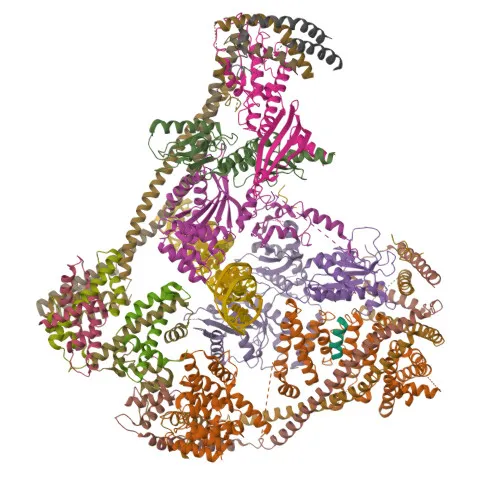
- Centromere protein C (CENP-C), also known as CENPC1 or interphase centromere complex protein 7, is a key component of the centromere/kinetochore region essential for proper chromosome segregation during mitosis.
- CENP-C is a member of the CENPA-NAC (nucleosome-associated) complex, which is critical for the assembly of kinetochore proteins, mitotic progression, and faithful chromosome segregation.
- The CENPA-NAC complex facilitates the recruitment of the CENPA-CAD (nucleosome distal) complex and is implicated in the incorporation of newly synthesized CENPA into centromeres.
- CENP-C additionally plays a role in epigenetic regulation by recruiting DNA methyltransferase DNMT3B to centromeric and pericentromeric satellite repeats, thereby modulating the histone code in these regions.
- Subcellular localization is predominantly to the nucleus, specifically at the centromere and kinetochore structures of chromosomes.
- Post-translational modifications include phosphorylation and ubiquitination (isopeptide bond, Ubl conjugation), which may regulate its function during cell division.
Experimental Guidance and Technical Tips
- The immunogen spans amino acids 380–520 of human CENPC, a region expected to generate reactivity against the full-length protein.
- For western blotting (WB), a major band at approximately 107 kDa is anticipated in human and rat cell or tissue lysates; additional bands may appear due to post-translational modifications or isoforms.
- In immunofluorescence/immunocytochemistry (IF/ICC), a distinct punctate nuclear pattern consistent with centromere/kinetochore localization should be observed.
- ELISA performance has been validated by the supplier; users should optimize coating conditions and antibody dilutions for their specific assay setup.
- Validation in the intended sample system (e.g., specific human or rat cell lines) is recommended to confirm reactivity and minimal non-specific binding.
CamelBio: Your One-Stop Sourcing Bridge
CamelBio offers diagnostic manufacturers, laboratories, and research institutes a streamlined one-stop platform for IVD raw materials, technical services, and consulting—covering every stage from concept to clinic. This anti-CENPC monoclonal antibody supports studies in centromere biology, kinetochore assembly, chromosome dynamics, and mitotic regulation. Leverage CamelBio’s supply capabilities for validated antibody pairs, optimized monoclonal/polyclonal antibodies, bulk ancillary reagents, and rare-target raw material sourcing to accelerate your IVD development and research projects.
REQUEST A QUOTE
Our professional team will reply to you within one business day. Please feel free to contact us!